

Every major technology company has spent the last several years pushing essentially the same core message: passwords are steadily on their way out, gradually replaced by something new called a passkey. For a small business owner trying to decide what actually matters here, the marketing noise and the real underlying security story are, in practice, two genuinely different things worth separating carefully.
This guide explains what passkeys and passwordless authentication actually are, why they resist phishing in a way passwords structurally cannot, how they relate to the multi-factor authentication your business may already use, and what a realistic adoption path looks like for a small business right now, not the idealized version in a vendor's product demo.
What a Passkey Actually Is
A passkey is not a stronger password; it is a fundamentally different kind of credential. Instead of a secret you type and an attacker can steal, guess, or phish, a passkey is a cryptographic key pair generated and stored on your device, authenticated with your fingerprint, face, or device PIN rather than something you memorize and type.
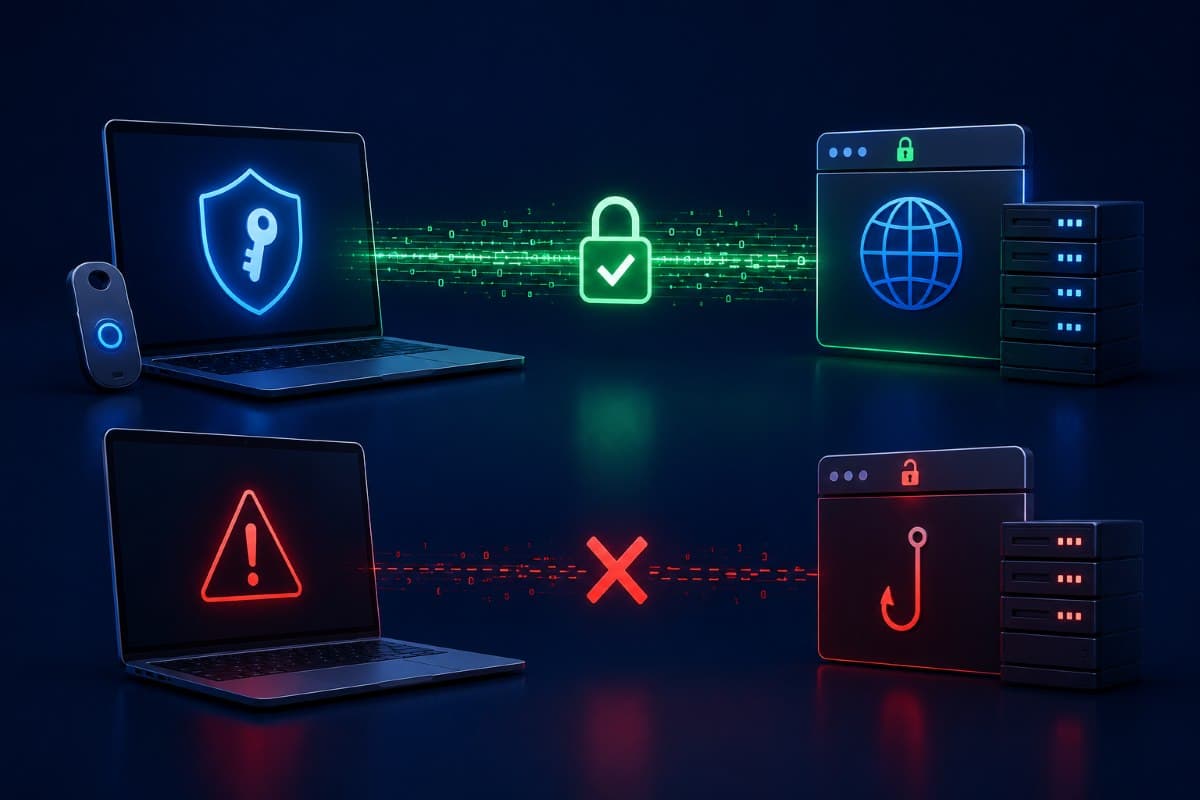
The technical detail that matters most for a business owner is this: the actual secret half of a passkey never leaves your device and is never typed anywhere, which means there is nothing for a phishing site to capture even if an employee is completely fooled by a convincing fake login page.
Why This Structurally Defeats Phishing
A traditional password can be phished because the whole system depends on a secret that gets typed into a form, and a fake, fraudulent form captures it just exactly as well as a genuinely real one does. A passkey cannot be phished the same way, because the credential is cryptographically tied to the real website's identity; a fake site simply cannot request or receive a valid response, regardless of how convincing it looks to a human eye, which makes this a structural improvement to access control rather than another rule for employees to remember.
This is not merely an incremental improvement over ordinary passwords; it genuinely removes an entire category of attack that has remained the single leading cause of business account compromises for years running.
Passkeys and MFA Are Not Competing, They Work Together
A common point of confusion: passkeys are sometimes described as replacing multi-factor authentication, when the more accurate framing is that a passkey often combines what used to require two separate steps into one. The device authentication step, your fingerprint or PIN, serves as something you are or something you know, while the cryptographic key itself serves as something you have, satisfying multi-factor principles in a single, faster action.
Businesses that have already invested in strong multi-factor authentication practices are not throwing that investment away by adopting passkeys; passkeys are the natural next step in the same phishing-resistance direction that guide already points toward.
Why Businesses Are Moving Faster on This Than Expected
Password-related incidents, reused credentials, phished logins, weak passwords guessed through automated tools, remain one of the most common entry points into small-business systems today. Passkeys address this at the root rather than through another layer of policy asking employees to simply try harder.
This is part of why adoption has moved faster than many expected: the security benefit is structural rather than behavioral, which means it does not depend on employees remembering to follow a rule correctly every single time, a distinction that matters especially for regulated businesses managing formal compliance and risk management obligations.
Comparing the Real Options
Why Now Is a Reasonable Moment to Start Paying Attention
Passkey support has crossed a real adoption threshold across major consumer and business platforms over the past couple of years, moving from an experimental feature to a genuinely mainstream option built directly into the operating systems most businesses already run. This timing matters because earlier passwordless attempts never reached this level of built-in, cross-platform support.
A business does not need to be an early adopter to benefit; it needs to recognize that the infrastructure underneath passkeys has matured enough to be a realistic option now, not an experiment reserved for the far future.
The Honest Rollout Reality
Vendor marketing sometimes implies a business can simply flip a switch and go passwordless overnight. The real rollout is more gradual and more account-by-account than that framing suggests, and a business planning its adoption should know this going in rather than being surprised by it.
Not Every Account Supports Passkeys Yet
Passkey support has expanded rapidly across major platforms, but coverage is still uneven across the smaller business tools, industry-specific software, and older systems many small businesses depend on daily. A realistic adoption plan treats passkeys as the preferred option wherever available, while maintaining strong traditional MFA everywhere passkeys are not yet supported, rather than waiting for universal support before starting.
Device Loss Needs a Real Answer Before You Roll Out
Because a passkey lives on a device, losing that device raises a legitimate question: what happens next? Major platforms address this through account recovery options and the ability to sync passkeys across a user's own devices, but a business adopting passkeys should test and document its actual recovery process before an employee's lost phone turns into a genuine access emergency.
This is not a reason to avoid passkeys; every authentication method has a recovery story, and passwords have historically had a weak one. It is a reason to have that answer ready in advance rather than improvising it during an actual incident.
Employee Communication Matters More Than the Technology Itself
The single most common source of friction during a passkey rollout is not technical; it is confusion. An employee who sees an unfamiliar login prompt without context tends to assume something is wrong rather than recognizing a security improvement, which generates avoidable help desk calls and, occasionally, employees trying to work around the new prompt entirely.
A short, plain-language explanation sent before the change, why it is happening and what to expect, prevents most of this friction at essentially no cost.
A Practical Adoption Path for a Small Business
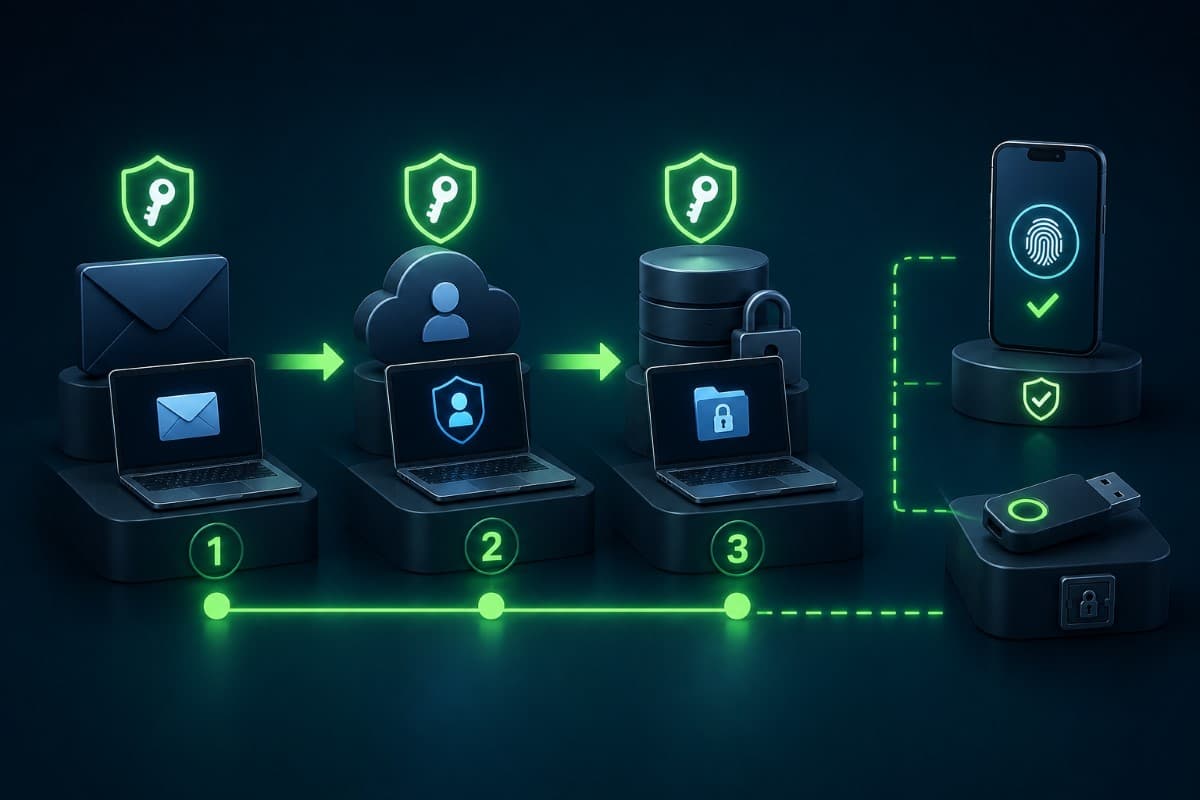
Start deliberately with the specific accounts that matter most and already support passkeys reasonably well today: email, the identity provider tying your other systems together, and any system holding particularly sensitive data. Getting passkeys onto these few high-value accounts first delivers most of the real security benefit quickly, without requiring a business-wide rollout across every tool on day one.
From there, expand passkey adoption as your other vendors add support, while keeping phishing-resistant MFA as the standard everywhere passkeys are not yet available. Document the device-loss recovery process before rollout, not after the first real incident, and communicate the change clearly to staff, since a login experience that suddenly looks different without explanation tends to generate confused calls to the help desk that a short heads-up would have prevented entirely.
What This Means for Compliance-Heavy Businesses
Businesses in regulated fields, medical, legal, financial, should note that passkey adoption can strengthen a compliance story that already leans on authentication controls, since demonstrating phishing-resistant login is increasingly a question auditors and insurers ask directly. Treating passkey rollout as part of the same conversation as other access-control improvements, rather than a separate consumer-technology trend, keeps the compliance narrative coherent.
A Genuine Security Improvement, Rolled Out Deliberately
Passkeys and passwordless authentication represent a real, structural improvement over passwords, not incremental marketing hype, because they remove phishing as a viable attack path rather than merely making it somewhat harder. The businesses that benefit most are the ones that roll this out deliberately, starting with high-value accounts, maintaining strong MFA where passkeys are not yet supported, and having a tested recovery plan ready before it is needed.
For businesses in the region, a partner providing IT support in Westlake Village can identify which of your accounts are ready for passkeys today and build the rollout plan for the rest.
Companies across the metro can get the same locally through managed IT services in Los Angeles, from a first account audit to a tested device-loss recovery process.
Watch How Your Software Vendors Are Moving on This
The pace of passkey adoption varies considerably across the software vendors a small business actually depends on day to day, and keeping a loose eye on which of your critical tools have added support recently helps time your own rollout sensibly. A vendor that added passkey support this year is signaling where the broader industry is heading, which is useful context even before your business is ready to act on it.
Passkeys Are Not a Complete Fix on Their Own
Businesses should also remember that a passkey protects the login itself, not everything that happens after someone is authenticated. An employee correctly and legitimately authenticated through a passkey can still fall for a social engineering attempt, still click on something they really should not, or still make a genuine judgment error once already inside a system they were properly and legitimately allowed to access in the first place.
Passkeys structurally defeat phishing, but they do not address every possible authentication risk on their own; a stolen device that is still actively authenticated in the wrong hands, or an account recovery process with weak verification, can still create real exposure worth planning around. Treating passkeys as one strong layer within a broader security approach, rather than a single fix that removes the need for any other consideration, keeps expectations realistic and grounded.
How Passkeys Handle Shared and Multi-User Accounts
Small businesses sometimes rely on shared logins for a specific system or role, a practice already worth avoiding for other security reasons, and passkeys handle this scenario differently than passwords do. Because a passkey is tied to a specific device rather than a memorized secret, a genuinely shared account becomes harder to support cleanly under a passkey model, which often surfaces the shared-login problem a business had been quietly living with anyway.
Rather than working around this limitation, most businesses find it is the right moment to finally assign individual accounts to individual people, a change worth making regardless of the authentication method, since shared logins make it impossible to know who actually took a given action.
Consider This an Opportunity, Not Just an Obstacle
A passkey rollout that forces a business to finally clean up shared accounts is delivering a second security improvement alongside the first. Individual accountability for every login is valuable on its own terms, entirely separate from the phishing resistance passkeys provide, and a business that treats this as a genuine forcing function rather than an annoying obstacle ends up getting considerably more security value out of the exact same rollout effort it was already planning to make regardless.
Frequently Asked Questions
A passkey is a cryptographic key pair generated and stored on your device, authenticated with your fingerprint, face, or device PIN, rather than a secret you type. Unlike a password, the actual secret half of a passkey never leaves your device and is never typed anywhere, which means a phishing site has nothing to capture even if an employee is completely fooled by it.
Not exactly; they often combine what previously required two separate steps into one faster action. That same authentication step satisfies one factor while the cryptographic key itself satisfies another, meeting multi-factor principles in a single step. Businesses with strong MFA already in place are building on that investment by adopting passkeys, not discarding it.
Not realistically yet. Passkey support has expanded quickly across major platforms but remains uneven across smaller business tools and industry-specific software many small businesses depend on. A practical approach treats passkeys as preferred wherever available while maintaining strong traditional MFA everywhere else, rather than waiting for universal support before starting.
Major platforms provide account recovery options and the ability to sync passkeys across a user's own devices, but a business should test and document its actual recovery process before rolling out passkeys, not after a lost phone becomes a real access emergency. Every authentication method needs a recovery story, and having one ready in advance avoids improvising during an actual incident.
A conversation about who can reach what, more broadly, is a natural companion to any passkey rollout.
For businesses in the region, a partner providing IT support in Simi Valley can run the account audit and the rollout together.
Regulated practices can pair this with a broader review of their obligations to keep the whole authentication story consistent.
If your business is weighing whether to adopt passkeys and passwordless authentication but is not sure where to start, GlobeVM can identify your highest-value accounts, build a realistic rollout plan, and test the recovery process before you need it.
Comments
0 Comments