Data is the lifeblood of the modern enterprise. As business operations become increasingly decentralized across cloud and on-premises environments, cyber threats have evolved at an unprecedented pace. At the forefront of these threats is ransomware, widely considered the most disruptive and costly cybercrime of our era.
The Ultimate Ransomware Protection Guide for Enterprises

By nazy rafaeil
7 May 2026

Historically, ransomware attacks were opportunistic, cast-a-wide-net campaigns aimed at individual consumers or disorganized small businesses. That paradigm has shifted entirely. Today, mid-market enterprises, healthcare providers, local governments, critical manufacturing plants, and multinational corporations are the primary targets for highly organized, well-funded cybercriminal syndicates. This shift, often referred to as "Big Game Hunting," exists because threat actors recognize that prolonged enterprise downtime equates to massive financial losses. They capitalize on this operational urgency, assuming organizations will pay exorbitant sums to regain access to mission-critical systems rapidly.
The true cost of a ransomware attack extends far beyond the initial extortion demand. The aggregate financial impact encompasses weeks of operational downtime, permanent reputational damage, customer churn, severe legal liabilities, significant regulatory fines, and the sheer cost of third-party forensic investigation and network remediation. In many cases, the total cost of recovery is ten to fifteen times higher than the ransom itself.
In this definitive guide, we explore the industrialization of ransomware, dissect the granular lifecycle of a modern attack, and provide an actionable, multi-layered ransomware protection and disaster recovery strategy. Our goal is to equip IT leaders with the knowledge to prevent infections, respond decisively to active breaches, and ensure rapid, secure data recovery without ever negotiating with cybercriminals.
The Evolution of Ransomware: The Industrialization of Cybercrime
Understanding how ransomware has evolved is crucial to defending against its current iterations. Cybercrime is no longer perpetrated by lone hackers; it is a structured, multi-billion-dollar global industry mirroring traditional corporate models.

The RaaS Model (Ransomware-as-a-Service)
The most significant catalyst for the explosion of ransomware is the "Ransomware-as-a-Service" (RaaS) business model. Elite malware developers create sophisticated encryption payloads and backend infrastructure, which they lease to lower-skilled "affiliates" on the dark web. The developers handle payment portals, negotiation platforms, and software updates, while affiliates focus solely on breaching networks. This profit-sharing model has democratized cybercrime and exponentially increased the volume of attacks worldwide.
From Simple Lockers to Multi-Layered Extortion
The tactics utilized by these RaaS groups have grown increasingly aggressive. The most alarming evolution in recent years is the shift from simple file encryption to multi-layered extortion models:
- Single Extortion: The attacker breaches the network, encrypts critical files, and demands a cryptocurrency payment for the decryption key.
- Double Extortion: Before deploying the encryption payload, the attacker stealthily exfiltrates (steals) terabytes of sensitive corporate data. If the organization refuses to pay the ransom, attackers threaten to leak confidential client data, financial records, or intellectual property on public dark web sites. This triggers regulatory fines and reputational damage.
- Triple Extortion: Attackers apply additional pressure by launching Distributed Denial of Service (DDoS) attacks against the target's external-facing network, ensuring the business remains offline to the public until payment is made.
- Quadruple Extortion: Threat actors directly contact clients, partners, or employees, informing them that their personal data has been compromised and encouraging them to pressure the executive team into paying the ransom.
The Lifecycle of a Modern Ransomware Attack: Deconstructing the Kill Chain
To build an impenetrable defense, IT leaders must understand the "Kill Chain" of a modern attack. A ransomware detonation is not an instant event; it unfolds methodically over days, weeks, or even months—a period known as "Dwell Time."

- Reconnaissance and Target Acquisition: Attackers, or specialized groups known as Initial Access Brokers (IABs), scan the organization's external assets. They look for unpatched VPNs, open RDP ports, misconfigured cloud storage, or gather data for targeted phishing campaigns.
- Initial Compromise (Infiltration): The perimeter is breached. This typically occurs through an employee clicking a malicious link, the exploitation of a software vulnerability, or the use of compromised credentials.
- Establishment of Persistence: Once inside, attackers deploy covert backdoors and Command and Control (C2) beacons, ensuring they maintain access even if the initial entry point is closed.
- Lateral Movement and Privilege Escalation: Attackers move laterally from workstation to workstation, seeking critical servers and domain controllers. They attempt to elevate their credentials to gain "Domain Admin" privileges, allowing them to disable security software and locate backup infrastructure.
- Data Exfiltration: Executing the double extortion strategy, attackers quietly siphon sensitive data out of the network to external servers under their control.
- Mass Encryption: After securing the stolen data and neutralizing local backups, the attackers deploy the encryption payload. Modern variants encrypt only small chunks of files to maximize speed, locking down databases in mere minutes.
- Extortion and Negotiation: A ransom note is deployed across infected screens, dropping a link to a negotiation chat room and initiating a high-pressure countdown timer.
Phase 1: Proactive, Defense-in-Depth Ransomware Protection Strategies
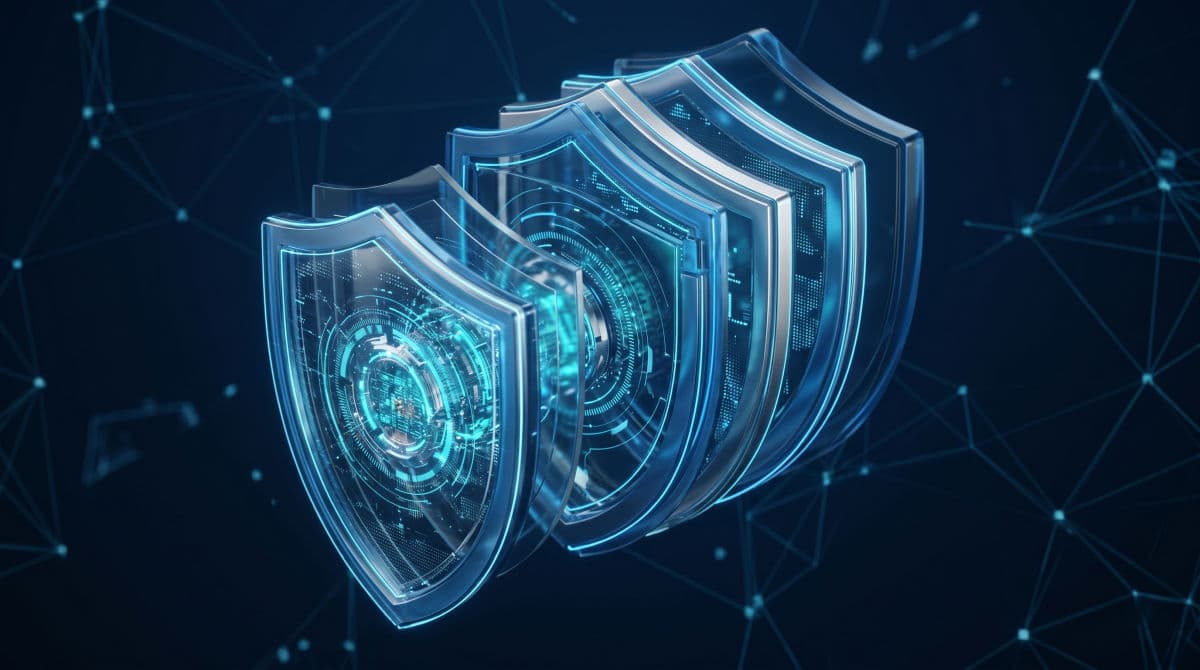
The most cost-effective way to combat ransomware is to deny attackers their initial foothold. Organizations must adopt a proactive, multi-layered "defense-in-depth" approach supported by robust cybersecurity solutions.
Zero Trust Architecture (ZTA) and Micro-segmentation
The traditional "castle-and-moat" security model is obsolete. Zero Trust operates on the principle of "never trust, always verify." Every access request must be dynamically authenticated and continuously validated. Furthermore, implementing network micro-segmentation ensures that if an attacker breaches one department's subnet, they are logically blocked from traversing into the core data center. A strong ransomware protection framework demands this level of internal isolation.
Extended Detection and Response (XDR)
Legacy signature-based antivirus solutions are blind to modern, fileless ransomware. XDR aggregates and correlates threat data across endpoints, cloud workloads, email gateways, and networks. Powered by behavioral analytics, XDR detects anomalous activities—like unusual PowerShell executions—and automatically isolates the compromised machine before encryption begins.
Phishing-Resistant Multi-Factor Authentication (MFA)
Organizations must mandate strong MFA across all remote access points (VPN, RDP, Cloud Apps). To combat advanced techniques like "MFA Fatigue" or adversary-in-the-middle (AiTM) phishing, businesses should transition toward phishing-resistant, hardware-based MFA solutions for highly privileged administrator accounts.
Identity and Access Management (IAM) Hygiene
Enforce the Principle of Least Privilege (PoLP), ensuring employees only have access to the specific data necessary for their roles. Routinely audit Active Directory to eliminate orphan accounts and strictly limit the number of users possessing Domain Admin rights.
Attack Surface Management and Patching
Many devastating attacks exploit known vulnerabilities for which patches have been available for months. Implementing an automated, continuous patch management system for operating systems, third-party software, and firewalls is essential to close these security gaps.
Security Awareness Training
Since spear-phishing remains a primary delivery mechanism, robust email filtering is critical. However, organizations must also conduct continuous security awareness training and simulated phishing tests to transform employees into a vigilant first line of defense.
Phase 2: Incident Response, Containment, and The Golden Hour
If a sophisticated ransomware strain breaches your network, the "golden hour" of incident response begins. How an organization acts in the first 60 minutes—often relying on immediate IT support and crisis management—dictates whether the incident remains a contained disruption or devolves into a disaster.

- Immediate Out-of-Band Communication: Assume all internal communications are compromised. Switch immediately to a secure, pre-designated "Out-of-Band" (OOB) platform to coordinate the response.
- Aggressive Network Isolation: Disconnect affected systems from the local network, Wi-Fi, and the internet immediately to halt lateral spread. Do not turn off the power or reboot the machines, as this destroys volatile memory (RAM) necessary for forensic investigation.
- Engage the Incident Response (IR) Team: Activate your internal crisis team or immediately retain a specialized third-party digital forensics and incident response firm.
- Identify Patient Zero: IR teams must conduct rapid forensics to trace the infection back to its origin point. Identifying the compromised device and the entry vulnerability is mandatory before beginning restoration.
- Contact Legal Counsel and Cyber Insurance: Before taking remediating steps or contacting threat actors, notify your cyber insurance provider. They will coordinate forensic teams and guide you through regulatory notification requirements.
Phase 3: Secure Data Recovery Without Funding Cybercrime
Paying the ransom is heavily discouraged by international law enforcement agencies. It guarantees nothing, funds future cybercrime, and marks your organization as a target for repeat attacks. Furthermore, in certain jurisdictions, paying a sanctioned entity is a federal offense. The only reliable recovery method is a rigorously tested disaster recovery strategy.

The Upgraded Backup Standard: The 3-2-1-1-0 Rule
The traditional backup rule is no longer sufficient against malware that actively hunts for backups. Enterprises must adopt the upgraded 3-2-1-1-0 Rule:
- 3 total copies of your data (one primary, two backups).
- 2 different types of storage media.
- 1 copy completely offsite.
- 1 copy completely offline, air-gapped, or structurally immutable (cannot be altered or deleted by anyone).
- 0 errors during recovery, ensured by daily backup verification.
Understanding RTO, RPO, and Clean Room Recovery
A successful recovery strategy relies on defined business continuity metrics:
- Recovery Point Objective (RPO): The maximum acceptable amount of data loss measured in time.
- Recovery Time Objective (RTO): The maximum acceptable amount of time a system can be offline.
- Clean Room Recovery: When a breach occurs, data must be restored into a highly secure, isolated "Clean Room" environment to scan backups for dormant malware payloads before moving them back into production.
The Critical Role of Cloud Technologies in Ransomware Defense
Legacy on-premises backup strategies are inefficient and highly vulnerable to lateral-movement threats. The transition to advanced cloud infrastructure has completely revolutionized disaster recovery.
The Shared Responsibility Model
When utilizing the cloud, organizations must understand the Shared Responsibility Model. While providers (like AWS or Azure) secure the physical infrastructure, the customer remains solely responsible for identity management, access controls, and data backups within the cloud.
Immutable Cloud Storage
The gold standard in ransomware protection is immutable cloud storage. Utilizing WORM (Write Once, Read Many) technology, immutable storage guarantees that once data is written, it is cryptographically locked. Even a threat actor with administrator privileges cannot encrypt or delete these backups.
Disaster Recovery as a Service (DRaaS)
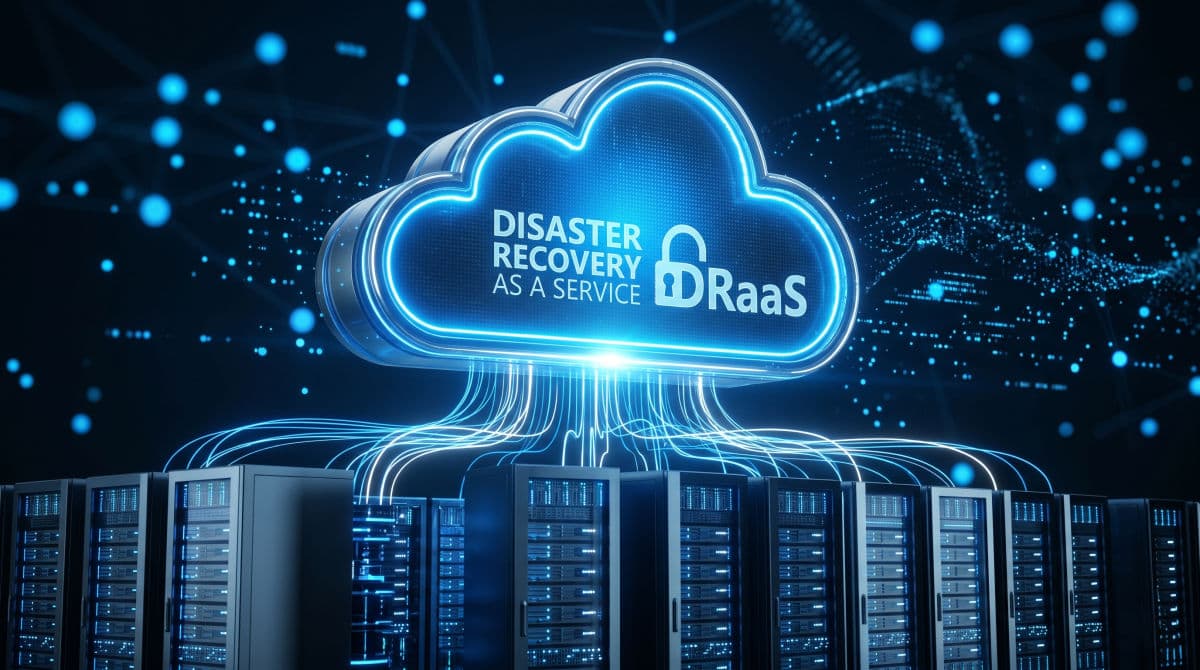
Cloud computing enables DRaaS, a paradigm shift in business continuity. DRaaS continuously replicates your entire server environment to a secure, dormant cloud space. In the event of an attack, organizations can execute a "failover," spinning up virtual machines in the cloud and restoring operational capability in minutes, completely bypassing infected local hardware.
Compliance, Cyber Insurance, and Continuous Risk Assessment
Maintaining a strong cybersecurity posture is an ongoing process of risk management, essential for legal protection and business stability.
Regulatory Compliance and Cyber Insurance
Organizations must align their ransomware protection strategies with industry regulations (HIPAA, PCI-DSS, GDPR). A ransomware attack involving data exfiltration is a data breach, subjecting the organization to regulatory fines and public disclosures. Furthermore, cyber liability insurers now require strict, auditable proof of proactive security measures (like MFA and immutable backups) before issuing policies or paying out claims.
Network Security Audits and Penetration Testing
The only way to know if your network is resilient is to test it aggressively:
- Vulnerability Assessments: Automated tools that map your attack surface to identify known security gaps and missing patches.
- Penetration Testing (Ethical Hacking): Human experts actively attempt to breach your systems using the same tactics as actual cybercriminals, identifying fatal flaws before malicious actors do.
Ready to elevate your organization's security posture?
Contact GlobeVM's security architects today for a Comprehensive Network Assessment and Security Consultation. Contact Us
Frequently Asked Questions
No. Traditional antivirus relies on signature-based detection, meaning it can only stop malware it has seen before. Modern ransomware groups alter their code to create "zero-day" threats that bypass legacy solutions entirely. Building a comprehensive ransomware protection strategy requires organizations to upgrade to behavior-based Endpoint Detection and Response (EDR/XDR) platforms.
Initial Access Brokers are specialized cybercriminals whose sole focus is breaking into corporate networks. They exploit vulnerabilities, establish a backdoor, and then sell this network access to ransomware affiliates on dark web forums.
Double extortion is a tactic where hackers exfiltrate (steal) massive amounts of sensitive company data before encrypting local files. If the victim refuses to pay the ransom to unlock their files, the attackers threaten to publish the confidential data on the public internet.
Recovery time depends entirely on your backup architecture and your RTO (Recovery Time Objective). Recovering from standard file-level backups on local drives can take days or weeks. However, with a cloud-based Disaster Recovery as a Service (DRaaS) solution, full server failover can reduce downtime to just a few hours or minutes.
This depends on your specific policy, jurisdiction, and the security controls in place at the time of the attack. Insurers are tightening requirements; if an organization fails to maintain agreed-upon security standards (like enforcing MFA), the insurer can deny the claim entirely. Additionally, paying sanctioned entities may void coverage.
Comments
0 Comments