


Cybersecurity services are the tools, monitoring, and expertise that protect a business from digital threats like ransomware, phishing, stolen passwords, and data theft. For a small or mid sized business, that rarely means one product. It means a set of layers that each cover a different way an attacker can get in, watched by people who can tell a real threat from background noise. The aim is not to promise that nothing will ever go wrong, because no honest provider can. It is to make an attack much harder to pull off, and to catch and stop the ones that do start before they turn into a serious loss.
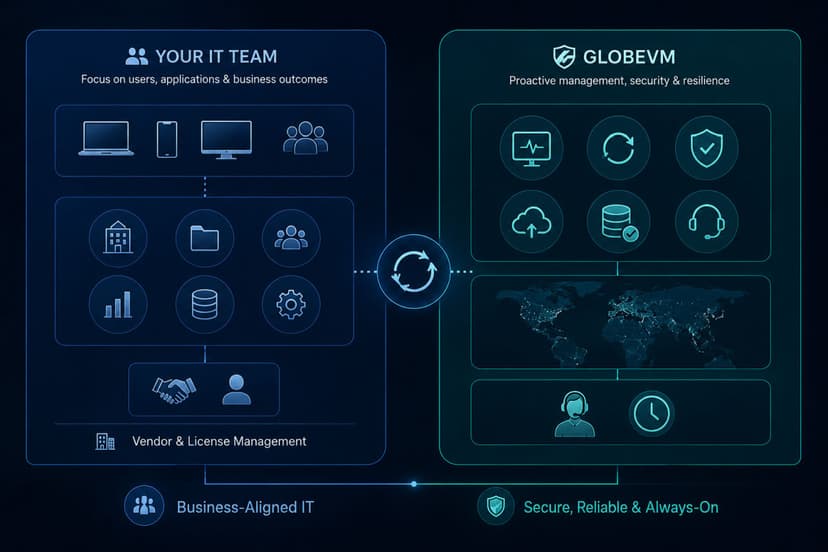
Managed cybersecurity takes that work off your plate. Rather than buying separate products and hoping they are configured correctly and watched, you get a program set up around your actual risks, monitored continuously, and adjusted as threats change. For most businesses without a full time security team, that is the difference between owning a pile of security tools and actually being protected by them.
Why Small and Mid Sized Businesses Get Targeted
A common and costly assumption is that attackers only go after large companies. In practice, most attacks on smaller businesses are automated. Software scans the internet constantly for any system with a weak password, an unpatched flaw, or an exposed service, and it does not care whether the target is a hospital or a two person office. Smaller firms are often hit precisely because their defenses are lighter and no one is watching closely, not because they hold the most valuable data.
The other reason is people. Most breaches begin with a person, usually through a convincing email that gets someone to click a link, open a file, or hand over a password. That is why technology alone is never enough, and why training the people who use your systems is part of real security rather than an afterthought. Attacks also tend to land outside business hours, when no one is likely to notice, which is the case for continuous monitoring rather than a tool that only runs during the day.
What a Layered Security Program Includes
No single tool covers every way in, so good security is built in layers, an approach often called defense in depth. Each of the services below closes a different gap.
Penetration Testing
A penetration test is an authorized, controlled attack on your own systems, carried out by security professionals to find weaknesses before a real attacker does. Instead of guessing whether your defenses hold, you get a clear report of what could be exploited and what to fix first.
Managed Detection and Response
Managed detection and response, or MDR, combines security tools with a human team that monitors your environment around the clock, investigates anything suspicious, and actively contains threats. Unlike a tool that only raises an alert and waits, MDR means someone is watching and acting, even at night and on weekends.
Email Security
Most attacks arrive by email, so filtering it well matters. Email security blocks phishing messages, malicious links and attachments, and the spoofed messages used in business email compromise, where a criminal poses as a colleague or vendor to trick someone into sending money or data.
Security Awareness Training
Because so many attacks target people, training staff to recognize a suspicious message is one of the highest value steps a business can take. Short, regular training helps your team spot phishing and social engineering, turning the people attackers rely on into a line of defense.
Endpoint Security
Endpoint security protects the devices your team uses every day, including laptops, desktops, and servers. Modern endpoint protection goes beyond traditional antivirus, watching for unusual behavior on a device and stopping threats that signature based tools would miss.
Identity and Access Management
Identity and access management controls who can reach what, and confirms that the person logging in is who they claim to be. Strong access control, including multi factor login and giving each person only the access they need, shuts down one of the most common ways attackers move once they have a stolen password.
Dark Web Monitoring
When credentials and data are stolen, they often end up for sale in places most businesses cannot see. Dark web monitoring scans for your company’s exposed passwords and information, so you can reset and respond before that stolen data is used against you.
Cybersecurity and Compliance
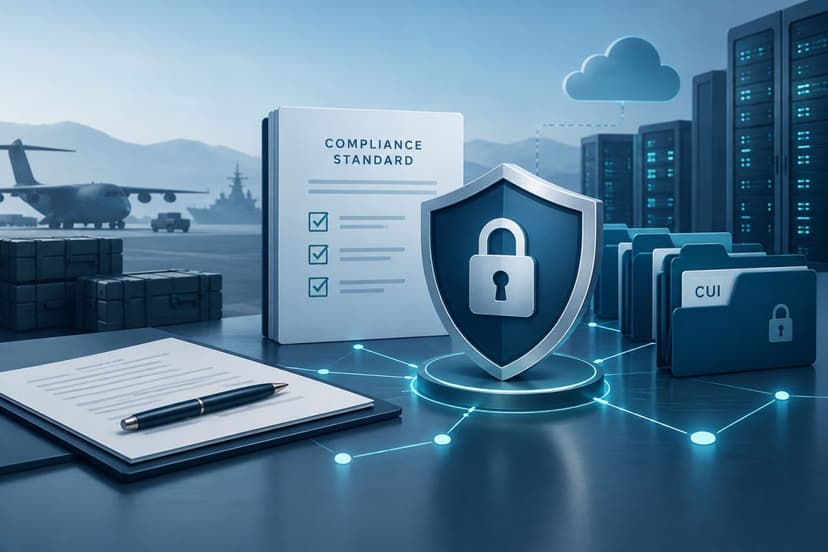
For many businesses in healthcare, finance, and similar fields, security is also a compliance requirement. Frameworks such as HIPAA and PCI DSS expect specific safeguards around how sensitive data is stored, accessed, and protected. Putting those safeguards in place and documenting them is a large part of meeting them. It is worth being clear that technology alone does not make a business compliant, since these frameworks also involve written policies, processes, and ongoing effort. The right approach treats strong security as the foundation that makes compliance achievable, rather than a box that gets checked once.
Local Cybersecurity Support in Los Angeles
Threats do not keep office hours, and a security partner nearby can respond when something needs hands on attention rather than only a remote alert. As a cybersecurity provider based in the Los Angeles area, GlobeVM supports businesses across Woodland Hills, Encino, Sherman Oaks, the San Fernando Valley, Santa Clarita, the Conejo Valley, and Ventura County. Local also means understanding the businesses here, from medical and dental practices to law firms, financial offices, and manufacturers, each handling data that has to stay private and available. With CCSP certified expertise, the goal is straightforward: practical security that fits how your business actually runs.