Artificial intelligence has moved from a buzzword into the everyday machinery of how technology and security actually work. Attackers now use it to craft more convincing scams, security tools use it to spot threats faster, and businesses are adopting AI-powered software across their operations. In the middle of all this sits your IT service provider, and whether they understand AI has become a real factor in how well they can protect and support your business. A provider without AI expertise is increasingly working with one hand tied behind their back, unable to use the tools that now define good security and unable to guide you through the AI decisions your business faces. This guide explains why AI expertise matters in an IT provider, how providers use AI well, the risks a knowledgeable provider helps you manage, and how to tell genuine capability from marketing.
The Essentials of Reasons Your IT Service Provider Should Have AI Expertise


Why AI expertise now matters in an IT provider
For years, choosing an IT provider was about responsiveness, reliability, and technical skill, and those still matter. What has changed is that AI now runs through both sides of the security equation and through the software businesses use every day, which means a provider who does not understand it is missing a growing part of the picture. Attackers are using AI to make their attacks more effective, defenders are using it to detect and respond to threats, and businesses are weighing AI tools that carry both promise and risk. A provider with real AI expertise can keep pace with all of this, while one without it is increasingly relying on yesterday's approach against today's problems, which is why this capability has become something worth looking for rather than a nice extra.

What AI expertise actually means for a provider
It is worth being clear about what genuine AI expertise looks like, because the term is used loosely. It does not mean a provider has simply added the word to its marketing or bought a product with AI in the name. Real expertise means a provider understands how AI is used in security and IT, can use AI-powered tools effectively rather than just owning them, understands the new risks that AI introduces, and can give a business honest, grounded guidance about adopting AI rather than hype. In short, it is the difference between a provider that can actually put AI to work for your protection and advise you sensibly, and one that has only learned to say the word. The distinction matters because the value is in the understanding, not the label.
How a capable provider uses AI well
The clearest sign of real AI expertise is how a provider uses it in the work of protecting and supporting your business. Several areas have been genuinely changed by AI, and a provider who understands them delivers better results.

Faster, smarter threat detection
Security has been one of the areas most transformed by AI, because modern threat detection depends on analyzing enormous amounts of activity to spot the signs of an attack, which is exactly what AI does well. AI-powered security tools can recognize unusual or malicious behavior across a business's systems faster and more accurately than older methods, catching threats that would otherwise slip through. A provider who understands and uses these tools can defend a business more effectively, which is now a core part of strong cybersecurity solutions. Without this capability, a provider is detecting threats with tools a step behind the ones attackers are using.
Proactive monitoring and early warning
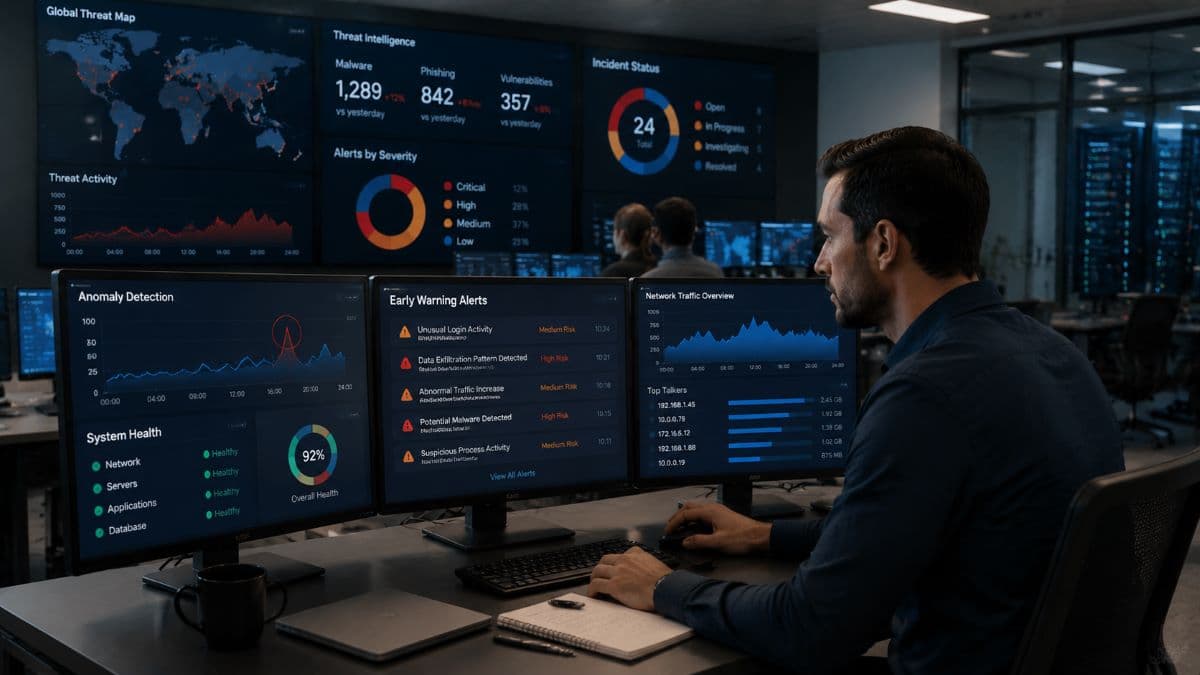
Beyond security, AI helps a provider watch a business's systems more intelligently, identifying patterns that suggest a problem is developing before it causes a failure. Rather than simply reacting when something breaks, AI-assisted monitoring can flag the early signs of trouble, allowing issues to be addressed quietly in advance. This makes the ongoing oversight a provider delivers through remote monitoring and management more effective, turning monitoring from a passive watch into something that anticipates problems. A provider who uses AI this way tends to prevent more disruptions and catch more issues early.
Automation and faster support
AI also helps providers handle routine work more efficiently, automating repetitive tasks and speeding up parts of support, which frees skilled people to focus on the problems that genuinely need human judgment. Used well, this means faster responses to common issues and more consistent handling of routine work, without replacing the human expertise that harder problems require. The point is not to remove people from support but to let AI handle what it does well so that the people are available for what they do well, which results in better service overall.
Better response when something goes wrong
AI also strengthens how a provider responds when an incident does occur, helping to make sense of what is happening across many systems at once and to identify the scope of a problem more quickly. When a security event unfolds, the speed of understanding what has been affected and how far it has spread matters enormously, and AI-assisted analysis can shorten that process. A provider who uses these capabilities can move faster from detecting a problem to containing it, which limits the damage. This is part of why modern detection and response has become more capable, and why a provider's ability to use these tools affects how well they protect a business when it counts most.
The risks a knowledgeable provider helps you manage
AI expertise is not only about using AI to help; it is also about understanding the risks AI brings, which a provider needs to grasp in order to protect a business properly.
Defending against AI-powered attacks
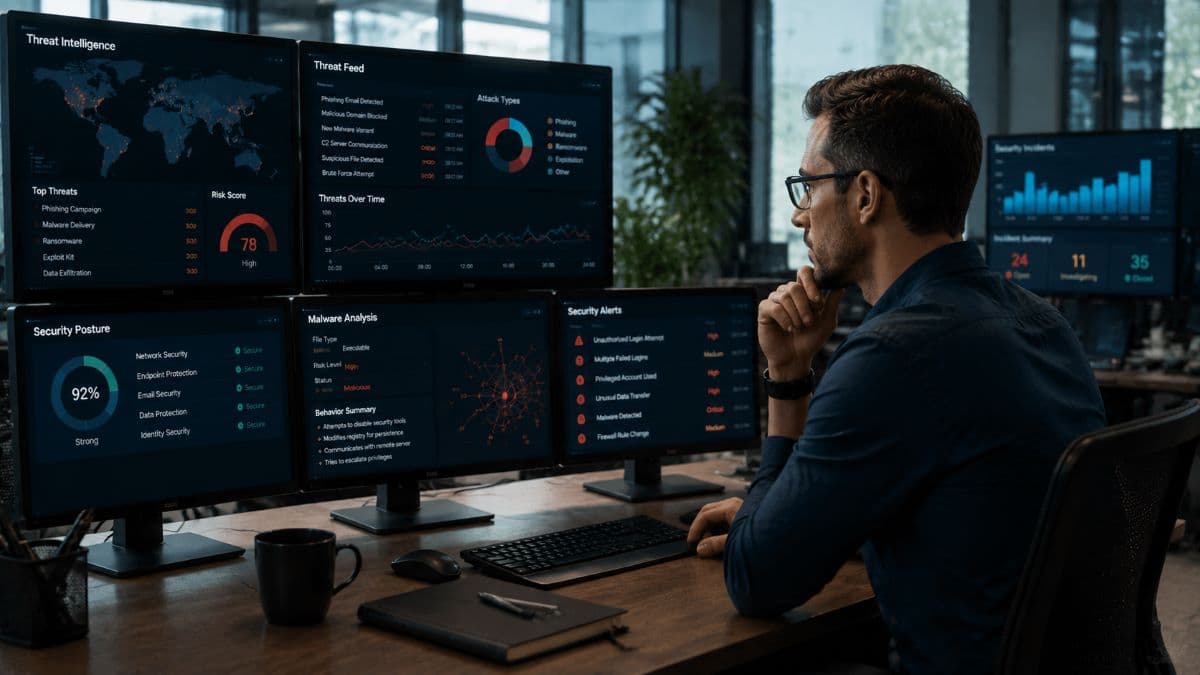
The same technology that helps defenders also helps attackers, who now use AI to create more convincing phishing emails, more sophisticated scams, and more effective attacks generally. A provider who understands this can prepare a business for threats that are harder to spot than they used to be, since an AI-crafted phishing message may lack the obvious errors that once gave such attacks away. Understanding how attackers use AI, as explored in our look at AI security risks for small businesses, is part of what lets a provider defend against the current generation of threats rather than the previous one.
Securing the AI tools your business adopts
As businesses bring AI-powered software into their operations, these tools introduce new considerations around data and security, since they often handle sensitive information and connect to a business's systems. A provider with AI expertise can help a business use these tools safely, understanding what data they access, how that data is protected, and what risks need to be managed. Without this understanding, a business may adopt AI tools that quietly create security or privacy problems, which is why having a provider who can guide safe adoption matters as AI software becomes more common.
Honest guidance instead of hype
Perhaps the most valuable thing a knowledgeable provider offers is grounded advice in a field full of exaggerated claims. A provider who genuinely understands AI can tell a business where it would help, where it would not, and what to be cautious about, rather than either dismissing it or overselling it. This honest guidance helps a business make sensible decisions about AI rather than chasing trends or missing real opportunities, and it is exactly the kind of practical, realistic counsel that distinguishes a trusted provider from one simply following the market.
The risk of a provider without AI expertise
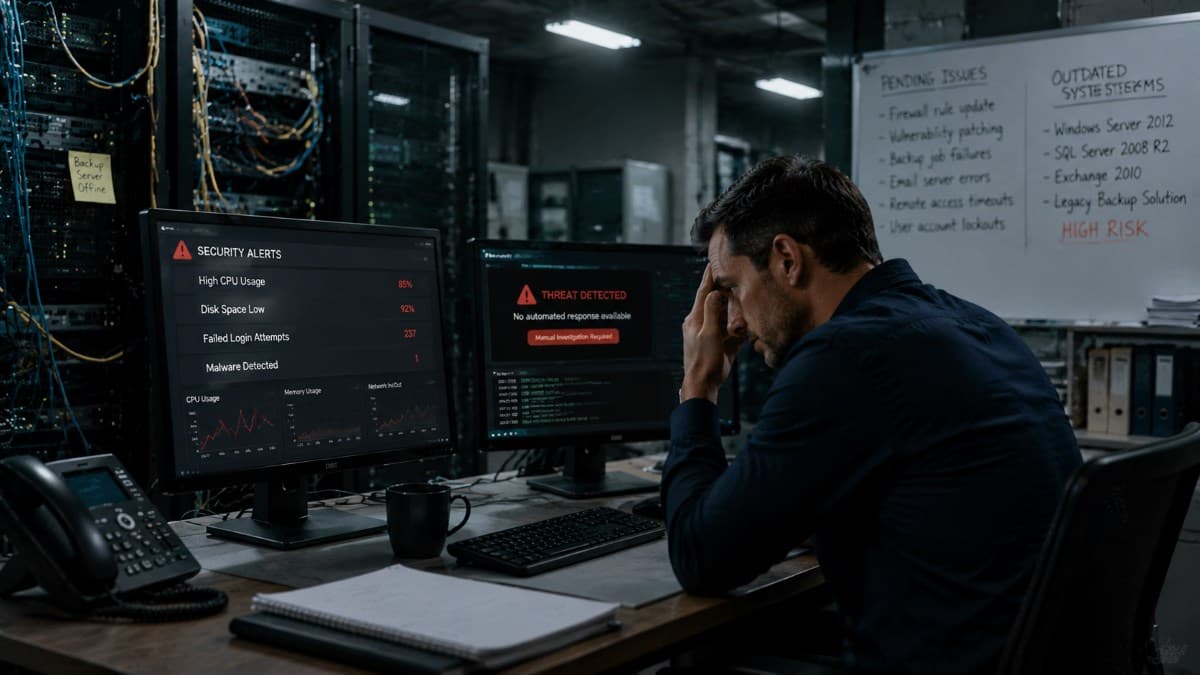
It is worth being direct about what a business gives up with a provider who has not kept up with AI. Such a provider is increasingly defending against AI-powered threats using older tools, which puts a business at a disadvantage against attackers who have moved on. They cannot offer meaningful guidance as a business weighs AI tools, leaving it to navigate those decisions alone or to adopt software without understanding the risks. And they are likely falling behind on the efficiency and detection that AI now enables, which shows up as slower, less effective service over time. None of this means a provider must chase every trend, but a provider genuinely unable to engage with AI is one whose capabilities are quietly narrowing, which is a real consideration when assessing whether your current provider still fits, much like the broader signs covered in our guide to knowing when your business has outgrown its IT provider.
How to tell genuine AI expertise from marketing
Because AI has become a marketing term, it takes some care to distinguish a provider with real capability from one that has simply adopted the language. The most reliable approach is to ask specific questions and listen for grounded answers. Ask how they use AI in protecting and supporting clients, and look for concrete explanations rather than vague claims. Ask how they think about the risks AI introduces and how they would help you adopt AI tools safely, since a provider who understands the technology can discuss its downsides as readily as its benefits. Be wary of a provider that talks about AI only in glowing, general terms, or that seems to treat it as a magic solution, since genuine expertise tends to be measured and specific rather than breathless. A provider who can speak honestly about what AI can and cannot do, as part of how they approach choosing the right managed service provider, is far more likely to have the real thing.

What AI does not change about good IT support
For all its importance, AI does not replace the fundamentals that have always defined a good IT provider, and a balanced view keeps that in mind. A provider still needs to be responsive when you have a problem, reliable in keeping your systems running, and genuinely skilled at the technical work, none of which AI substitutes for. The human relationship still matters, since the hardest problems and the most important decisions call for judgment, communication, and an understanding of your specific business that no tool provides. AI is best understood as something that makes a strong provider stronger, not as a replacement for the qualities that made them worth choosing in the first place.
This is worth stressing because it cuts both ways. A provider with impressive AI capabilities but poor responsiveness, weak security basics, or no real grasp of your business is still a poor fit, just as a provider strong on fundamentals but unable to engage with AI is increasingly limited. The right provider combines both: the enduring qualities of good support and the AI expertise that the current environment calls for. Looking for one without the other tends to leave a gap, which is why the real question is not whether a provider uses AI but whether they pair it with everything else that good support requires.
For businesses across Woodland Hills and the surrounding area, the practical aim is a provider who brings both: dependable, responsive support and the AI expertise to protect and advise a modern business as the technology around it keeps changing.
Frequently Asked Questions
If you want an IT partner who can actually put AI to work for your protection and advise you honestly about it, GlobeVM brings that AI expertise to businesses across Los Angeles and the surrounding area as part of managed IT and security built for how you operate.
Comments
0 Comments