When a business decides it needs email encryption, it usually has one scenario in mind: a message containing something sensitive should not be readable by anyone except the person it was sent to. That is a reasonable goal, and getting there is more complicated than switching a setting on.
Email Encryption for Business: What It Does and Does Not Cover

By George
6 August 2026

The complication is that email encryption describes two really different things, and the one most businesses already have does not do what they assume it does.
The Two Things People Mean
The first is encryption in transit, which protects the message while it travels between mail servers. Nearly all business email providers do this automatically today, and it is the reason a message cannot simply be read off the wire by someone monitoring network traffic.
The second is message-level encryption, where the message itself is encrypted so that only the intended recipient can open it, regardless of where it sits or who has access to the mailbox it lands in. This is the version most businesses picture when they think about encrypted email, and it is the one they usually do not have.
Why Transit Encryption Alone Leaves a Gap
Transit encryption protects the journey and not the destination. Once the message arrives, it sits in the recipient's mailbox in readable form, which means anyone with access to that mailbox can read it: the recipient, anyone they have delegated access to, an administrator at their organization, and an attacker who compromises that account.
For most everyday business email this is entirely acceptable. For a message containing patient information, client financial details, or legal work product, the difference between protecting the journey and protecting the content is exactly the difference that matters.
When a Business Genuinely Needs the Stronger Form
The honest answer is: for specific messages, not for all email. Businesses that attempt to encrypt everything create friction that staff route around, which produces worse outcomes than encrypting the smaller set of messages that warrant it.
The messages that warrant it are recognizable: anything containing patient health information, anything with account numbers or financial identifiers, legal documents subject to privilege, and material a regulator or contract specifically requires to be protected in transit and at rest.
Regulated Industries Often Have This Decided for Them
Healthcare, financial services, and legal practices frequently face requirements that go beyond good practice into obligation, and the specifics differ enough by sector that a business should confirm its own rather than assume a general standard applies. Where an obligation exists, the encryption approach becomes part of the practice's documented controls rather than an internal preference.
The Recipient Experience Is What Kills Adoption
This is the practical failure nobody mentions in a product demonstration. Message-level encryption requires the recipient to do something: click through to a secure portal, create an account, or authenticate in some way before reading.
Clients tolerate this once. By the third time, some of them ask you to just send it normally, and the business faces a choice between the security control and the client relationship. Systems that minimize recipient friction, by remembering the recipient or by degrading gracefully when the recipient's own mail system supports secure delivery, get used consistently. Systems that do not tend to be quietly abandoned.
Ask to See the Recipient Side Before Buying
Vendors demonstrate the sending experience because it is the clean part. Ask specifically to see what a first-time recipient encounters, on a phone rather than a desktop, since that is where most people will in fact open it and where the friction is worst.
Automatic Rules Beat Relying on People
A policy that says staff should encrypt sensitive messages depends on every person correctly recognizing sensitivity while working quickly. That fails predictably.
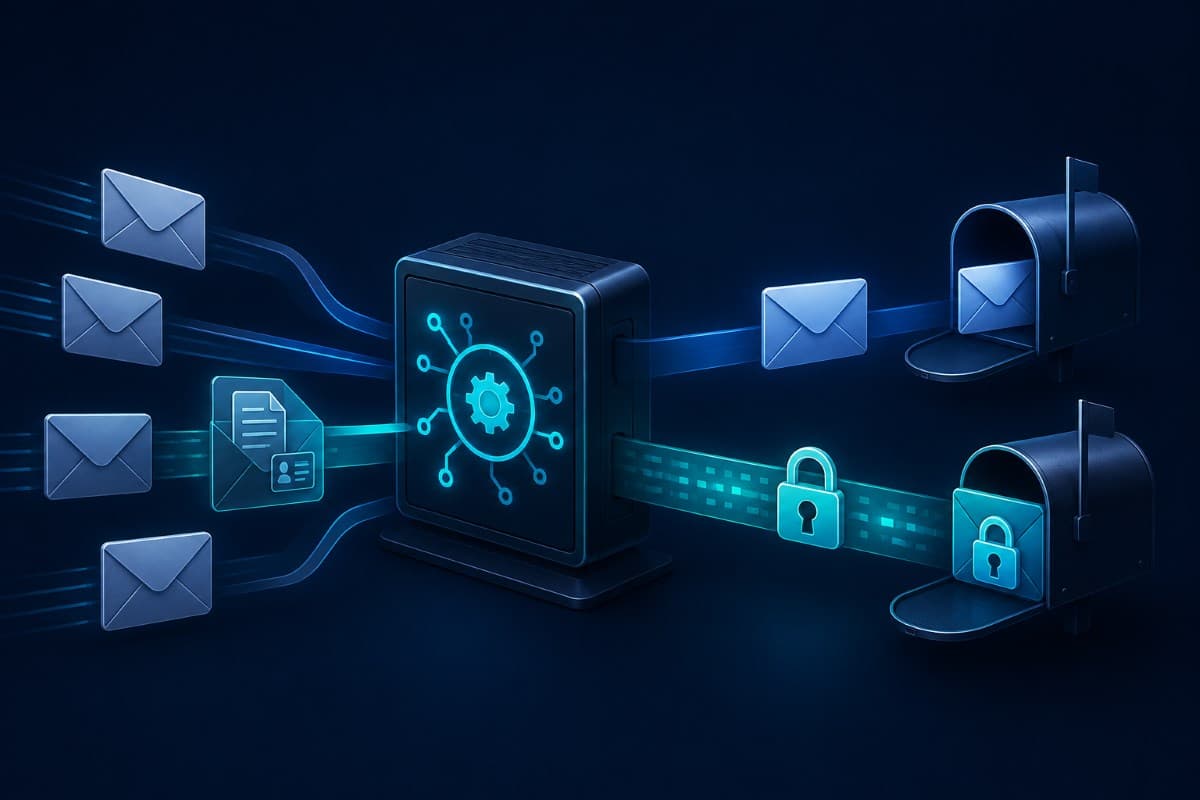
Most business email platforms can apply encryption automatically based on content patterns, detecting things that look like account numbers or identifiers, or based on recipient domain and message classification. Configuring these rules moves the decision from individual judgment to a system, which is the same principle behind any well-run email security configuration.
Rules Need Tuning, Not Just Enabling
Automatic rules set too broadly encrypt routine messages and generate the recipient friction described above; set too narrowly, they miss what they were meant to catch. Reviewing what the rules triggered on over the first month, and adjusting, is the step that separates a working configuration from one that gets switched off.
You May Already Be Paying for This
Message-level encryption is included in some business email subscription tiers and sold as an add-on in others, which means the first question is what your current plan already provides rather than what to buy.
Businesses on higher subscription tiers frequently discover they have had the capability for years without configuring it. Checking that before purchasing a separate product is a short conversation that occasionally makes the whole procurement question unnecessary.
Large Files Are a Different Problem
Email was never designed to move large files, and attachment size limits mean sensitive documents often get sent another way: a personal file-sharing link, a consumer cloud account, or a service nobody approved. That workaround usually undoes whatever the encryption policy achieved.
The fix is providing a sanctioned secure file transfer method alongside encrypted email, so the person with a large sensitive document has an approved option that is easier than improvising one. Businesses that address encryption without addressing this find the gap simply moves rather than closes.
What Encryption Does Not Protect Against
Worth being direct, because businesses sometimes buy this expecting broader protection than it provides. Encryption does not help if the message is sent to the wrong person, which is one of the most common ways sensitive information actually leaves a business.
It does not protect against a compromised sending account, since an attacker with access to the mailbox can send encrypted messages as easily as the legitimate user. And it does nothing about what the recipient does with the content once they have opened it legitimately.
Where This Fits in the Larger Picture
Encryption addresses one specific risk well and should sit alongside the controls handling the others: authentication strong enough that accounts are hard to compromise, retention rules governing how long messages persist, and training so people recognize when a message contains something that needs care. Treating encryption as the whole answer to email risk is the common mistake, and it belongs inside a broader set of cybersecurity solutions rather than standing alone.
Encrypt the Messages That Matter, Properly
Most businesses already have transit encryption and assume it covers more than it does. The useful next step is not encrypting everything; it is identifying the specific categories of message that genuinely need message-level protection, configuring rules to catch them automatically, and choosing a system whose recipient experience your clients will really tolerate. Email encryption done this way gets used. Done as a blanket policy, it gets worked around.
For businesses in the region, a partner providing IT support in Simi Valley can identify which of your messages truly need this and configure the rules to catch them.
Companies across the metro can get the same locally through managed IT services in Los Angeles, including a look at the recipient experience before you commit to a platform.
Frequently Asked Questions
Almost certainly in transit, which protects the message while it travels between mail servers and is standard with business email providers today. That is different from message-level encryption, where the message itself stays protected after arrival so only the intended recipient can open it. Transit encryption protects the journey; the message still sits readable in the recipient's mailbox at the end of it.
Generally no. Encrypting everything creates recipient friction that staff and clients route around, which produces worse outcomes than protecting the smaller set of messages that really warrant it: patient information, financial identifiers, privileged legal material, and anything a regulation or contract specifically requires.
Because of the recipient experience. Message-level encryption usually requires the recipient to click through to a portal, create an account, or authenticate before reading. Clients tolerate this once or twice and then ask for messages to be sent normally. Before choosing a platform, ask to see exactly what a first-time recipient encounters on a phone, since that is where the friction is worst.
Sending to the wrong recipient, which is one of the most common ways sensitive information in fact leaves a business. It also does not help if the sending account itself is compromised, since an attacker with mailbox access can send encrypted messages as easily as the real user, and it has no effect on what a legitimate recipient does with the content after opening it.
If you are not certain which of your outgoing messages are genuinely protected after they arrive, GlobeVM can review what your current email encryption actually does and close the gap where it matters.
Comments
0 Comments