
Many business owners breathe a sigh of relief when they pass a cybersecurity audit. The report comes back clean, the checklist is satisfied, the compliance requirement is met, and security feels like a box that has finally been ticked. That relief is understandable, but it hides a hard truth: passing an audit is not the same as being secure. Attackers do not follow the checklist an auditor uses, and a clean report has never stopped ransomware, fraud, or a real breach on its own. A cybersecurity audit is a valuable starting point, but the work that protects your business happens in the months after the auditor leaves. This guide explains what an audit covers, how it differs from an assessment or a penetration test, and what real security beyond the audit looks like.
What a Cybersecurity Audit Tells You
A cybersecurity audit is a formal review of your security controls, policies, and practices, usually measured against a framework or a regulation, to identify gaps and confirm that required protections are in place. Done well, an audit is useful. It surfaces weak procedures, inconsistent practices, and gaps that might otherwise go unnoticed, and it encourages staff to follow security practices more carefully. It gives you a clear, structured picture of where your security stands and helps you understand where your risks are. None of that should be dismissed, because a business with no idea of its own weaknesses is in a worse position than one that has had them mapped out.
What a cybersecurity audit covers
Scope depends on the framework or regulation behind the audit, but most audits of a small or mid-sized business look at the same core areas. The table below works as a checklist for what to expect, and for what to gather before the auditor arrives.
| Area | What the auditor checks |
|---|---|
| Asset inventory | A current list of devices, software, cloud services, and where sensitive data lives |
| Access and identity | Who has which accounts and admin rights, multifactor authentication coverage, and how departing staff are removed |
| Patching and vulnerabilities | Update status of systems, recent scan results, and how quickly critical fixes are applied |
| Network and email security | Firewall rules, remote access, Wi-Fi separation, and email filtering |
| Data protection and backups | Encryption, retention, backup copies, and whether restores are tested |
| Logging and monitoring | Whether security events are recorded, reviewed, and alerted on |
| Policies, training, and vendors | Written policies, security awareness training, and agreements with outside providers |
| Incident response | A written plan, who does what, and whether the plan has been practiced |
Audit, assessment, or penetration test?
These terms get used interchangeably, but they answer different questions, and buying the wrong one is a common and expensive mistake. Our guide to what an IT assessment includes covers the broader review many businesses need first.
| Review | Question it answers | How it works | What you get |
|---|---|---|---|
| Cybersecurity audit | Do our controls meet a defined standard? | Reviews policies, settings, and evidence against a framework or regulation | Findings measured against that standard |
| Risk assessment | Where are we most likely to be hurt, and how badly? | Identifies threats, weaknesses, and business impact | A prioritized list of risks |
| Vulnerability scan | Which known weaknesses exist right now? | An automated tool checks systems for missing patches and misconfigurations | A list of vulnerabilities ranked by severity |
| Penetration test | Could an attacker get in, and how far? | A tester tries to break in, within agreed rules | Proof of what could be exploited and how |
Why an audit is only a snapshot
The limitation is in what an audit fundamentally is: a snapshot. It captures the state of your security on the days it was conducted, against the threats known at that time. The moment it is finished, reality keeps moving. New software is installed, settings are changed, staff come and go, and new attack methods appear. A clean audit describes a particular Tuesday, not the state of your defenses three months later. Understanding this is the difference between treating an audit as a finish line and treating it as one input into a continuous process. A proper view of compliance and risk management uses the audit as a checkpoint, not as the goal itself.
Why a Clean Audit Does Not Mean You Are Secure
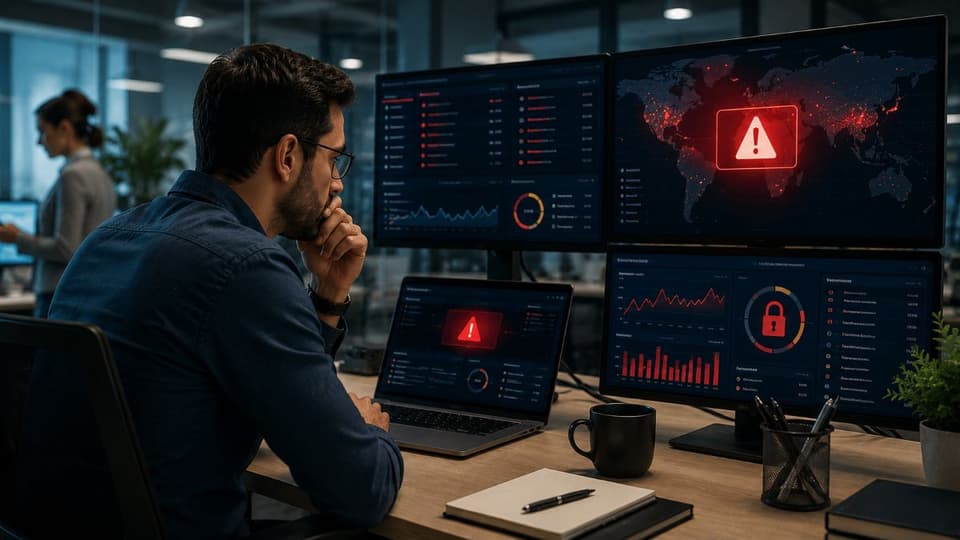
Several specific gaps sit between passing an audit and being protected, and they are worth naming because they explain real breaches. The first is drift. A setting that was correct and compliant during the audit can slip into an insecure state shortly afterward, often through a routine change made days later. A cloud storage area that was locked down for the auditors can be opened up by an ordinary update, and nobody notices until an attacker does. The audit certified a configuration that no longer exists. This kind of quiet drift is one of the most common ways organizations that look compliant on paper end up exposed in practice.
The second gap is the difference between how people behave during an audit and how they behave the rest of the year. While the auditor is watching, staff follow the rules carefully, close unnecessary access, and stick to protocol. Once the audit is over, old habits return: personal devices reconnect, convenient shortcuts are switched back on, and unapproved tools creep back in. The third gap is that an audit tests against known threats, while attackers are constantly developing new ones. A framework written to check for yesterday’s risks will not catch a method invented next month. These gaps are why even large organizations holding respected certifications have suffered serious breaches, because their controls existed on paper but not consistently in daily practice.
Compliance as a Floor, Not a Ceiling
Part of the problem is a subtle distortion that compliance can create. When passing an audit becomes the objective, effort naturally flows toward the controls that are easiest to document and that an auditor can verify, rather than toward the protections that an attacker is most likely to exploit. Security starts being shaped by what looks good in a report instead of what stops an intrusion. Compliance frameworks are useful, since they set a baseline and create accountability, but they describe a minimum standard of care. When the minimum becomes the goal, a business falls behind attackers who operate continuously and without any regard for scope or checklists.
The healthier way to think about it is that compliance should be a product of strong security, not the engine that drives it. If you build real, continuous protection, passing audits becomes a natural byproduct, because your controls work all the time rather than only on inspection day. The right question shifts from whether you had the right controls during the audit to whether your controls are working right now, everywhere, every day. That reframing is the foundation of everything that comes after the audit, and it is why real managed cybersecurity is built around ongoing protection rather than periodic certification.
California now requires audits for some businesses
Regulations under the California Consumer Privacy Act took effect on January 1, 2026, and they make an annual cybersecurity audit by a qualified, independent auditor mandatory for businesses whose handling of personal information presents significant risk. In practice that means businesses covered by the CCPA that earn half or more of their revenue from selling or sharing personal information. It also covers those above the CCPA revenue threshold, about $26.6 million, that process personal information of 250,000 or more consumers or households, or sensitive information of 50,000 or more.
The first certifications are due April 1, 2028 for businesses with more than $100 million in revenue, April 1, 2029 for those between $50 million and $100 million, and April 1, 2030 for smaller businesses that meet the criteria. Most small practices and firms in the Los Angeles area are likely to fall below these thresholds. Even so, the areas the rule asks auditors to examine are a sensible benchmark for any California business that holds customer data.
What Real Security Looks Like After the Audit
The first step beyond the audit is the most obvious and the most often skipped: act on the findings. An audit report is only valuable if its recommendations are carried out, tracked, and confirmed as fixed, yet many reports are filed away and forgotten until the next cycle. Closing the gaps the audit identified, and verifying that they stay closed, is where the audit’s value is realized. Everything else builds on this, because there is little point in continuous protection layered over weaknesses the business already knows about but never addressed.
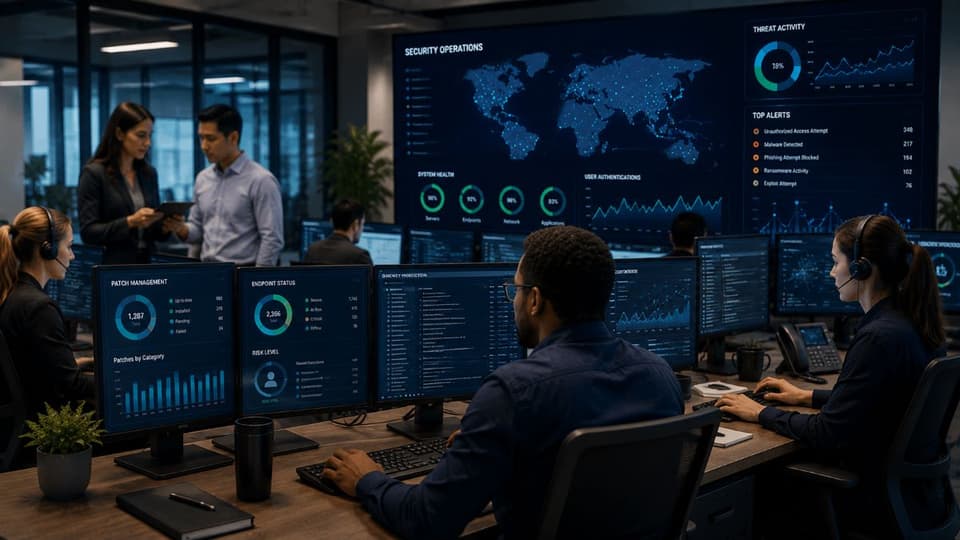
The next step is continuous monitoring in place of periodic checking. Rather than waiting a year to look again, security needs to be watched constantly, so that drift, new weaknesses, and active threats are caught as they appear rather than long after. This is the role of continuous threat detection, which keeps an eye on systems between audits and catches the problems a once-a-year review never could. Alongside monitoring, weaknesses need to be found and fixed on a continuous basis through regular scanning and prompt patching, so that the time a known hole stays open is measured in days rather than months.
Identity is where much of the real defense lives. Verizon's 2025 Data Breach Investigations Report found that credential abuse was the way in for 22 percent of breaches, just ahead of exploited vulnerabilities at 20 percent, and a control that exists only on paper offers no protection here. Strong authentication should be in place everywhere, without convenient exceptions, which is why phishing-resistant MFA matters more than almost any single item on an audit checklist. Closely related is limiting what any one account can reach, so that one compromised login does not open the whole business. Granting each person only the access their role requires and separating critical systems, the approach behind zero trust architecture, contains an attacker who does get in.
The Capabilities Audits Tend to Underweight
Some of the most important protections are ones a checklist can confirm exist while saying little about whether they work. Backups are the clearest example. An audit may verify that backups are configured, but a backup that has never been tested is not a recovery strategy, and businesses routinely discover their backups are unusable only when they try to restore during a crisis. Real protection means backups that are kept safe from tampering, tested regularly, and proven to recover within a realistic timeframe, so that when ransomware or a failure strikes, recovery is something you have confirmed rather than something you hope for.
Incident readiness is another capability that lives beyond the audit. It is not enough to have a written incident response policy that satisfies a requirement. The plan has to be practiced through tabletop exercises and realistic simulations, so that when a real event happens, people know their roles and act quickly instead of improvising under pressure. Verifying that defenses hold up against a realistic attack, rather than only against a checklist, is where a penetration test earns its place, because it probes how systems behave when someone is trying to break in. These capabilities turn a paper program into one that works when it is tested by reality.
People belong on this list as well, because an audit can confirm that security training exists without revealing whether it has changed how anyone behaves. A policy that staff clicked through once at the start of the year does little against a convincing phishing email months later, when the training is a distant memory. Real protection comes from training that is kept current as threats change and repeated often enough that careful habits stick, so the people in your business become a working line of defense rather than a documented checkbox. This work is unglamorous and continuous, and it fades the moment security becomes a once-a-year project. It is often the difference between a phishing email someone reports and one that succeeds because nobody recognized it.
Treating Security as Ongoing Work
The thread running through all of this is that security is a continuous practice, not an event with a finish line. Exceptions and accepted risks should be treated as temporary, monitored liabilities rather than permanent fixtures, because a legacy system left in place as an acceptable risk often becomes the very door an attacker walks through. The systems, staff, and vendors that make up your environment change constantly, and protection has to keep pace with that change rather than being recertified once a year and otherwise left alone. A business that internalizes this stops asking only whether it passed and starts asking whether it is protected today.
For most small businesses, building and sustaining this kind of continuous protection is more than an internal team can manage alone, which is where an experienced partner makes the difference. A provider offering managed IT services in Los Angeles can turn the findings of an audit into an ongoing program of monitoring, patching, identity protection, tested backups, and incident readiness. Security is then maintained rather than rediscovered each audit cycle. The audit tells you where you stand on one day; a continuous program is what keeps you standing the rest of the year.

From Passing to Protected
A cybersecurity audit is worth doing, and a clean result is worth having, but it is a beginning rather than an end. What it cannot do is keep you secure on its own, because attackers, systems, and settings keep changing long after the report is filed. Real security comes from acting on what the audit found and then maintaining protection continuously: monitoring constantly, patching promptly, locking down identity, limiting access, testing backups, and practicing your response. A business that pairs a regular cybersecurity audit with that ongoing discipline moves from passing to protected, which is the only result that matters when an attack comes. For companies in Woodland Hills, Encino, and the rest of the Valley, that ongoing work is part of our managed IT and security for San Fernando Valley businesses.
If you passed a cybersecurity audit but are not confident you are protected day to day, GlobeVM can turn those findings into a continuous security program that keeps working after the report is filed.