

If you have priced business laptops recently and wondered why the same machine costs noticeably more than it did a year ago, you are not imagining it. A global RAM shortage that began in late 2025 has pushed memory prices up faster than almost any component in modern computing history, and every device that contains memory, which is every device, is inheriting part of that increase.
This is not a story about gamers overpaying for parts. It is a supply problem that is quietly reshaping what business computers cost, how they are configured, and how long orders take to arrive. This guide explains what is actually happening, how long the pressure may last, and the specific moves a small or mid-sized business in the Los Angeles area can make to buy smart instead of buying scared.
What Is Causing the RAM Shortage
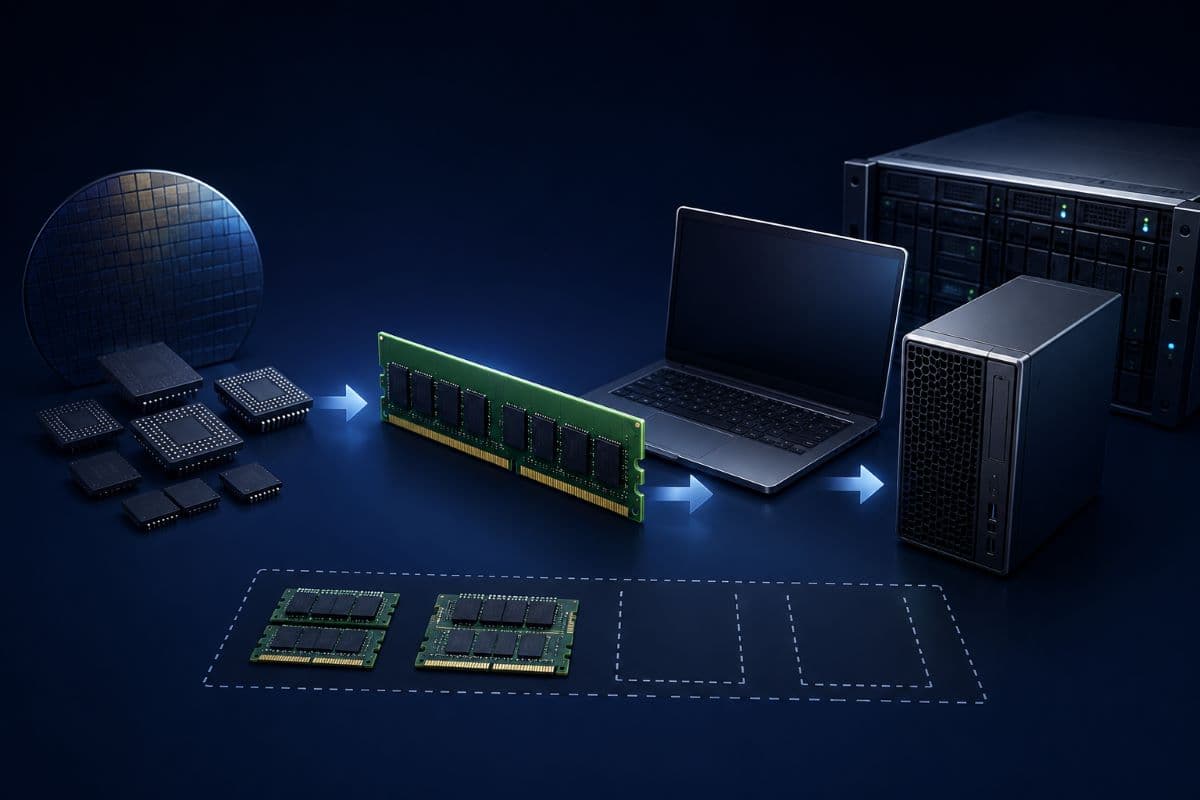
The short version: artificial intelligence data centers are consuming the world's memory supply. Training and running large AI models requires enormous amounts of specialized high-bandwidth memory, and the handful of manufacturers who produce nearly all of the world's memory chips, Samsung, SK Hynix, and Micron, have shifted production capacity toward those high-margin AI orders.
The scale of that shift is hard to overstate. One widely reported agreement tied a single AI infrastructure project to a substantial share of global memory chip output. When the largest buyers in the market are AI companies willing to pay premium prices, the capacity left over for ordinary laptops, desktops, and servers shrinks, and the price of what remains goes up.
The numbers reflect that squeeze. Industry price trackers recorded memory chip prices rising roughly 170 percent over the course of 2025, and prices have continued climbing through 2026, though the pace of increase has slowed. Storage has followed a similar path, because the same AI demand is pulling on flash memory used in solid state drives.
How the RAM Shortage Reaches Your Business
Your business does not buy memory chips, but it buys things built from them, and the increases have already moved through the supply chain. Major PC makers adjusted pricing months ago: Dell, for example, reportedly raised prices by 130 to 230 dollars on common 32 gigabyte configurations, and by several hundred dollars more on high-memory workstations, starting in late 2025.
Price is only the visible half. The quieter change is in configurations. Manufacturers are shipping entry-level machines with less memory than before, and specifications that used to be standard are becoming paid upgrades. A laptop that looks like last year's model at a similar price may simply contain less computer.
Here is where the pressure shows up across a typical business environment:
It Is Not Just New Computers
The same shortage affects the machines you already own. Upgrading memory in an existing computer, once the cheapest way to extend its life, has become one of the most expensive relative to history, with some standalone modules selling for several times their earlier prices. Replacement parts and spare inventory cost more, and quotes from vendors now tend to carry shorter validity windows because component costs move quickly.
Lead times deserve equal attention. High-memory configurations and servers can take longer to arrive than they did a year ago, which matters if you are planning around a fixed date such as an office opening in Thousand Oaks, a compliance deadline, or the end of a tax year.
How Long Will It Last
Nobody can promise a date, and the honest answer is that the people closest to the supply chain mostly expect this to run for a while. Intel has pointed to 2028 before conditions normalize. SK Hynix has reportedly said much the same. One module maker expects severe shortages into at least mid-2027, and one industry chairman has floated 2030. A former Samsung executive has offered the most optimistic view, suggesting prices could ease within a year.
Two nuances matter for planning. First, the rate of increase has been slowing through 2026 as ordinary buyers push back on prices, so the situation is stabilizing at a high level rather than spiraling. Second, there have been brief periods where certain memory prices dipped meaningfully before climbing again, which means individual quotes can vary a lot week to week. Plan for elevated prices through at least 2027, and treat anything better as a pleasant surprise.
A Buying Playbook for the Next Twelve Months
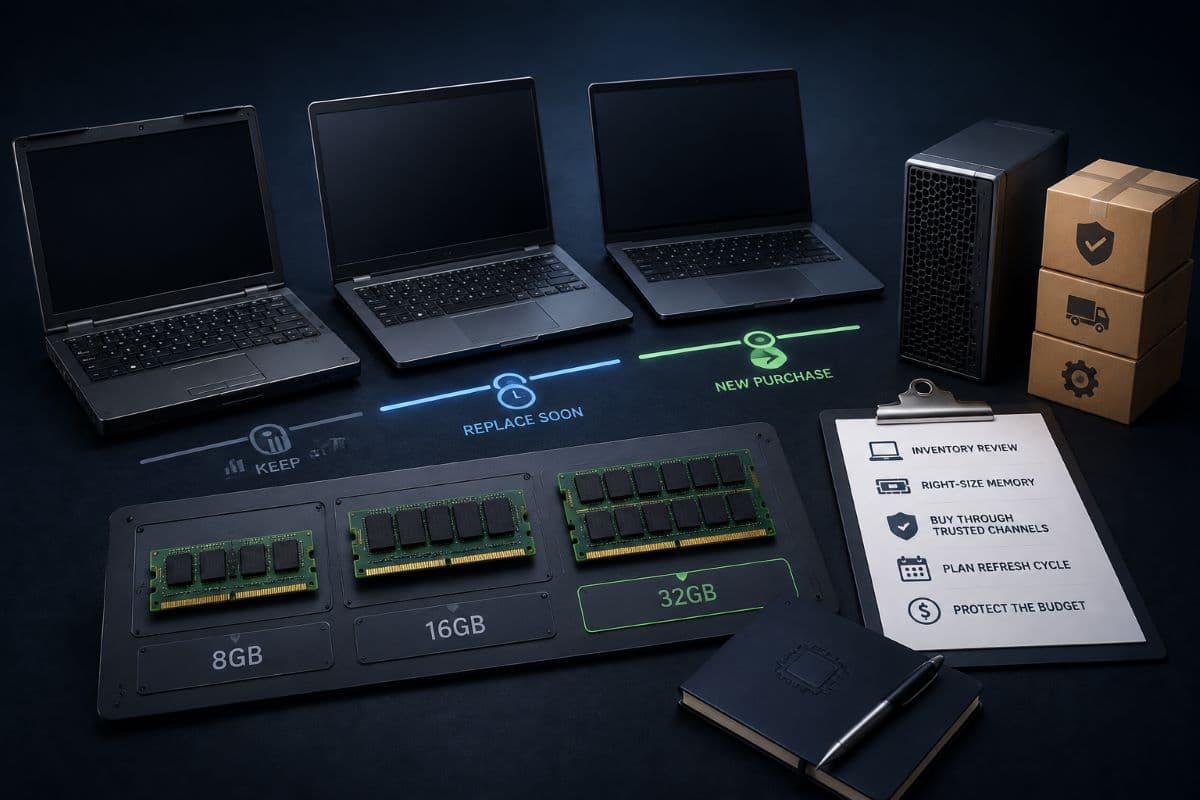
The wrong responses to a shortage are panic buying and total paralysis. The right response is to make your normal decisions earlier and with better information. That starts with knowing exactly what you own: the age, specification, and condition of every machine, so replacements are chosen on facts instead of guesses. Businesses still carrying computers affected by the end of Windows 10 support face a double reason to act, since those machines need replacing regardless of what memory costs.
Pull Planned Purchases Forward, Within Reason
If a machine was going to be replaced in the next two or three quarters anyway, replacing it sooner is usually the better bet while forecasts point to continued elevated prices. That is different from stockpiling hardware you have no plan for, which ties up cash and ages on a shelf. The dividing line is simple: accelerate what was already justified, and skip what was not.
Right-Size Memory at Purchase Time
Because adding memory later has become disproportionately expensive, the specification you choose on day one matters more than it used to. For most office workloads, 16 gigabytes remains workable, but users who live in large spreadsheets, design tools, or heavy multitasking are better served buying 32 gigabytes up front than paying painful upgrade prices in two years. Spending a little more per machine now to avoid a much worse upgrade later is one of the few clean wins this market offers.
Buy Through Channels You Trust
Shortages attract fraud. The consumer memory market has seen documented scams, including counterfeit modules and bait-and-switch listings, and gray-market inventory carries real warranty risk. Business purchases belong with authorized distributors and established vendors, where a bad module is a support ticket instead of a loss. Sound managed IT services include procurement through vetted channels for exactly this reason.
Protect the Budget, Not Just the Purchase
Rising and unpredictable hardware costs are exactly the kind of thing that produces surprise IT bills when replacements are handled reactively, one emergency at a time. A staggered refresh plan spreads the cost across quarters, keeps any single month manageable, and gives you room to time purchases around better quotes. Quotes themselves deserve attention too: with shorter validity windows, an approved purchase should be executed promptly rather than left waiting for a signature.
Get the Plan Reviewed Before You Spend
A one-time review of your device inventory, refresh schedule, and pending purchases will almost always find money: machines worth keeping another year, machines that should not wait, and specifications that no longer match how people actually work. That kind of planning conversation is the core of good IT consulting, and in a market like this one it pays for itself quickly. Year-end tax treatment of equipment purchases can also offset part of the increase, which is worth raising with your accountant before the fourth quarter.
Is Moving to the Cloud a Way Around This?
It is tempting to read all of this and conclude that owning hardware is the problem, and that shifting work to the cloud sidesteps the shortage entirely. The honest answer is only partly. Cloud providers buy memory in the same squeezed market, and their AI buildouts are in fact the demand driving it, so cloud pricing is not immune to these costs over time.
What the cloud genuinely changes is the shape of the spending. Instead of a capital spike every time a server ages out, you pay a monthly fee and the provider absorbs the procurement problem, the lead times, and the component pricing. Approaches such as virtual desktops can also stretch the life of modest office machines, because the demanding work runs in the data center while the device on the desk mostly displays it.
The right way to decide is workload by workload, not headline by headline. A migration that made sense before the shortage still makes sense now, and one made in a panic usually costs more than the hardware it avoided.
Frequently Asked Questions
Because AI data centers are buying an enormous share of the world's memory production, and manufacturers have shifted capacity toward those high-paying orders. Less supply is left for regular computers, and the remaining chips cost more. The increase began in late 2025 and has continued through 2026, with industry trackers recording one of the sharpest memory price runs on record.
Forecasts from manufacturers and analysts mostly point to elevated prices into 2027 or 2028, with one optimistic view suggesting relief within a year and one pessimistic estimate stretching to 2030. The pace of increases has slowed through 2026, but slower increases are still increases. A reasonable planning assumption is that prices stay elevated through at least 2027.
If a replacement was already justified for the next few quarters, buying sooner is generally the better bet while prices remain on an upward path. If a machine is healthy and meets its user's needs, there is no reason to replace it early just because of headlines. Accelerate planned purchases, skip speculative ones, and consider buying more memory per machine than you would have a year ago, since upgrading later has become expensive.
Yes. The same AI demand is pulling on flash memory, so solid state drives have risen too, and graphics processors have seen supply pressure of their own. Servers feel the effect most, since memory and storage make up a large share of their cost. In practice, almost any hardware quote your business receives in 2026 reflects some part of this squeeze.
Partly. Cloud services shift hardware costs into a monthly fee and hand the procurement and lead-time problems to the provider, and virtual desktops can extend the life of modest office machines. But cloud providers buy memory in the same market, so their pricing carries the same pressures over time. Treat cloud moves as workload decisions rather than a shortage escape, and expect them to change the shape of the cost more than the size of it.
The RAM shortage was created by forces far outside any small business's control, but its impact on your budget is very much within your control. The businesses that come through this well will be the ones that know their inventory, buy deliberately, and treat hardware as a planned expense instead of a recurring emergency, whether they operate in Los Angeles, Thousand Oaks, or anywhere in between. If you would like a clear picture of which of your machines are worth replacing before prices climb further, GlobeVM can review your inventory and build a refresh plan that fits your budget instead of the market's mood.
Comments
0 Comments