

Patients want to be texted. Appointment confirmations, arrival instructions, balance reminders, the channel they answer is the one in their pocket, and practices that use it see fewer no-shows and lighter phone queues. The catch is that the most convenient messaging channel on earth was never built for protected health information, and HIPAA compliant texting is therefore a phrase that needs unpacking before a practice sends its first message. The honest summary: ordinary SMS is not compliant by itself, texting patients is still absolutely achievable within the rules, and the difference lives in three places, what you send, how the patient chose it, and what platform carries it. This guide walks through all three, plus the staff-texting problem already happening inside most practices, and the policy moves that make the whole channel safe to keep.
Is Texting HIPAA Compliant? The Short Answer
Standard text messaging is not HIPAA compliant on its own, because SMS carries none of the safeguards the Security Rule expects for electronic protected health information: messages travel and rest unencrypted, copies persist on carrier systems and both handsets, there is no access control beyond whoever holds the phone, and no audit trail exists. But that is the beginning of the analysis, not the end. Practices can text patients compliantly through three doors: messages so limited in content that little or no protected health information is exposed, patient-requested texting honored after a documented risk warning, and secure messaging platforms that supply the missing safeguards. Most real programs use all three at once, and the three doors matter because they map to three failure stories regulators actually see: oversharing templates, undocumented preferences, and consumer apps doing clinical work.
Why Ordinary SMS Fails the Security Rule
It helps to see exactly where the gaps are, because they define what a compliant alternative must fix. In transit, SMS is not end-to-end encrypted, and messages traverse carrier infrastructure in readable form. At rest, the conversation persists indefinitely on both devices and in carrier records the practice does not control. Identity is assumed rather than verified: the practice cannot know who is reading the screen, and a wrong-number text discloses to a stranger. Nothing is logged in a way a compliance officer could review, nothing can be recalled or wiped from a lost phone, and nothing ties the message to the patient's record. Every one of those gaps is a Security Rule expectation, encryption, access control, audit, integrity, and every one is why the fixes below take the shape they do. The comparison that clarifies it: HIPAA compliant email solved these same gaps years ago with encryption, access rules, and vendor agreements, and texting is simply the same problem arriving on a smaller screen.
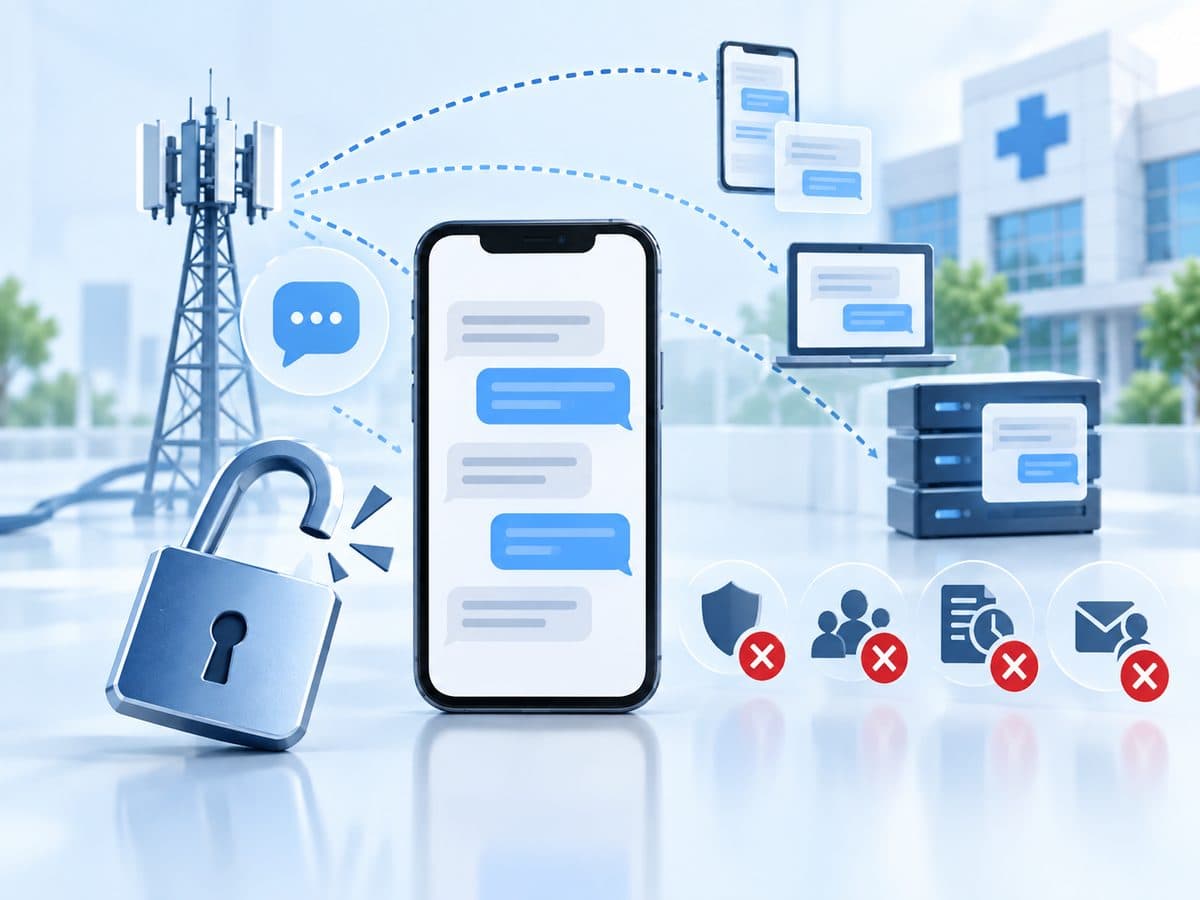
What You Can Text: Appointment Reminders Done Right
Appointment reminders are permitted, they fall under treatment and health care operations, and no authorization is required to send them, but the minimum necessary principle governs what they may contain. The safe recipe is deliberately boring: the patient's first name, the date and time, a generic practice name, and a callback number. What stays out is anything that reveals health condition or care detail: no diagnosis, no test results, no procedure names, no medication references, and, the nuance practices miss, no practice name that itself discloses a condition. A reminder from a generic medical office is one thing; a text from an oncology, fertility, or behavioral health clinic discloses something sensitive by its sender line alone, which argues for a neutral sending identity in those specialties.
The same logic extends to the other routine messages worth sending: arrival and parking instructions, generic recall notices asking the patient to call and schedule, and balance-due notices without service detail. The pattern is consistent: the text is a doorbell, and the substance waits behind an authenticated door, a phone call, the portal, or a secure thread. A quick self-test: read the draft aloud and ask what a stranger at a bus stop would learn about the patient; if the answer is anything clinical, the template needs surgery. Recall and results messages deserve the same review, because "your results are ready" is fine while "your biopsy results are ready" is a disclosure, and the gap between them is one careless word.
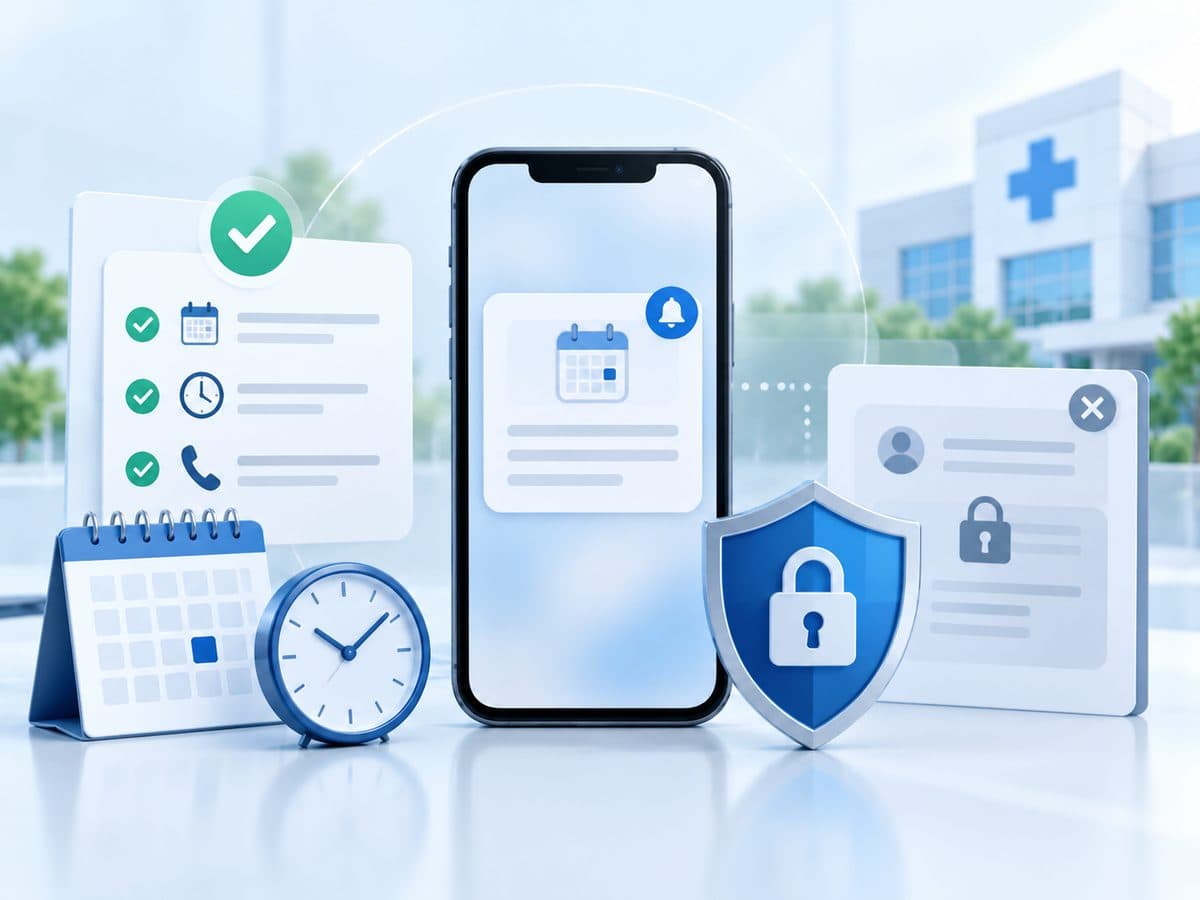
The Patient-Choice Rule Most Practices Underuse
HIPAA respects patient preference. Individuals can request to receive communications by a channel of their choosing, including standard text, and a practice may honor that request even though SMS is unsecured, provided the patient was warned of the risk and the choice is documented. Done properly, this becomes a consent workflow at intake and in the portal: a plain-language line explaining that standard texting is not secure, a checkbox capturing the patient's election, a record of it in the chart, and an easy way to revoke. Two boundaries keep it honest. The election belongs to the patient, so the practice cannot default everyone into unsecured texting and call it choice. And the warning must be real, dated, and retrievable, because in any later dispute the documentation is the difference between honoring a right and ignoring a rule. Practices around Thousand Oaks and everywhere else fail this in the same spot: the checkbox exists, the warning language is fine, and the signed record cannot be produced two years later when it matters.
One more layer applies to the texting itself, separate from HIPAA entirely: federal telecommunications rules under the TCPA govern automated texting, so the program also needs the patient's consent to receive texts at that number, honored opt-outs on every message, and a clear line between treatment-related messages and anything promotional, which requires stricter written consent. A practice that captures phone consent at intake and stops on request satisfies the ordinary case; a practice that texts marketing without written consent has traded a privacy problem for a telecom one. Short codes and toll-free texting numbers add carrier registration requirements of their own, one more reason the reminder platform should be a vetted vendor rather than a spare cell phone at the front desk.
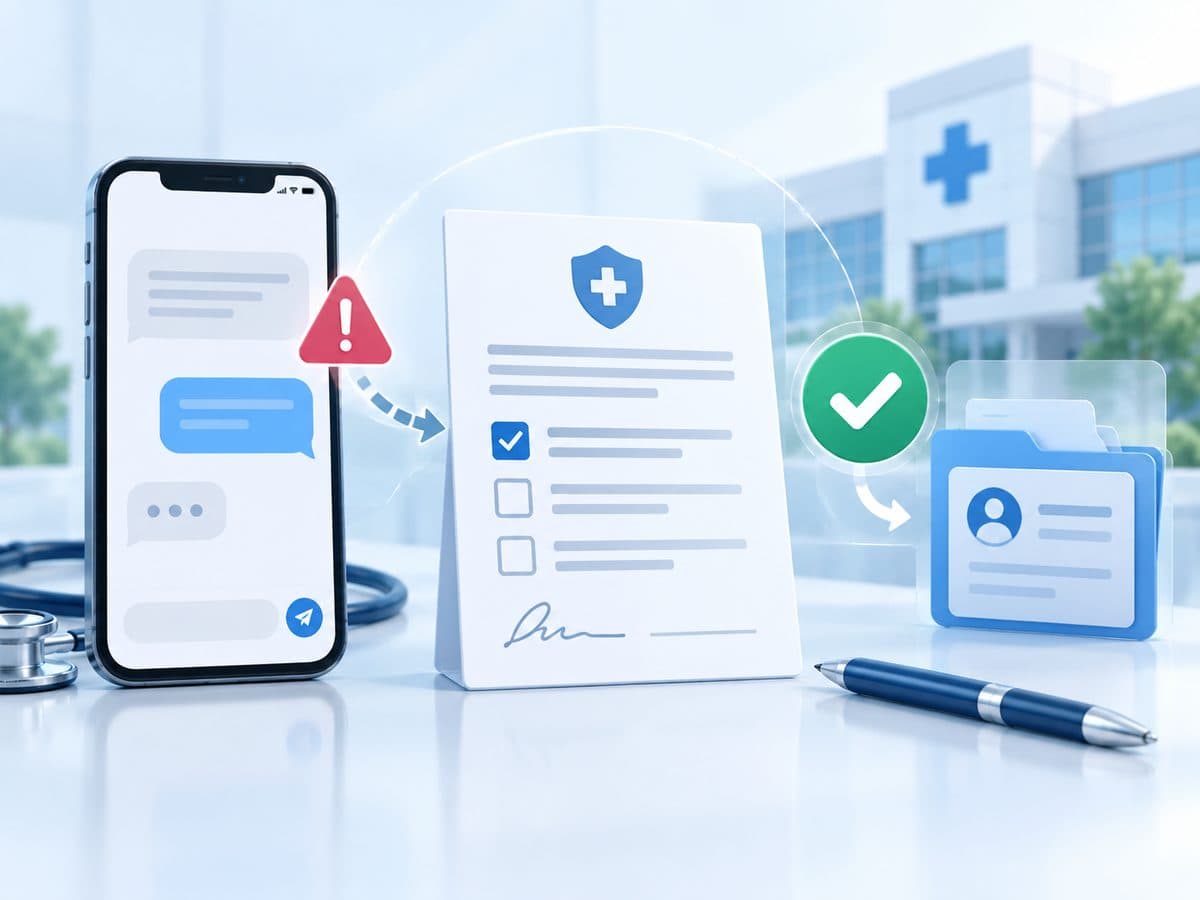
What Makes a Texting Platform HIPAA Compliant
For everything richer than a doorbell message, results, clinical instructions, photos, real conversation, the channel has to supply the safeguards SMS lacks, which is the job of secure messaging platforms. The checklist that separates a compliant platform from a chat app is specific: encryption in transit and at rest; individual authenticated accounts rather than a shared phone line; role-based access; audit logs of who sent, read, and exported what; remote wipe and session timeout for lost devices; message retention controls aligned to the practice's policy; and, non-negotiably, a signed business associate agreement from the vendor, because a platform handling your patients' information without a BAA is itself the violation, whatever its encryption brochure says. That checklist is also the working definition of HIPAA compliant texting: not a special phone, but ordinary safeguards applied to an informal channel. That last test is also the quickest way to sort the consumer apps: iMessage, WhatsApp, and their peers offer no BAA and no practice-level controls, and they are not compliant channels for patient information regardless of their encryption marketing.
Well-run programs pair the platform with the doorbell pattern: the automated reminder goes as a limited-content standard text, and anything substantive rides the secure channel or the portal, with the patient's experience kept as close to ordinary texting as the platform allows. Many practices anchor this on the messaging built into their EHR or their cloud phone platform, which keeps threads tied to the record and the phone number patients already know.
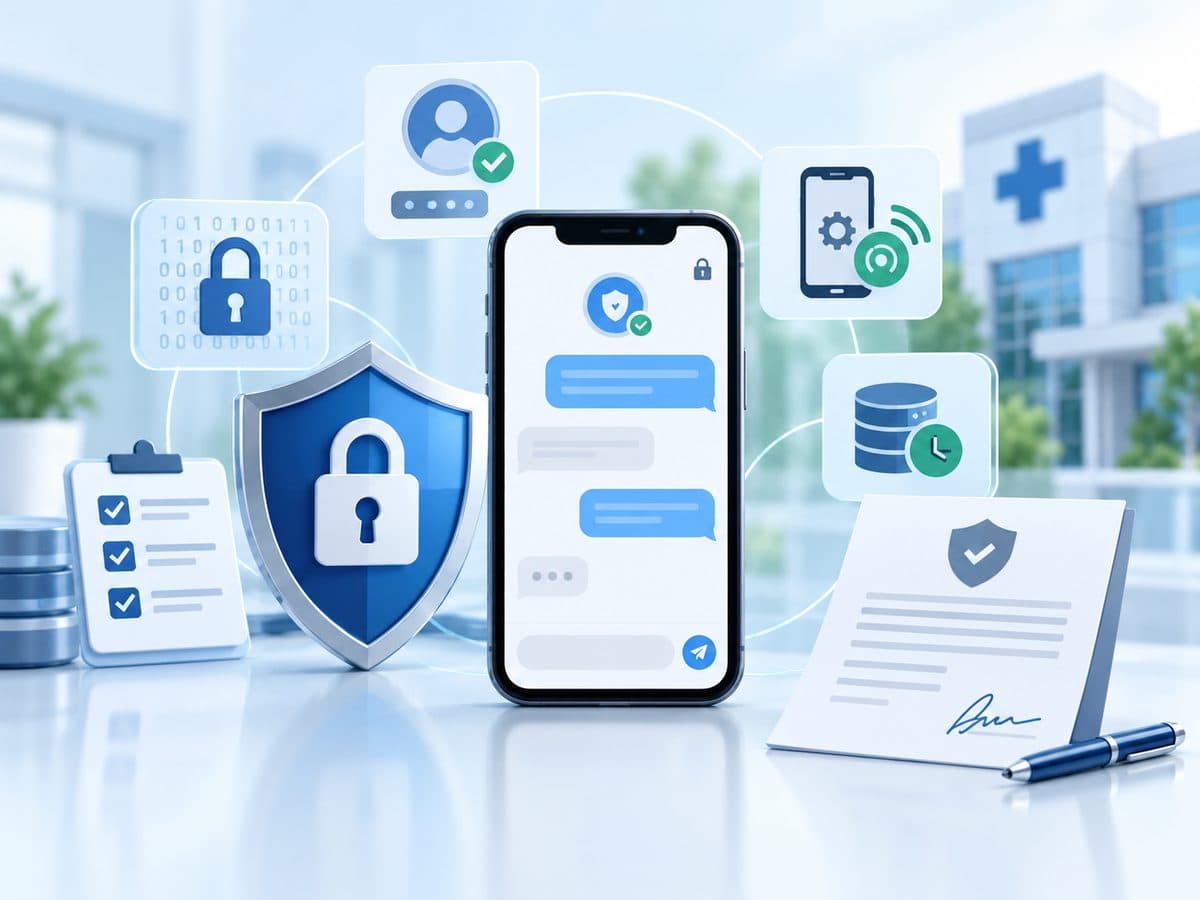
It is worth knowing where the rules are heading. The pending update to the Security Rule proposed in early 2025 would make encryption of health information mandatory rather than flexible, along with required multifactor authentication; it has not been finalized, with federal timelines now pointing toward 2027, but the direction is unambiguous, and platforms chosen today should already meet the bar the proposal describes.
The Staff Texting Problem Already in Your Practice
The riskiest texting in most practices is not patient-facing; it is the clinical shorthand flying between staff on personal phones. A room number and a last name, a photo of a wound, a quick question about a med, each is protected health information on an unsecured personal device, outside any audit trail, surviving employee departures and phone upgrades. The fix is not a memo against convenience; it is replacing the channel: a secure messaging platform for all clinical communication, on managed profiles where personal devices are used, with the explicit policy that patient information never rides personal SMS, and the realistic acknowledgment that staff will use whatever is fastest, so the compliant channel has to actually be fast; speed is a compliance control here, not a luxury. Departures belong in the same policy: when someone leaves, platform access ends the same day, and any patient threads they carried stay with the practice rather than leaving in a pocket. This is also where HIPAA-focused staff training proves its worth, because the workforce is not being careless; it is being efficient in a channel nobody replaced. Fix the channel and the behavior follows on its own.
A Practice Playbook for Compliant Texting

- Write the channel policy. What may go by standard text, what requires the secure platform, and the absolute rule for personal SMS.
- Build the consent workflow. Texting consent and the unsecured-channel warning at intake and in the portal, documented, revocable, honored.
- Template the doorbell messages. Approved reminder and notice templates with the minimum necessary content, so nobody improvises disclosure.
- Deploy the secure platform with a BAA. Individual accounts, audit logging, remote wipe, and retention configured before the first message.
- Kill the shadow channel. Move staff clinical chatter onto the platform and make the policy explicit.
- Train briefly and concretely. Show the real examples: the reminder that says too much, the wrong-number text, the wound photo on a personal phone.
- Review twice a year. Sample the logs, refresh templates, confirm departures lost access, and fold texting into the practice's risk analysis alongside the rest of a HIPAA compliance program.
Frequently Asked Questions
If your reminders go out over plain SMS with nobody quite sure what they say, or your staff group chats would not survive an audit, a focused review of your messaging channels is the fastest route to HIPAA compliant texting that patients like and a compliance officer can defend.
Comments
0 Comments