A partner is in trial prep at nine on a Sunday night, the document management system will not open the exhibit folder, and the firm's IT company answers Monday at eight. Every attorney who has lived a version of that evening already understands why IT support for law firms is a specialty and not a commodity. A law practice runs on confidentiality obligations, court deadlines that do not move, and a handful of systems whose failure stops billable work cold, and a support provider who has never carried those constraints will learn them at the firm's expense.
Choosing IT Support for Your Law Firm: What Actually Matters

By George
20 September 2026

This guide covers what makes supporting a law practice genuinely different, what a firm-ready support arrangement includes, the questions that expose whether a provider knows this world. And the honest way to think about models and cost before anything gets signed.
Why Law Firm IT Support Is Its Own Discipline
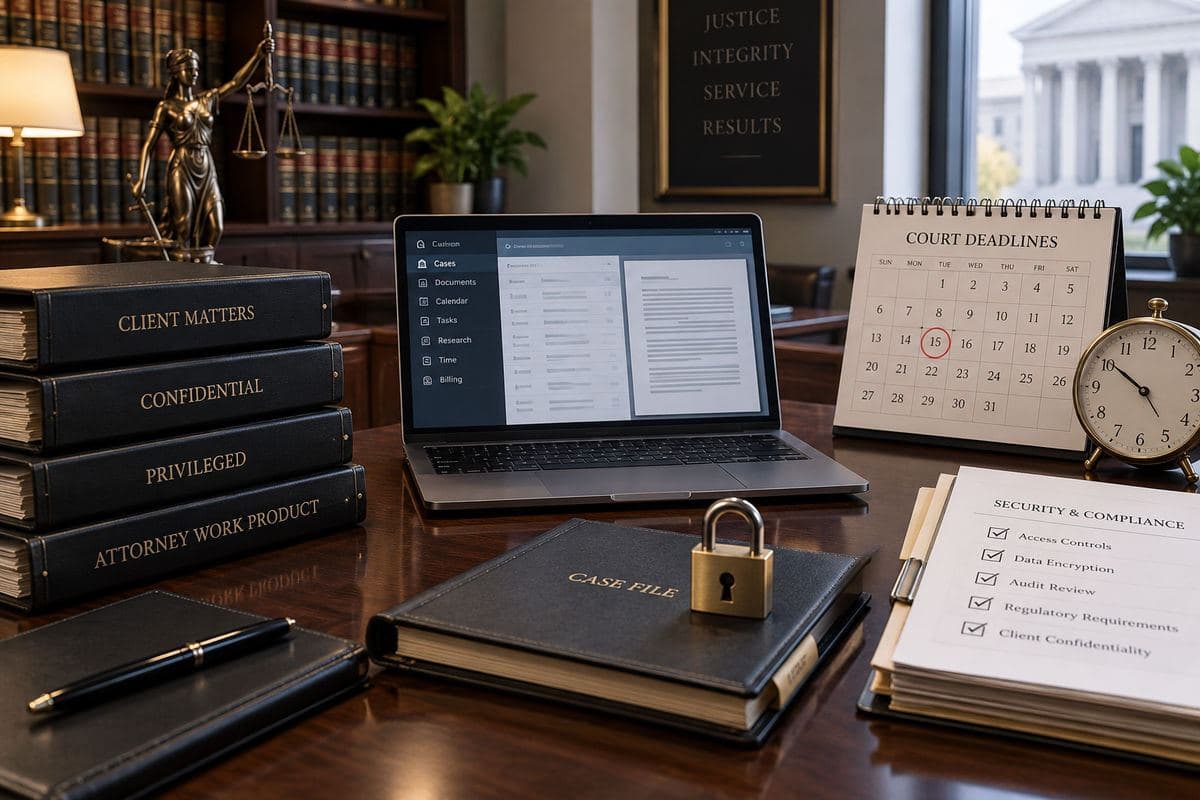
Three conditions separate a firm from an ordinary office of the same headcount. First, the data is privileged: client files are not merely confidential business records, they sit under attorney-client privilege and the duty of confidentiality, which means every technical decision, from where files sync to who can read a mailbox, carries an ethical shadow. Second, deadlines are absolute: a filing cutoff, a discovery deadline, or a closing does not reschedule because a server hiccupped, so downtime in a firm converts directly into professional risk, not just lost hours. Third, the software stack is legal-specific: document management, practice management, time and billing, e-filing portals, and research platforms, each with its own vendor, its own quirks, and its own way of stopping the day when it misbehaves.
There is also a fourth condition that surprises firms the first time it appears: clients now audit their law firms. Corporate clients send outside counsel guidelines and security questionnaires before sending work, and the firm's answers about encryption, access control, and incident response are read by people who decide where the next matter goes. The bar has weighed in as well, and the expectations in the ABA cybersecurity guidelines make technology competence part of professional competence, not an optional extra.
What Good Law Firm IT Support Includes
Support that understands billable time
The first difference shows up in how problems get handled by the day-to-day help desk. A firm-literate desk knows that an attorney calling at 4:40 before a filing is not a routine ticket, understands the difference between the DMS being slow and the DMS being down, and resolves issues remotely without asking a paralegal to troubleshoot for forty minutes of unbillable time. Response commitments should be written in the agreement with a separate, faster tier for the systems that stop casework, and a firm running evening and weekend crunches needs coverage that matches how litigation actually behaves, not office hours on a brochure.
Confidentiality engineered into the systems
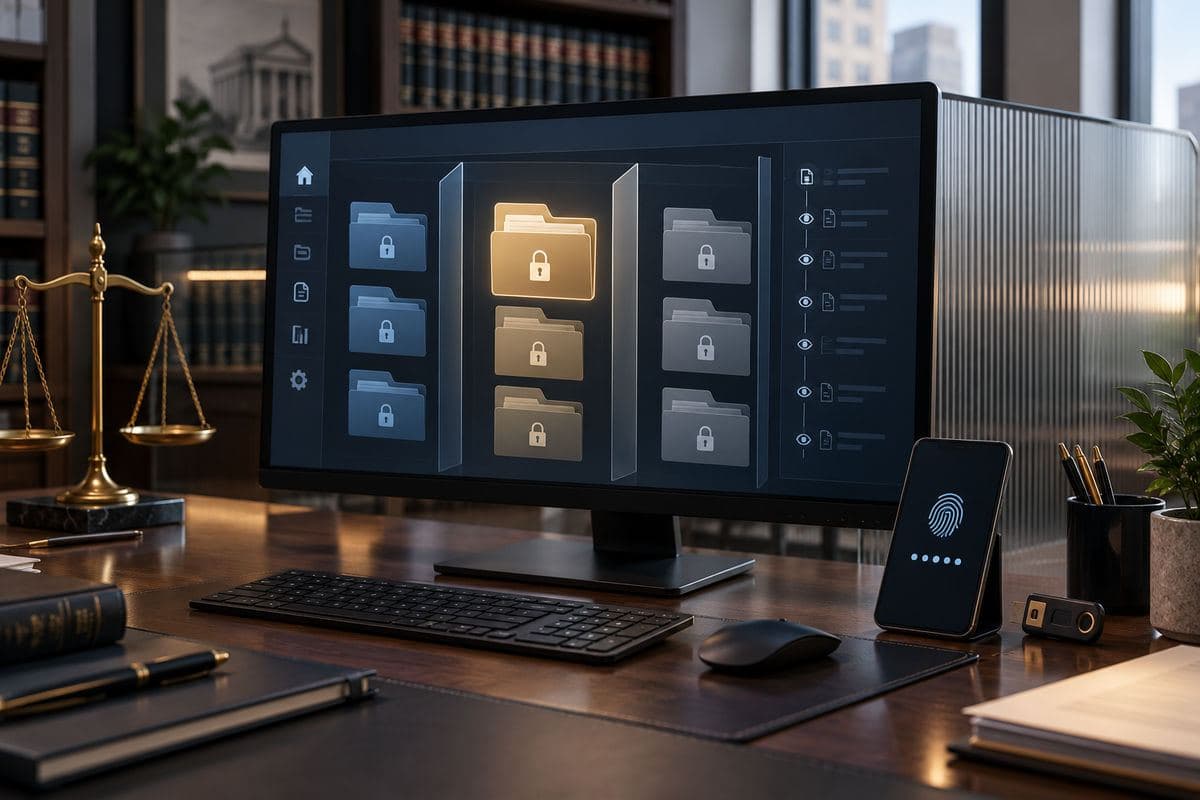
In a firm, access control is an ethics requirement wearing a technical costume. Good support builds and maintains ethical walls when conflicts require them, restricts matter files to the teams working them, ties those restrictions to the firm's conflicts screening so a wall raised by the ethics process is enforced by the systems the same day, enforces multi-factor authentication everywhere client data can be reached. And keeps an audit trail that can show who touched what.
Mobility gets the same treatment: attorneys work from courthouses, homes, and airports, so laptops are encrypted, phones are managed, and remote access runs through a controlled path rather than whatever tool someone installed during a deadline. The everyday movement of documents deserves its own discipline too, and our guide to secure file sharing for law firms covers why email attachments and consumer links are the quiet leak in most practices.
The systems that stop billable work, engineered for uptime
Every firm has a short list of applications whose failure empties the timesheet: the document management system, practice management and calendaring, time and billing, and email. Firm-ready support maps that list, monitors it, keeps the servers or cloud tenants behind it healthy, and stages spare hardware for the components that matter. Just as important is the recovery story: versioned, tested data backup and disaster recovery that can restore a corrupted matter folder from this morning, not last week, because in litigation the difference between those two restore points can be the work product for an entire motion.
Deadline-aware change management
A generalist provider patches and reboots on its own schedule. A legal-literate one asks for the firm's calendar first, freezes changes ahead of trials and closings, and schedules maintenance around the rhythm of the practice. The e-filing portal deserves special respect here, because a browser update that breaks the court's upload page at 4:55 on a filing day is a story every litigator can finish. The same awareness applies to onboarding laterals and staffing up for a big matter: accounts, DMS access, and devices ready on day one, and access shut cleanly when someone leaves the firm, because a departed user with live credentials is both a security hole and a malpractice question waiting to be asked.
Evidence for the people who audit you
Client security questionnaires, cyber insurance applications, and bar-driven expectations all ask for the same thing: proof. A support relationship built for firms produces that proof as a byproduct, documented policies, access reviews, training records, and technical evidence, so the managing partner answers a fifty-question audit in an afternoon instead of a panicked week. The questionnaires cluster around the same domains every time, encryption, access control, training, incident response, and vendor management, and a provider who has answered them before knows the shape of the winning packet. Firms that handle regulated matter types, health records in medical malpractice work, payment data, or financial client information, inherit those frameworks too, and the provider should be able to speak to them without improvising.
The Questions That Separate Providers
Interviews reveal more than proposals, and the pattern to listen for is specificity: real systems, real timeframes, real firm clients. Six questions do the sorting:
- How many law firms do you support today, and will two of them take a reference call?
- Which document management and practice management platforms do you administer, and who on your team owns escalations with those vendors?
- What is your written response commitment when a system that stops billable work goes down, including evenings and weekends?
- How do you build and enforce ethical walls and matter-level access restrictions?
- Walk us through your last restore of a client file or matter folder: how old was the backup, and how long did recovery take?
- When our clients send security questionnaires, what documentation do you hand us, and how fast?
Vague answers to any two of these are a verdict. So is a proposal that never asks about your practice areas, your court calendar, or the platforms your attorneys live in, because a provider who did not ask will support the firm exactly that generically.
The wire that empties the trust account
One risk deserves its own paragraph because it ends firms: payment fraud aimed at trust and settlement funds. Attackers study closings and settlements, then send the convincing email that redirects a wire, and the money is unrecoverable within days. The defenses are procedural and technical together: callback verification on every banking change and disbursement instruction, confirmed on a number already on file, plus mailbox monitoring that flags the forwarding rules and lookalike senders these schemes depend on. A provider serving firms should raise this subject before you do; if they look puzzled, the interview is over.
Red Flags Worth Walking Away From
A few patterns reliably predict a painful relationship. A provider with no current law firm references would be learning privilege, deadlines, and DMS behavior on your matters. One response time for every client means your filing-day outage queues behind somebody's printer.
Hesitation about signing a confidentiality agreement, or vagueness about which of their staff can see client data, misunderstands the role entirely. And a first proposal that wants to replace your practice management or document system in month one is optimizing for the provider's preferred stack rather than the firm's continuity; good providers stabilize what exists and change deliberately, with the partners, not around them.
Models and Cost, Honestly
Firms land in the same three shapes as other professional practices, and headcount predicts the fit more reliably than practice area. Small firms most often pair an administrator or office manager with a fully managed provider that owns everything technical. Mid-sized firms with an internal IT person do well in a co-managed split where the employee keeps the attorney relationships and floor presence while the provider supplies security depth, after-hours coverage, and the specialist bench.
Larger firms need assigned teams and scheduled onsite presence. On cost, legal-literate support prices above generalist support for the same seat count, and the premium is the product: privilege-aware controls, deadline-aware operations, audit-ready documentation, and faster commitments on the systems that bill.
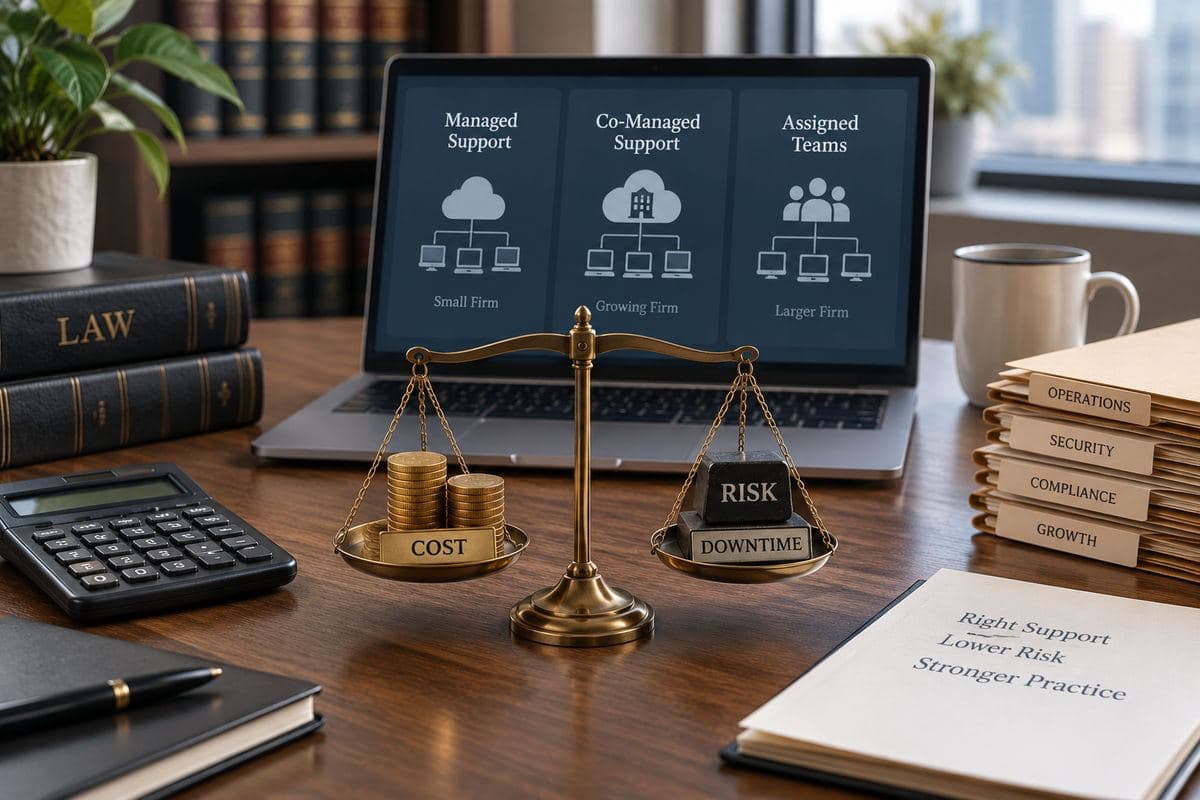
In the Valley and on the Westside alike, the seat-count math lands within a few dollars of the citywide ranges, so geography moves the number less than scope does. The honest comparison is scope against scope, and the honest baseline is what one hour of firm-wide downtime costs in unbilled time, a number every managing partner can calculate in one uncomfortable minute. We run these conversations with firms across Los Angeles every month, from two-attorney practices to multi-office litigation shops. And the firms happiest a year later are the ones that interviewed for legal literacy rather than shopping the lowest monthly number, which is the whole reason our IT support for law firms practice exists as its own discipline rather than a menu item.
Frequently Asked Questions
Beyond standard help desk and device management, it includes administration of legal-specific platforms such as document management and practice management, privilege-aware access controls and ethical walls, uptime engineering and fast response for the systems that stop billable work, deadline-aware maintenance scheduling, tested backup and recovery of matter files, and the documentation firms need for client security audits and insurance.
Three ways: the data sits under privilege and the duty of confidentiality, so access control is an ethics obligation rather than a preference; deadlines are absolute, so response and change management are built around the court calendar; and the software stack is legal-specific, so the provider must know the document and practice management world rather than learning it on your matters.
Yes, because the obligations do not scale down. A two-attorney firm carries the same confidentiality duty, the same filing deadlines, and increasingly the same client security questionnaires as a large firm, with less room to absorb a bad week. The interview questions above test for legal literacy at any size, and a strong generalist will fail them politely.
Six questions do the sorting: current firm clients with references, which legal platforms they administer and who owns vendor escalations, their written response commitment for billable-work outages including after hours, how they implement ethical walls and matter-level access, a walkthrough of their most recent client-file restore, and what documentation they provide when client security questionnaires arrive.
More than generalist support for the same headcount, because the scope is larger: privilege-aware controls, deadline-aware operations, legal platform expertise, and audit-ready documentation are the paid difference. Compare quotes scope against scope rather than total against total, and weigh both against what an hour of firm-wide downtime costs in unbilled attorney time.
Yes. A provider administering firm systems can see client information, so a written confidentiality commitment is baseline diligence, and for regulated matter types a formal agreement such as a business associate agreement may also be required. A provider who hesitates at confidentiality paperwork is telling you it has not internalized the role it is asking to play.
Choosing IT support for a law firm is ultimately a hiring decision about who stands next to the practice on its worst technology night, and the evaluation above finds that answer before the night does. If you would like it run against your own firm, book a firm IT review with GlobeVM, because the honest test of IT support for law firms is how it performs on the night that matters, and we would rather show you than tell you.
Comments
0 Comments