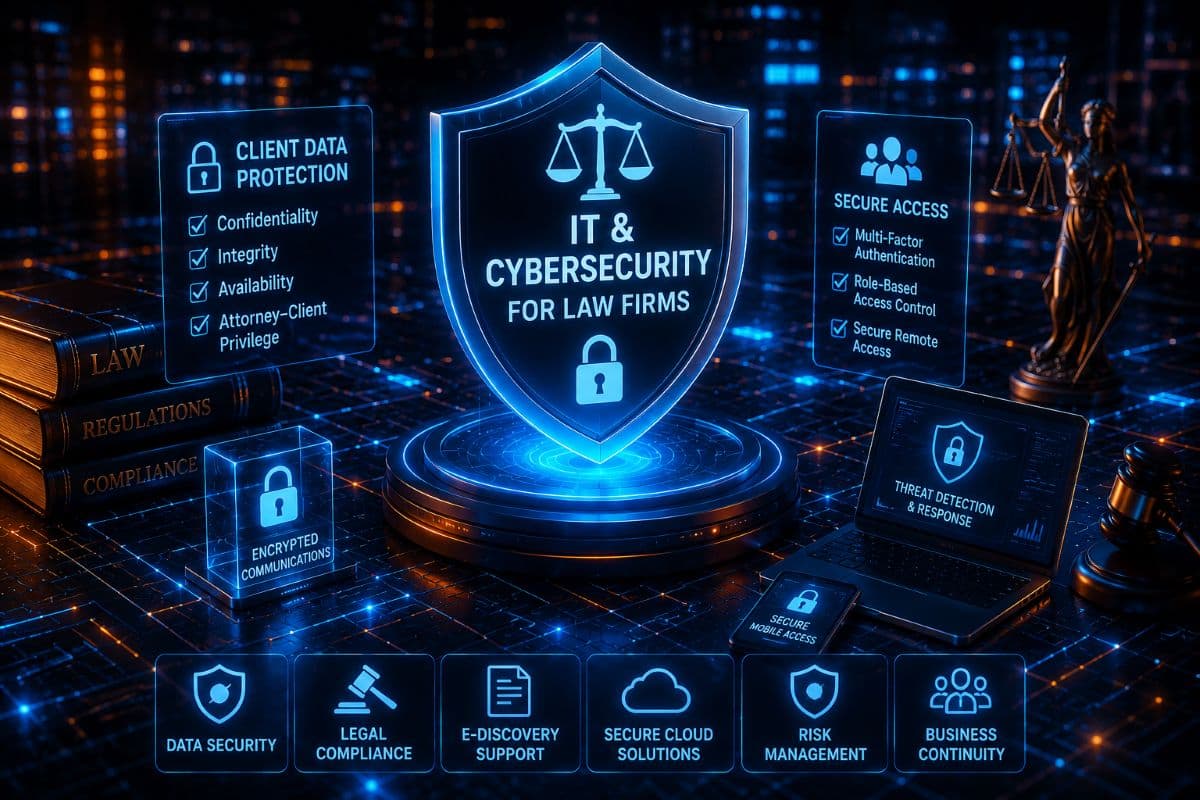





A law firm’s work depends on confidentiality. Clients share information with their lawyers that they share with almost no one else, and the firm’s duty to protect that information is not merely good practice but a professional obligation. Technology sits at the center of this, because client files, communications, and case material live on the firm’s systems, and any weakness there is a weakness in the firm’s ability to keep its clients’ confidences. IT for a law firm therefore has to be built around protection and reliability in a way a typical office does not require.
When client data is exposed, the damage reaches the firm’s reputation, its client relationships, and potentially its standing with the bar. When systems are down near a deadline, the consequences can be severe. Our work is to provide technology and security shaped around how a legal practice operates, so confidentiality is protected and the firm can rely on its systems when it matters most. That means treating the firm’s data not as ordinary business files but as material the firm is duty-bound to safeguard.
Why Law Firms Are a Target
Law firms have become a favored target for a simple reason: they concentrate valuable, sensitive information in one place. A single firm may hold confidential business plans, personal details, financial records, and privileged communications across many clients, which makes it an appealing target for criminals who would otherwise have to attack each of those clients separately. Attackers know this, and they also know that many firms, especially smaller ones, have invested less in security than the value of their data warrants. Size is not protection here; a small firm handling sensitive matters is a worthwhile target. Understanding this is the first step toward treating security as the professional responsibility it is, rather than an IT detail to be handled later.
Protecting Confidential Client Information
Protecting the confidential information a firm holds takes several layers working together rather than a single safeguard. That includes controlling who can access client files and ensuring a stolen password alone cannot open them, protecting the devices where information lives, filtering the email that is the most common route for attacks, encrypting sensitive data, and keeping dependable backups so that case files can be recovered if something goes wrong. It also includes the people in the firm, because staff who can spot a suspicious message stop attacks that slip past technology. The aim is straightforward: to make sure the information clients entrust to the firm stays within the firm, protected at every point it is stored, sent, or accessed.
Sharing Documents Securely
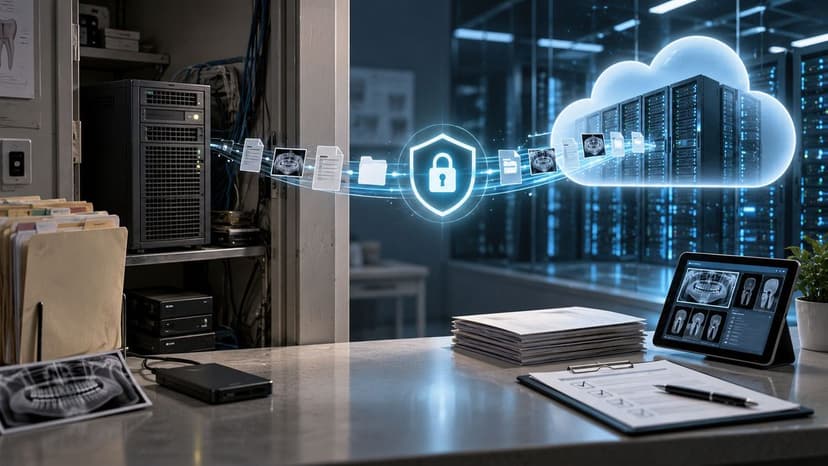
One area that deserves particular attention in a law firm is how documents are shared. Legal work involves constantly exchanging sensitive material, with clients, with opposing counsel, and with courts, and the ordinary habit of sending documents as email attachments is one of the weaker points in many firms’ security. Email was never designed to be private, and a confidential file sent that way can be intercepted or misdirected more easily than people assume. Secure methods of sharing documents, where files are protected and access is controlled, address this without slowing the work down. Getting this right matters more in legal practice than in most fields, precisely because so much of the work depends on moving confidential material safely, and it is a subject worth treating carefully rather than leaving to habit.
Keeping the Firm Running
For a law firm, the reliability of its systems is tied directly to its ability to meet obligations that do not move. Court deadlines are unforgiving, and a system outage at the wrong moment is not merely an inconvenience but a genuine risk to a case and to the firm’s responsibilities. Dependable legal IT therefore puts real weight on availability and on recovering quickly when something fails, through monitoring that catches problems early, maintenance that keeps systems healthy, reliable backups of the files the firm cannot afford to lose, and support that responds quickly when it is needed. A firm should be able to trust that its technology will be there when a filing is due, rather than hoping it holds.
Legal IT Across Los Angeles
As a managed IT and cybersecurity provider based in the Los Angeles area, with CCSP certified expertise, GlobeVM supports law firms across Woodland Hills, Encino, Sherman Oaks, the San Fernando Valley, Santa Clarita, the Conejo Valley, and Ventura County. We protect confidential client information with layered cybersecurity, give your firm secure ways to share sensitive documents, keep your systems running against the deadlines you cannot miss, and stay reachable when you need us. We are not your lawyers, but we understand what is at stake in protecting privileged information, and we treat your clients’ confidentiality with the seriousness your profession demands.