
Most of what a small business spends on security goes toward keeping attackers out. Firewalls, antivirus, spam filters: these are the locks on the front door, and they matter. But a large share of real incidents do not come from a stranger breaking in. They come from someone who already has a key, an employee, a contractor, or an attacker quietly using stolen login details. When the threat is already inside, a stronger lock on the front door does not help. This is the problem of insider threats, and it is also where many small businesses have almost no visibility. This guide explains what insider threats are, why they are so hard to catch, and how a managed SIEM gives a business your size the internal awareness to spot them before the damage is done. A managed SIEM is a security information and event management platform that a provider runs for you: it collects the logs from your systems, tunes the detection rules, watches the alerts around the clock, and tells you which ones matter.
What an Insider Threat Actually Is
An insider threat is a risk that comes from someone with legitimate access to your systems and data. That access is the whole problem, because the person is not climbing over a wall; they are already inside, doing things they are technically allowed to do. Insider threats fall into three broad types, and the difference matters because each calls for a different response.

The Malicious Insider
This is the type most people imagine: someone who intends to cause harm. It might be an employee who copies your client list before leaving for a competitor, a staff member who leaks sensitive records out of grievance, or a person pressured or paid by an outside party to steal data. Malicious insiders are dangerous precisely because they know where the valuable information lives and have permission to reach it. They often move slowly and carefully to avoid drawing attention.
The Negligent Insider
Far more common, and often just as costly, is the insider who means no harm at all. A negligent insider is the employee who emails a spreadsheet to the wrong recipient, saves confidential files to a personal cloud account to work from home, or clicks a link they should not have. Shadow IT, where staff adopt unsanctioned apps and tools on their own, falls here too. There is no bad intent, but the data still ends up somewhere it should not be.
The Compromised Insider
The third type looks like one of your own people but is not. When an attacker steals a valid username and password, through phishing or a reused credential, they can sign in and operate as that user. To most security tools, this activity appears legitimate because the credentials are real. The account is trusted, so the actions are trusted, which is exactly what makes a compromised insider so effective and so hard to notice. This is the same mechanism behind business email compromise, where a hijacked account is used to redirect payments or deceive coworkers from a trusted address.
Why Insider Threats Are So Hard to Catch
Traditional perimeter defenses are built to recognize outsiders and known bad software. They are far less useful against someone using valid credentials to do things that, taken one at a time, look normal. An employee opening a file they have access to is not suspicious. Logging into the VPN is not suspicious. Copying a document is not suspicious. The danger lives in the pattern, not the individual action, and a firewall or antivirus product is not designed to see that pattern. Add the fact that insider incidents often unfold gradually, over weeks or months, and you have a category of risk that can stay invisible until the data is already gone. This is the gap that managed cybersecurity built around internal visibility is meant to close, and it is part of why so many breaches are discovered long after they began.

What a SIEM Is, in Plain Language
SIEM stands for Security Information and Event Management, which is a mouthful for a fairly simple idea. Nearly every system you use keeps a log of what happens: who signed in, what file was opened, what was sent where. On their own, those logs sit scattered across your firewall, your servers, your email, and your cloud applications, and no human has time to read them. A SIEM gathers all of those logs into one place, puts them into a common format, and looks for connections between them. It is the core of the threat detection service a provider runs on your behalf.
The value is in connecting events that mean little alone but tell a story together. A SIEM can notice that a single user logged into the VPN after hours, opened a folder of sensitive client files, and then uploaded a large encrypted file to a personal account. It can raise that as one suspicious sequence rather than three unrelated entries. Many modern systems add behavioral analytics, sometimes called user behavior analytics, which learn what normal looks like for each person and flag departures from it, such as someone suddenly downloading far more than usual or working at an odd hour. Just as important, the stored history a SIEM keeps becomes the evidence trail you need to investigate an incident after the fact, and to show an auditor or support a legal case if it comes to that.
Why a SIEM on Its Own Is Not Enough
Here is the part many small businesses learn the hard way: buying a SIEM does not make you secure. A SIEM is, in effect, a loud and sensitive alarm clock. It will generate alerts, including a steady stream of false alarms, but an alarm only helps if someone is there to hear it, judge whether it matters, and act. A SIEM left unwatched is just noise nobody is listening to. Running one well takes constant tuning to cut down false positives, the expertise to tell a real threat from background activity, and people available to respond at any hour. For most small and mid-sized businesses, hiring a full security team to do that is not realistic, and a SIEM sitting unattended can create a false sense of safety that is worse than having none.
What Managed SIEM Means for a Small Business
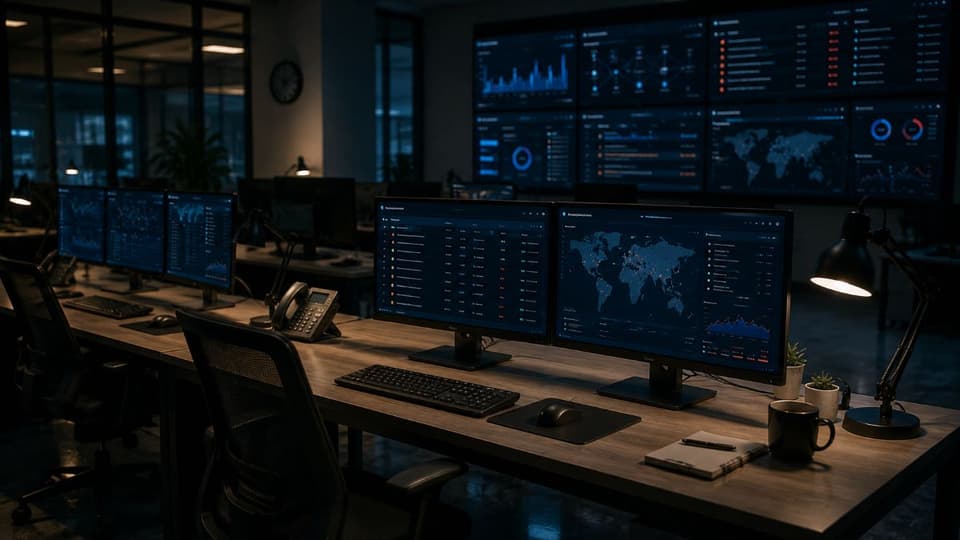
This is where managed SIEM comes in, and it is the practical answer for most businesses your size. With a managed SIEM, an outside provider runs the system for you: they handle the setup, connect it to your systems, tune the detection rules, watch the alerts, and respond when something real appears, usually with a security operations team behind it. You get the internal visibility a SIEM provides without having to build and staff one yourself. A capable provider relies on continuous monitoring so that alerts are seen and acted on rather than piling up unread. They also bring pre-built detection rules and ready integrations for the tools you already use, such as Microsoft 365 and common firewalls, so the system is useful quickly.
| Managed SIEM | SIEM run in-house | |
|---|---|---|
| Who watches the alerts | A staffed security team, around the clock | Whoever has time, during business hours |
| Tuning | Done for you and adjusted as the environment changes | Weeks of initial tuning, then ongoing upkeep |
| Cost shape | Predictable monthly fee | License, storage, and the salary of someone who knows the tool |
| Time to value | Weeks | Months, if it happens at all |
| Compliance evidence | Reports produced as part of the service | You build and maintain them |
| Fit | Nearly every small business that needs the visibility | Organizations with an existing security team |
The honest comparison is between managed SIEM and trying to run one in-house. In-house gives you the most direct control but demands the budget, the staff, and the around-the-clock attention that few smaller organizations can sustain. Managed SIEM trades some of that control for far lower cost and the expertise of a team that does this all day. For a small practice that needs the visibility but cannot justify a dedicated security department, the managed route is usually the one that actually gets the job done rather than the one that looks good on paper.
Where Managed SIEM Fits Among Your Other Defenses
It is worth being clear that a SIEM is a detective tool. It is good at noticing and reconstructing what happened, but on its own it does not prevent much. That is why it works best as one layer among several. Strong access controls and multi-factor authentication reduce the chance that a stolen password turns into a compromised insider in the first place, which closes a door a SIEM would otherwise have to catch someone walking through. On the endpoint side that means EDR security watching behavior on each machine, with the SIEM as the place where the signals meet.
In the same way, endpoint protection guards individual devices, data loss prevention watches for sensitive information leaving the business, and a broader zero trust architecture limits what any single account can reach, so the harm one insider can do is contained. None of these replace a SIEM, and a SIEM does not replace them. The mistake to avoid is the common one of spending almost the entire budget on the front-door locks of firewalls and antivirus while leaving the inside of the building without any cameras at all.
Insider Threats, Compliance, and the Paper Trail
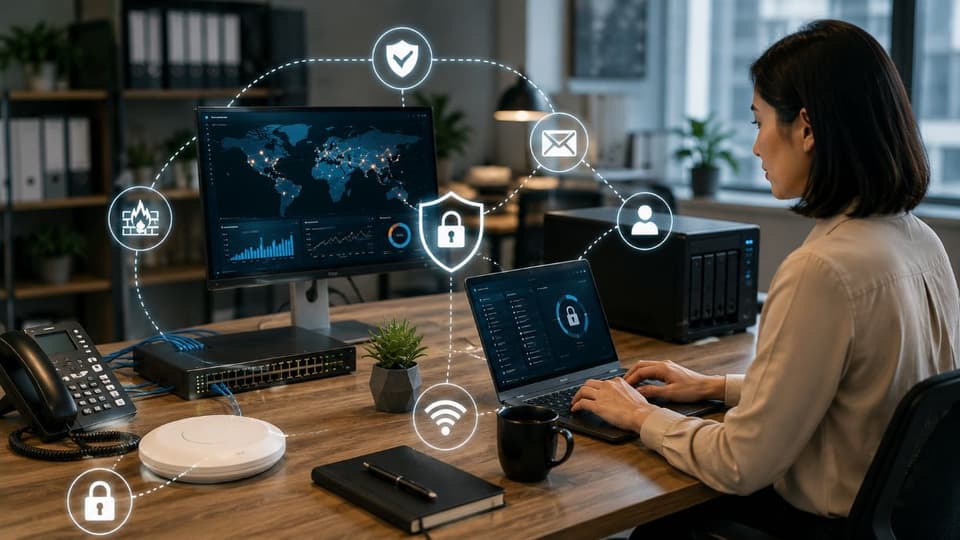
For medical, legal, and financial businesses, there is a compliance dimension that makes this more than a security nicety. Rules like HIPAA and PCI DSS expect you to track access to sensitive data and to be able to show what happened during an incident, and the centralized logs a SIEM keeps are well suited to producing that kind of audit-ready record. If a breach does occur, the difference between a manageable response and a painful one is often whether you can reconstruct exactly who touched what and when. That same record supports any investigation or claim that follows, which is why a structured approach to compliance and risk management treats logging and monitoring as core rather than optional.
Beyond satisfying an auditor, that detailed history shortens the most stressful part of a breach: working out what was actually exposed. When a regulator or a notification rule requires you to state precisely whose data was affected, a guess is not good enough, and reconstructing the answer from memory after the fact is close to impossible. The logs a managed SIEM retains turn that question from a scramble into something you can look up and answer with confidence.
A Realistic Take for a Small Business
None of this means every small business needs a full managed SIEM on day one. Security works best when it is built in sensible order, and for many practices the first priorities are the basics: multi-factor authentication everywhere, least privilege, so each person can reach only what their job requires; reliable monitoring; and staff training that turns employees into a line of defense rather than the weak point. A managed SIEM becomes worthwhile as your systems, your data, and your risk grow, and a sober assessment such as network security audits can tell you where you stand before you spend on tooling you may not yet need. For most small businesses the practical route is managed detection and response, where the SIEM is one component of a staffed service rather than a product to run.
There is also a human side that technology cannot solve. Security has to be a bridge to getting work done, not a wall, because controls that make people's jobs harder push people toward workarounds. Think of the staff member who turns to a personal cloud account because the approved way to share a large file is too cumbersome. And it is worth saying plainly that watching for insider risk is not the same as distrusting your team. A managed SIEM looks at system and access logs for unusual patterns; it is not personal surveillance, and being transparent with staff about what is monitored and why keeps it that way. A local partner offering managed IT services in Los Angeles can help strike that balance between protection and practicality for a business that depends on both.

If you are weighing whether a managed SIEM fits your business, or simply want to understand where your blind spots are, GlobeVM can assess your current visibility and recommend a practical next step.