
Imagine this scenario: It is the final week of Q4, the absolute busiest season for your enterprise. Your sales team is actively closing critical deals, your finance department is finalizing end-of-year reports, and your customer service representatives are handling a peak volume of incoming requests. The entire organization is operating at maximum capacity. Suddenly, the primary onsite database server—an aging piece of machinery you purchased four years ago—makes a high-pitched grinding noise and goes completely dark. The flashing red error lights on the server rack confirm your worst fear: a catastrophic hardware failure has occurred. Panic sets in as core operations grind to an immediate and painful halt.
When your IT manager finally assesses the damage, the verdict is devastating. The motherboard and the RAID controller are entirely fried. The manufacturer's warranty expired over a year ago, meaning you are fully liable for the replacement. Purchasing a new, enterprise-grade server capable of handling your current data load will require a shocking $30,000 out-of-pocket capital expenditure. Worse yet, due to ongoing global supply chain delays and semiconductor shortages, the replacement hardware will take two agonizing weeks to arrive, configure, and fully deploy into your network. During this period, your business is effectively paralyzed, hemorrhaging thousands of dollars in lost revenue, damaging client trust, and shattering employee productivity every single day.
This nightmare scenario is not merely a hypothetical warning; it is a harsh reality for countless organizations that continue to rely on outdated, reactionary technology acquisition models. The traditional IT purchasing model—where companies buy expensive, rapidly depreciating equipment upfront, manage it internally until it inevitably breaks down, and then scramble in panic to replace it—is fundamentally dead. It is an unsustainable, high-risk strategy that cripples a company's cash flow, burdens internal staff, and leaves agile businesses severely vulnerable to sudden financial shocks and operational blackouts.
Fortunately, modern enterprises have access to an ultimate financial and operational escape from this vicious cycle of endless capital expenditures and unpredictable IT disasters. The definitive solution is the Hardware as a Service (HaaS) model. By fundamentally shifting how modern businesses acquire, deploy, and maintain their foundational IT infrastructure, HaaS eliminates the immense risks associated with physical hardware ownership, providing a stable, highly scalable, and fully supported technology environment designed for continuous growth.
A Deep Dive into the Hardware as a Service Model
To truly understand the transformative power of this modern approach, business leaders must move beyond simplified, surface-level definitions. Hardware as a Service is not merely a financial leasing mechanism, nor is it a simple rental agreement for office computers. It is a holistic, comprehensive Service-Level Agreement (SLA) that encompasses the entire lifecycle of your foundational business technology.
In a robust HaaS arrangement, a dedicated Managed Service Provider (MSP) like GlobeVM assumes complete, end-to-end responsibility for the procurement, provisioning, installation, ongoing maintenance, and eventual lifecycle replacement of all critical IT hardware. Instead of purchasing physical assets that immediately begin to depreciate the moment they are unboxed, the business essentially subscribes to the utility, uptime, and performance of the hardware for a predictable, flat monthly fee. This enterprise-grade model ensures that the physical hardware environment is always perfectly aligned with the shifting operational demands of the organization, effectively turning static metal and silicon into a dynamic, fully managed strategic asset.
HaaS vs. Traditional Hardware Leasing
A common and dangerous misconception among financial officers and business owners is equating HaaS with traditional hardware leasing. While both models technically allow businesses to avoid massive upfront purchasing costs, the similarities abruptly end there. The differences are profound, functionally distinct, and fundamentally alter the Total Cost of Ownership (TCO) for your business over time.
In a traditional hardware lease—often structured as a capital lease or a fair-market-value lease facilitated through a bank or third-party financial institution you are strictly financing the physical equipment. The leasing company operates essentially as a banking entity; their sole concern is the collection of your monthly payment, not the performance, security, or longevity of the device. If a leased server crashes in the middle of the night, if a leased firewall's internal memory fails, or if a workstation motherboard burns out, you are still entirely responsible for the repair costs. You must pay the IT labor required to troubleshoot the issue, cover the cost of replacement parts, and absorb the catastrophic financial blow of the resulting downtime. In a traditional lease, you are merely renting the box.
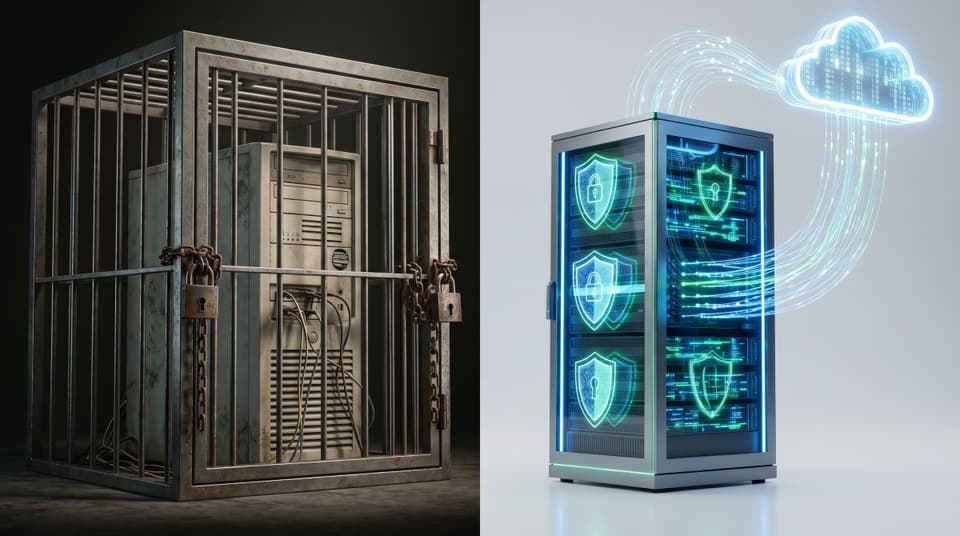
Conversely, the HaaS model provided by GlobeVM is a comprehensive, vested technology partnership. When you utilize a true HaaS program, you are not just financing hardware; you are investing in guaranteed business uptime. Proactive technical support, firmware updates, security patching, and immediate hardware replacement are fully baked into the monthly subscription. If a hard drive fails in a HaaS-provisioned server, our monitoring systems detect the anomaly proactively. Our engineers are alerted immediately, and the component is replaced at zero additional cost to your business. The monumental risk of hardware failure is entirely transferred from your financial balance sheet to our dedicated engineering team.
The Anatomy of a Modern HaaS Agreement (SLA)
What exactly makes the HaaS model so reliable? The secret lies in the Service-Level Agreement (SLA). When acquiring hardware as a service, the contract clearly defines the performance metrics the equipment must meet. It outlines strictly enforced response times for hardware troubleshooting, guarantees parts availability, and specifies exactly when the equipment will be swapped out for newer models. This contractual obligation means the MSP is financially incentivized to provide you with the most durable, high-quality enterprise hardware available. If cheap hardware is provided and it breaks, the MSP absorbs the labor cost to fix it. Therefore, HaaS guarantees that your business is equipped with top-tier, reliable infrastructure from day one.
What Equipment is Covered?
The scope of a modern HaaS agreement extends far beyond basic desktop computers and monitors. It covers the entire spectrum of sophisticated enterprise IT infrastructure required to keep a business competitive, secure, and fully operational. The exact hardware ecosystem typically includes:
- Physical Servers and Storage Arrays: The critical backbone of your local network operations. This includes high-availability servers, Network Attached Storage (NAS), and robust Storage Area Networks (SAN). In a HaaS model, these servers are equipped with high-speed Solid State Drives (SSDs) and NVMe storage protocols to ensure rapid data processing, vast redundancy, and failover protection.
- Enterprise-Grade Firewalls and Network Security Appliances: The perimeter defense of your digital assets. We deploy Next-Generation Firewalls (NGFW) equipped with Deep Packet Inspection (DPI), Intrusion Detection and Prevention Systems (IDS/IPS), and advanced traffic routing capabilities. Keeping these security appliances constantly updated is the most critical step in preventing catastrophic ransomware attacks and unauthorized network breaches.
- High-Performance Workstations and Laptops: Tailored computing devices customized precisely for the specific needs of your workforce. This includes high-end workstations with dedicated GPUs for graphic designers and engineers, heavy processing machines for financial analysts, and highly secure, lightweight ultrabooks for remote executives who travel frequently.
- Network Switches and Wireless Access Points: The circulatory system of your office data. We provide managed Power over Ethernet (PoE) switches to power internal devices and deploy high-density Wi-Fi 6 or Wi-Fi 7 access points to ensure seamless, gigabit-speed wireless connectivity across your entire office floorplan, eliminating dead zones and dropped connections.
- Business VoIP Systems: Advanced desktop IP phones, sophisticated conference room audio equipment, and integrated communication peripherals. These endpoints ensure crystal-clear voice quality and unified communications across your team without the heavy financial burden of purchasing and owning a depreciating onsite PBX closet.
The Hidden Costs of Traditional IT Infrastructure
To fully appreciate the profound financial and operational advantages of the HaaS model, business leaders must first confront the terrifying, often obscured costs associated with the traditional "buy, maintain, and replace" IT model. These are the silent budget killers that continuously erode profit margins and stunt business growth over time.
The CAPEX Trap and Cash Flow Bottlenecks
Purchasing enterprise-grade hardware requires massive Capital Expenditures (CAPEX). When an expanding company decides to purchase a new server cluster or refresh 50 employee laptops, they must instantly deploy tens, or even hundreds, of thousands of dollars in liquid capital. This financial phenomenon is known as the CAPEX Trap. Every single dollar spent on rapidly depreciating computer hardware is a dollar that cannot be strategically invested in direct revenue-generating activities. That frozen capital could have been used to hire top-tier sales talent, expand aggressive marketing campaigns, open new geographic locations, or fund critical research and development.
Furthermore, CAPEX purchases require lengthy, highly bureaucratic budget approval processes. By the time a CFO reviews the quotes, negotiates with vendors, and formally approves the capital allocation for a new hardware rollout, the specific technological needs of the business may have already evolved. This leaves the IT department constantly playing a frustrating game of catch-up, trying to force inadequate, newly purchased resources to meet modern demands.
Depreciation and the Accelerated Technology Lifecycle
Physical hardware is a rapidly depreciating asset; its financial value plummets the exact moment it is unboxed and powered on. Unlike commercial real estate or certain industrial machinery that holds intrinsic value, IT equipment is subject to the brutal reality of Moore's Law and accelerated obsolescence. Processing power doubles, software operating systems become heavier, and cybersecurity protocols demand more system resources simply to run in the background. Because of this relentless technological acceleration, enterprise equipment typically becomes frustratingly obsolete within a tight window of 3 to 5 years.
In the traditional purchasing model, a company that buys an expensive server today will invariably find that in 48 months, that exact server can no longer efficiently run the latest database software or support newer virtualization platforms. The company is then forced to start the painful, expensive CAPEX cycle all over again. They must pay to safely and securely dispose of the old hardware, purchase the new hardware at a premium, and pay expensive IT consultants to migrate the data. It is a perpetual cycle that aggressively drains company resources.
The Terrifying Cost of Downtime and Lost Productivity
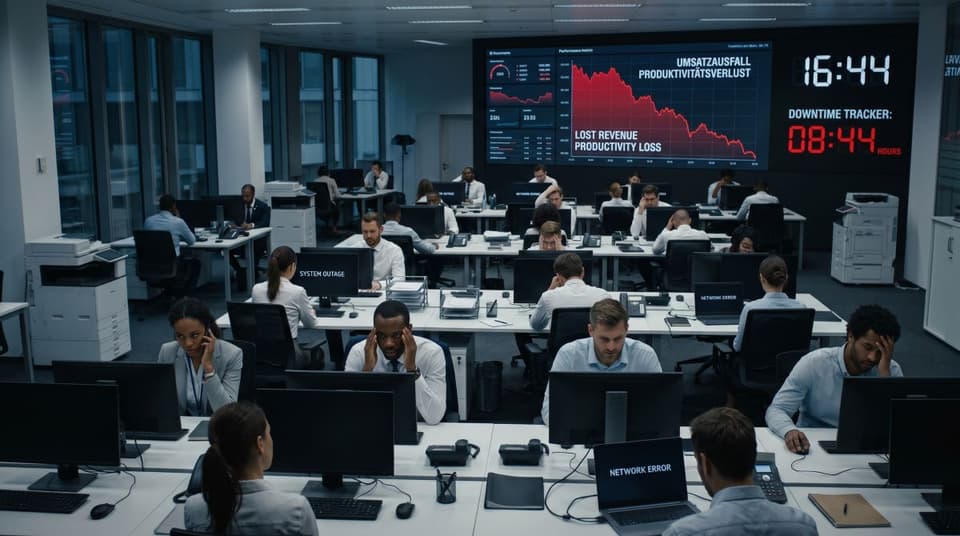
The most devastating hidden cost of owning aging, unmanaged hardware is the sheer financial impact of an unexpected system failure. When traditional, self-owned hardware breaks down, it never happens at a convenient time. Calculating the true, holistic cost of downtime involves significantly more than just looking at the price tag of a replacement motherboard or hard drive. It requires a stark, undeniable mathematical formula:
Cost of Downtime = (Minutes of Outage × Per-Minute Operating Cost) + (Lost Revenue) + (Emergency IT Labor Rates) + (Reputational Damage).
Consider a hypothetical mid-sized logistics firm with 100 employees, generating roughly $50 million in annual revenue. If their aging core network switch fails and it takes 8 full business hours to source a replacement, install the physical device, and reconfigure all internal VLANs, the math is terrifying. Eight hours where 100 employees are unable to access their files, where shipping deadlines are missed, and where incoming orders cannot be processed can easily equate to $50,000 to $100,000 in unrecoverable financial losses for a single day of an outage. Emergency IT repairs are not just inconvenient inconveniences; they are a direct and severe threat to the financial survival of the organization.

The Opportunity Cost of Internal IT Resources
Another deeply hidden cost of owning physical IT equipment is the heavy toll it takes on your internal staff. If you have an in-house IT team, their time is incredibly valuable. However, in a traditional hardware ownership model, highly paid IT professionals are frequently reduced to hardware mechanics. Instead of focusing on strategic initiatives—such as improving internal workflows, evaluating new software efficiencies, or training staff on cybersecurity best practices—your IT team spends countless hours diagnosing strange fan noises, swapping out failing RAM sticks, and negotiating RMAs (Return Merchandise Authorizations) with hardware vendors. This represents a massive opportunity cost. By shifting the burden of hardware maintenance to a HaaS provider, your internal talent is freed to focus on initiatives that actually move the needle for your business.
How the HaaS Model Eliminates Financial Burdens
The primary appeal of Hardware as a Service for executives, business owners, and finance departments is its unique ability to completely neutralize the financial volatility of IT management. It introduces much-needed predictability, organizational agility, and peace of mind into a domain that has been historically characterized by sudden, wildly expensive emergencies.
Shifting from CAPEX to OPEX for Predictability
The financial transition from purchasing hardware outright to subscribing to it as a service represents a Chief Financial Officer's ultimate dream: converting massive, unpredictable Capital Expenditures (CAPEX) into a smooth, predictable, flat-rate monthly Operational Expenditure (OPEX). With HaaS, budgeting for your entire IT infrastructure becomes as simple, reliable, and straightforward as budgeting for the office electricity bill or your internet service connection.
This OPEX model frees up massive amounts of liquid cash flow. Instead of dropping $50,000 on a necessary hardware refresh, that vital capital remains in the bank, fully available for strategic business growth and emergency reserves. Furthermore, OPEX expenses are typically fully tax-deductible as standard operating expenses in the exact year they are incurred. This profoundly simplifies corporate accounting and provides immediate tax benefits to the organization, completely eliminating the need for finance teams to manage complex, multi-year depreciation schedules for owned hardware assets.
Evergreen IT (Free Upgrades and Scalability)
Technology should always act as a powerful enabler of business growth, not as a heavy anchor holding your operations back. One of the most powerful and transformational concepts introduced by the HaaS model is the principle of "Evergreen IT." Because the physical hardware is provided as an integrated part of an ongoing service SLA, your business continuously has access to the latest, most secure technology without ever needing to submit new budget requests or beg for capital approvals from the board.
When the provided hardware reaches the end of its optimal, high-performance lifecycle (typically every 36 to 48 months), GlobeVM proactively and automatically replaces the aging equipment with brand-new, state-of-the-art models. Your dedicated employees will never again be forced to suffer through booting up sluggish, 6-year-old laptops, and your local network traffic will never be bottlenecked by obsolete firewalls lacking modern processing power. Your infrastructure remains perpetually modern, ensuring that your workforce maintains maximum daily productivity and your security posture remains continuously hardened against emerging cyber threats.
Zero Maintenance Costs and Guaranteed Lifecycles
With traditional hardware ownership, the initial purchase price is only the beginning of your financial commitment. You remain completely financially responsible for the ongoing maintenance, difficult troubleshooting, and eventual replacement of any burnt-out components. If a vital power supply unit fails on a Friday afternoon, you pay for the expedited shipping of the part and the expensive after-hours labor to install it.
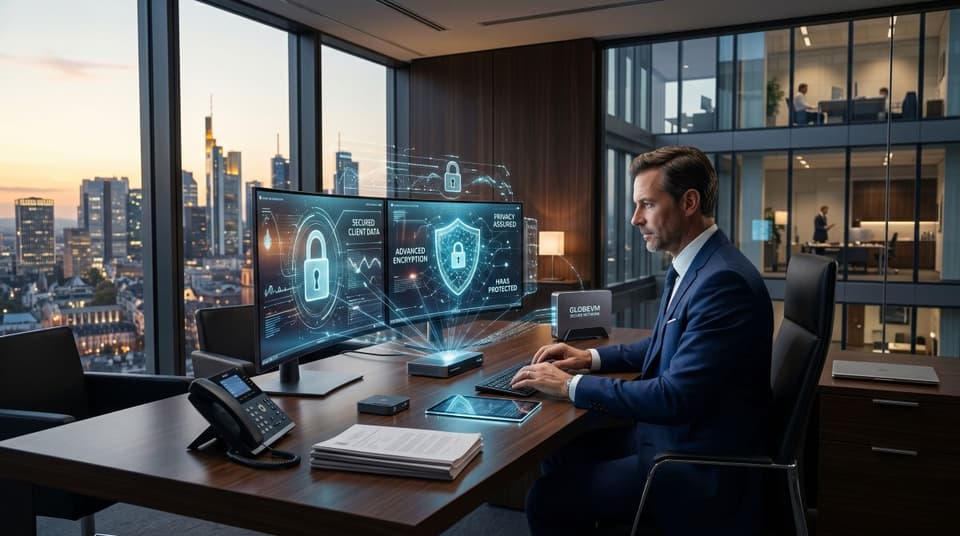
Under the HaaS model, absolutely zero maintenance costs exist outside of your highly predictable, fixed monthly subscription. The immense responsibility for keeping the hardware functioning flawlessly lies entirely with GlobeVM. Deep hardware troubleshooting, running crucial firmware updates, applying urgent security patches, and physically replacing malfunctioning parts are already comprehensively baked into the monthly fee. If a device fails, it is entirely our problem to fix or replace it immediately, at no extra cost to you. This dynamic aligns our business incentives perfectly with yours: we naturally ensure your hardware is robust, premium, and perfectly maintained because it is our contractual responsibility to guarantee your uptime.
Synergy with Broader Enterprise IT Services
It is critical for business leaders to understand that world-class hardware, while absolutely essential, cannot exist in a vacuum. A brand-new, top-of-the-line server or a lightning-fast Gigabit network switch will still completely fail to deliver genuine business value if it is improperly configured, poorly monitored, or isolated from a cohesive, overarching IT strategy. Hardware alone is not enough; it must be deeply integrated with robust network management, proactive cybersecurity protocols, and modern infrastructure planning.
Seamless Integration with Managed IT Services
This is where the HaaS model truly shines as the foundational bedrock of your broader technology ecosystem. When you acquire your essential hardware as a service, it naturally and powerfully synergizes with comprehensive Managed IT Services. Our expert engineers do not just drop off the equipment in boxes and walk away; they actively manage the operating systems running on that hardware, monitor the intricate network traffic flowing through it, and ensure that your entire IT environment is operating at absolute peak efficiency 24/7/365.
Accelerating Cloud Services and Migration
Furthermore, having modern, high-performance hardware sitting on-premises is the ultimate accelerator for broader digital transformation efforts. If your organization is looking to transition heavy applications and vast data stores to remote data centers, your local routing and firewall hardware must be extremely capable. It must handle massive, heavily encrypted VPN tunnels without introducing crippling latency. By utilizing HaaS, you guarantee that your local infrastructure is robust enough to fully support advanced Cloud Services and Migration initiatives. You simply cannot harness the immense power of the modern cloud if your local office network is choked by a ten-year-old network switch. HaaS ensures the physical bridge connecting your office to your cloud environment is always lightning-fast, highly secure, and fully optimized.
Strengthening the Foundation for Cybersecurity
Finally, outdated hardware is a massive security liability. Older firewalls often cannot process modern threat intelligence feeds quickly enough to stop zero-day exploits. Older servers may not support the firmware required to patch fundamental processor vulnerabilities. By keeping your hardware perpetually updated through HaaS, you are essentially fortifying the physical perimeter of your network. This seamlessly complements advanced Cybersecurity Solutions, ensuring that your security software is running on robust, uncompromised hardware capable of repelling sophisticated modern attacks.
Is the HaaS Model Right for Your Industry?
While the immense financial and operational benefits of HaaS are universally applicable across the business spectrum, the profound impact is particularly noticeable in specific industries where data security, system uptime, and strict regulatory compliance are simply non-negotiable. Here is how this transformative model provides highly specific, critical value across three demanding sectors:
Law Firms: Protecting Privileged Client Data
In the fast-paced legal industry, time is quite literally money, and absolute client confidentiality is paramount. Law Firms handle massive, constantly growing volumes of highly sensitive documents, intricate e-discovery data, and deeply privileged communications. They simply cannot afford to operate on slow, aging servers that introduce the risk of data corruption or open the door to catastrophic data breaches. The HaaS model ensures that legal practices are always equipped with the latest, highest-security hardware. By providing workstations with encrypted storage drives and deploying advanced threat-protection firewalls at the perimeter, HaaS fundamentally safeguards client data, ensures strict compliance, and guarantees that attorneys can continually bill hours without suffering through disruptive technology interruptions.
Medical Offices: Ensuring Seamless HIPAA Compliance
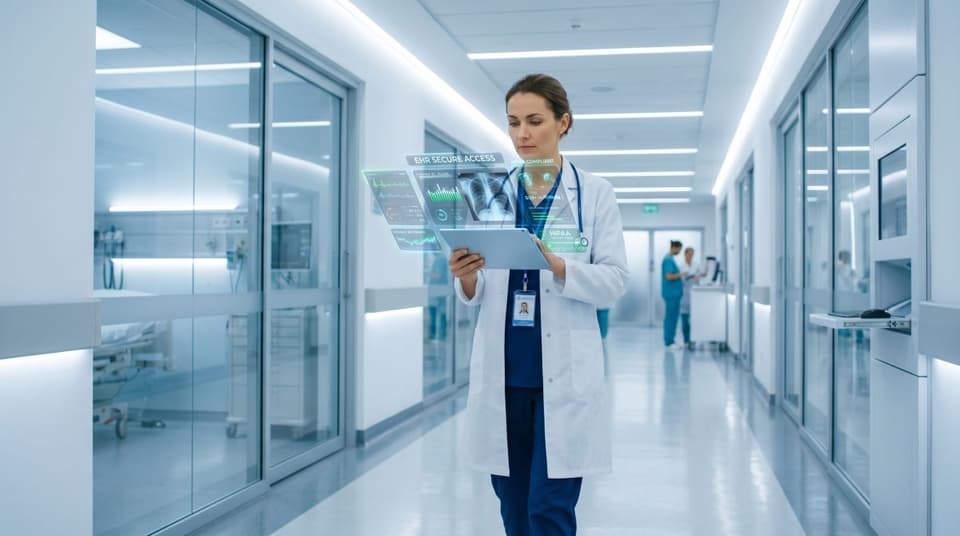
Healthcare providers face some of the strictest, most punitive regulatory environments in the world. For Medical Offices, having reliable, modern hardware is directly tied to maintaining seamless HIPAA compliance and the vital ability to deliver rapid, effective patient care. Aging hardware can severely slow down complex Electronic Medical Record (EMR) and Electronic Health Record (EHR) systems, actively delaying doctors from accessing critical patient medical histories during time-sensitive appointments. HaaS completely guarantees that medical staff and administrative personnel have immediate, highly secure access to fast workstations and flawlessly reliable servers, allowing the practice to focus entirely on improving patient health outcomes rather than helplessly troubleshooting frozen computers in the middle of a clinic.
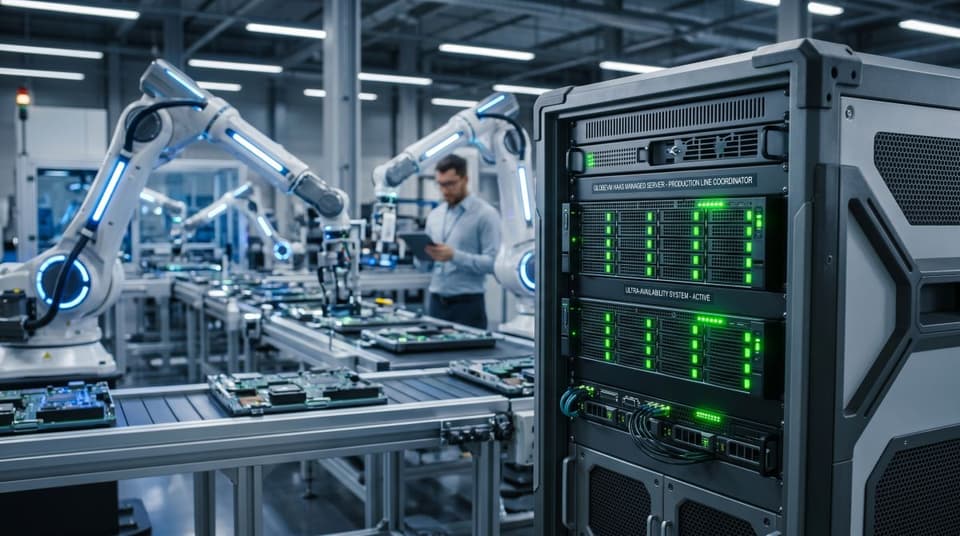
Manufacturing: Preventing Supply Chain Halts
The modern manufacturing sector relies incredibly heavily on complex Enterprise Resource Planning (ERP) systems, real-time inventory databases, and highly integrated supply chain logistics software. If a local routing device or an onsite server coordinating the automated factory floor goes offline, production lines screech to a halt, and supply chains immediately back up. In this industry, downtime is easily measured in thousands of dollars per minute. Manufacturing facilities avoid these catastrophic supply chain disruptions by relying entirely on the HaaS model. They gain immediate access to ruggedized, high-availability hardware with built-in redundancy, ensuring that the critical technology driving their production lines is always optimized, thoroughly updated, and fiercely impervious to unexpected downtime.
Conclusion and Next Steps
The reckless era of gambling your overall business stability on rapidly depreciating, internally unmanaged hardware is officially over. Embracing Hardware as a Service fundamentally transforms your foundational IT infrastructure from a highly unpredictable, massive capital liability into a deeply predictable, fully managed strategic asset.
The Return on Investment (ROI) is undeniable and crystal clear: forward-thinking businesses permanently eliminate the upfront CAPEX trap, completely eradicate the hidden, budget-destroying costs of maintenance and downtime, and guarantee that their hardworking workforce always has immediate access to modern, evergreen technology. This comprehensive model delivers the ultimate operational peace of mind, allowing executives and internal IT staff to focus entirely on aggressively growing their business and serving their clients rather than frantically managing broken servers.
Stop gambling with aging, failing equipment that actively threatens your revenue and employee productivity. It is time to modernize your approach to enterprise technology acquisition. We strongly encourage you to take the first proactive step towards achieving a stable, highly predictable IT budget by filling out our comprehensive Free Network Assessment to critically evaluate your current setup and identify looming hardware risks. Alternatively, you can contact our dedicated Helpdesk and IT Support team today for immediate, expert guidance on seamlessly transitioning your organization to a secure, fully managed hardware environment.