

You cannot fix or defend what you cannot see. A business runs on a growing collection of computers, servers, network equipment, cloud services, and applications, and each one is constantly producing signals about how it is doing. Telemetry is the practice of collecting those signals and bringing them together so a business can actually understand what is happening across its systems. The result is what people mean by holistic visibility: a complete, connected view rather than a set of disconnected pieces. This guide explains what telemetry is in plain terms, the kinds of data it involves, what produces it, how it relates to monitoring and observability, and why that visibility matters for keeping a business both running and secure.
What telemetry actually is
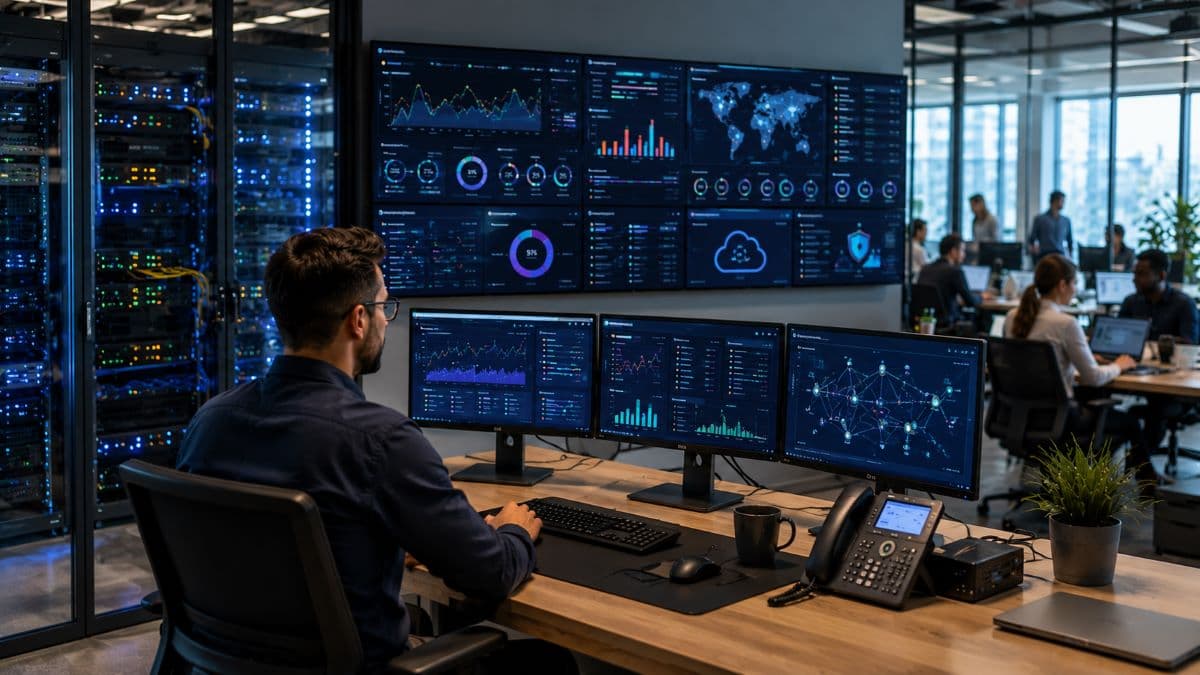
Telemetry is the automatic collection and transmission of data from your systems to a central place where it can be stored and analyzed. The word comes from measuring something remotely, and that is exactly what it does: instead of someone checking each device by hand, the systems themselves continuously report on their own activity and health. Every server, application, and piece of network equipment generates this kind of data as it runs, and telemetry is what gathers it so it can be put to use rather than disappearing unseen.
Telemetry in plain terms
A simple way to picture telemetry is the dashboard and warning lights in a car. The vehicle constantly measures speed, fuel, engine temperature, and more, and reports it where the driver can see it, so a problem shows up as a warning rather than a breakdown. Telemetry does the same for a business's technology, turning the constant internal activity of your systems into information someone can read and act on. Without it, you are driving with no dashboard, finding out about problems only when something stops working, which is the most expensive moment to discover them.
The building blocks: metrics, logs, and traces
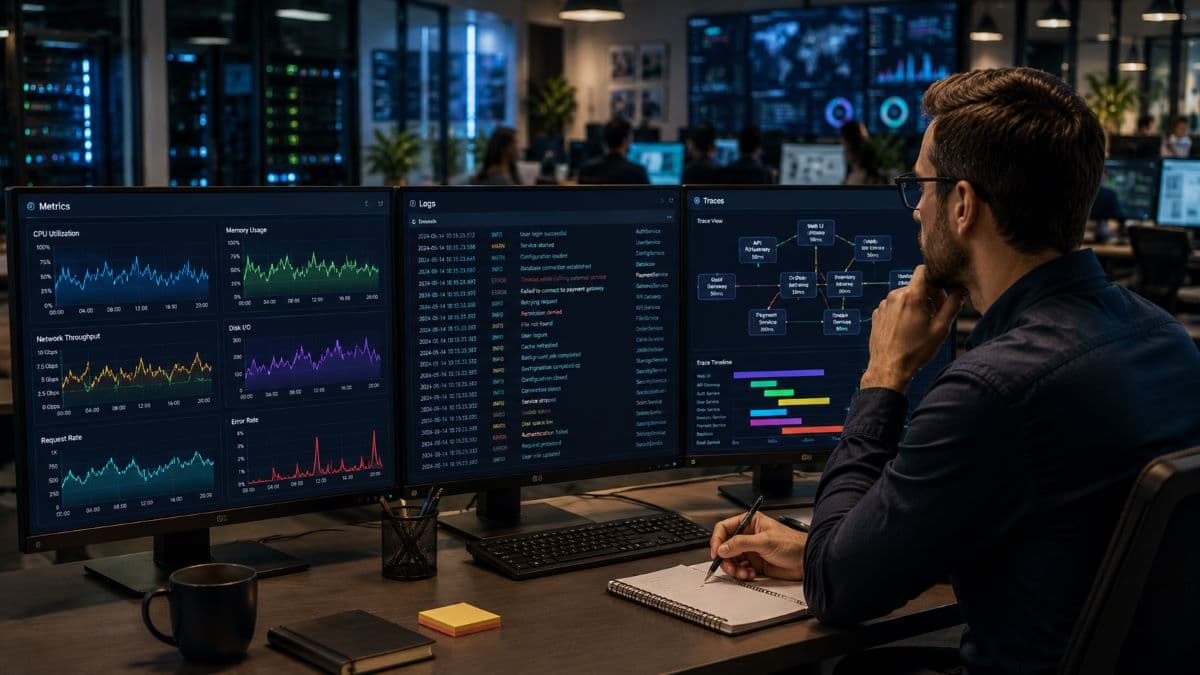
Telemetry data generally comes in three forms, often described as the three pillars of visibility. Each answers a different question, and together they give a far fuller picture than any one alone.
Metrics
Metrics are measurements taken over time, such as how much of a server's capacity is in use, how fast an application is responding, or how much network traffic is flowing. They are numbers tracked continuously, which makes them ideal for spotting trends and seeing at a glance whether something is within its normal range. Metrics are usually the first sign that something is changing, like a temperature gauge creeping upward before anything actually fails, which is what makes them useful for catching problems early.
Logs
Logs are timestamped records of individual events, written as things happen. When a user signs in, an error occurs, or a setting is changed, a log entry records what happened and when. Where metrics tell you that something is off, logs often tell you what specifically took place, which makes them essential for investigating a problem or a security incident after the fact. They are the detailed account a business turns to when it needs to understand exactly what occurred, and they are often required as evidence for both troubleshooting and compliance.
Traces
Traces follow a single request or action as it moves through the different parts of a system, showing each step of its journey. In a setup where one task touches several services, a trace reveals where time was spent or where something broke along the way. For businesses running more complex or cloud-based applications, traces are what make it possible to pinpoint the exact stage where a slowdown or failure happened, rather than guessing across the whole system and hoping to find the cause.
What produces telemetry in your business
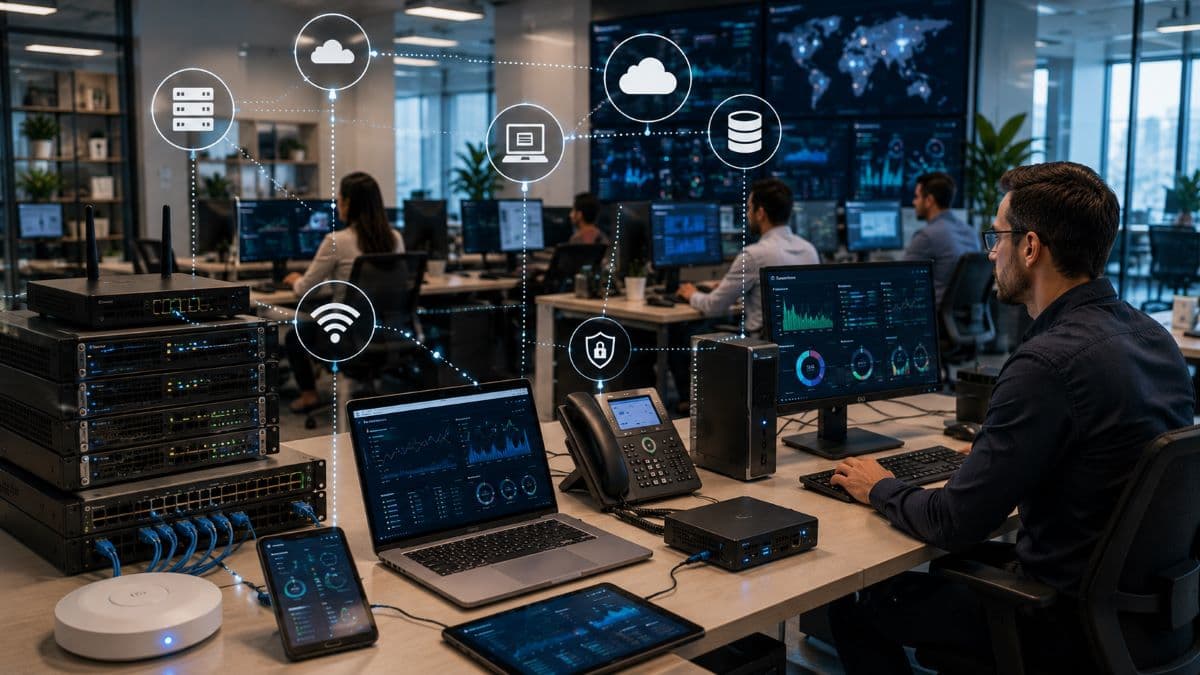
It helps to know where all this data comes from, because telemetry is not one feed but many, gathered from across your environment. Bringing these sources together is what creates a complete picture rather than a partial one.
Devices and servers
The computers your staff use and the servers that run your business both produce a steady stream of data about their performance, errors, and activity. This includes how hard they are working, what software is running, and what events are occurring, which together reveal whether a machine is healthy or heading for trouble. On the security side, this device-level data is also where many signs of a threat first appear.
Network and cloud services
Your network equipment reports on traffic and connections, while the cloud services and applications your business relies on produce their own logs and metrics about usage, performance, and access. As more of what a business does moves into the cloud, this source becomes increasingly important, because a great deal of activity now happens on systems that are not physically in your office. Pulling this together with everything else is part of what keeps a modern, partly cloud-based business visible rather than scattered.
Telemetry, monitoring, and observability: how they relate
These three terms get used together and are easy to confuse, but the distinction is straightforward. Monitoring is the activity of checking whether your systems are working, usually by watching for known problems and raising an alert when something crosses a threshold. Telemetry is the underlying data, the metrics, logs, and traces that monitoring relies on. Observability is the broader ability to understand the internal state of your systems from that data, including being able to answer questions you did not think to ask in advance.
Put simply, telemetry is the raw material, monitoring watches it for known issues, and observability is the deeper understanding it all makes possible. A business does not need to master the vocabulary, but it does benefit from the visibility all three describe, which is why ongoing remote monitoring and management is built on exactly this foundation. The data on its own changes nothing; the value comes from watching it and acting on what it shows.
Why holistic visibility matters for your business
Collecting all this data is not an end in itself. The point is what visibility lets a business do, and the benefits are practical rather than theoretical.
Catching problems before they cause downtime
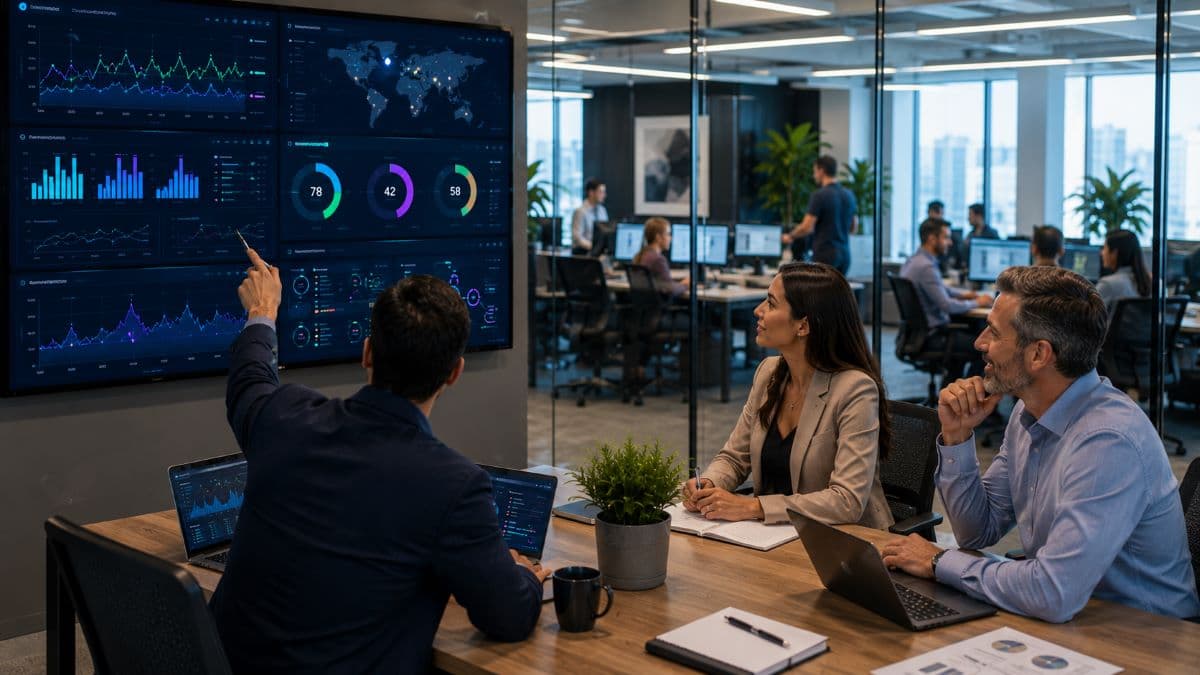
When systems are reporting on themselves continuously, many problems announce themselves early, as a metric drifting out of range or an unusual pattern of errors, before they grow into an outage. That early warning is the difference between a quiet fix and a disruption that stops work, and avoiding downtime is one of the clearest returns on visibility, as our look at the true cost of IT downtime shows. Visibility turns many would-be emergencies into routine maintenance handled before anyone notices.
Seeing security threats early
The same data that reveals performance problems also reveals signs of an attack. Unusual logins, unexpected changes, and strange patterns of activity show up in telemetry, often well before the full impact is felt. Without this visibility, an intruder can move through systems unseen, which is why the early detection that telemetry enables is central to limiting damage and connects directly to a business's broader cybersecurity solutions. Many serious breaches were detectable in the data long before they were discovered.
Understanding what normal looks like
A less obvious but important benefit is that continuous data lets a business learn what normal looks like for its own systems. Once you know the usual patterns, anything unusual stands out, whether it is a performance issue or a security concern. This baseline is what makes it possible to tell the difference between an ordinary busy period and a genuine problem, rather than reacting to every fluctuation or missing the ones that matter. Without a sense of normal, every alert looks the same and the important ones get lost.
Telemetry as the foundation of threat detection
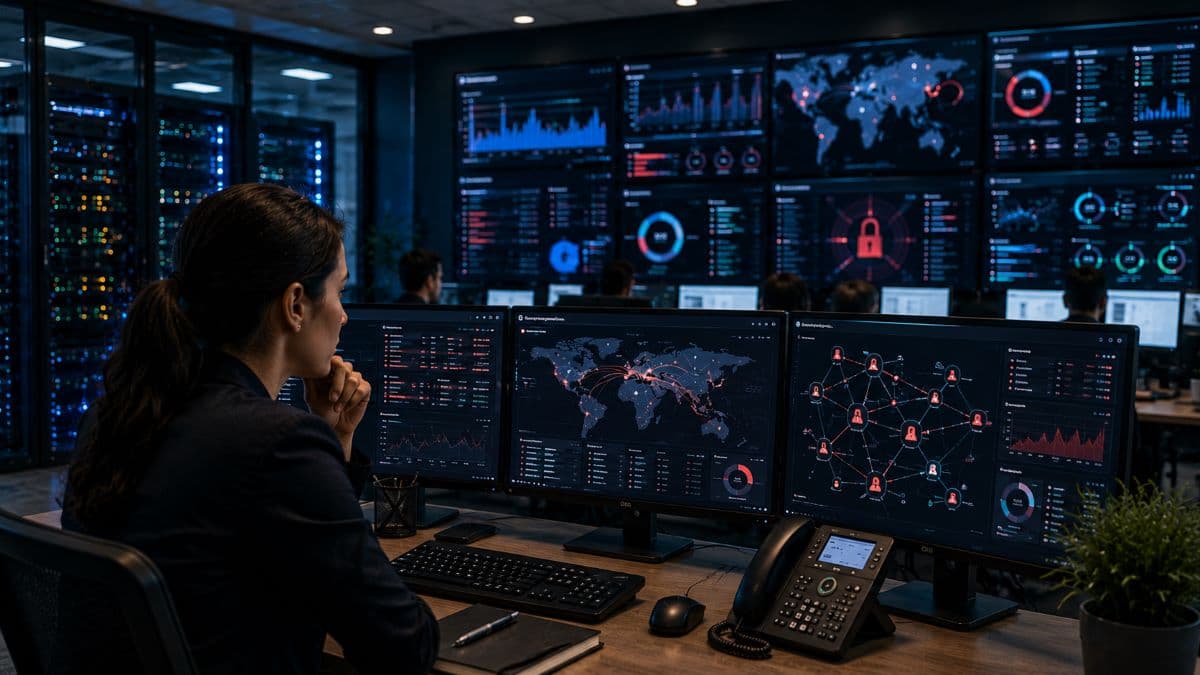
In security specifically, telemetry is what makes detection possible at all. Tools that watch for threats depend on a steady stream of data from across the environment, from individual devices to network activity to cloud services, to recognize when something is wrong. Endpoint and log data feed the systems that correlate signals from many sources and flag suspicious behavior, which is how a modern security operation spots an attack in progress.
This is also why a security model that assumes no user or device is automatically trusted, the principle behind zero trust architecture, depends so heavily on visibility: you cannot verify what you cannot see.
When an incident does occur, that same telemetry provides the record needed to understand and contain it, which is where a plan for ransomware incident response draws much of its information. Without good telemetry, a business is left guessing about what happened, how far it spread, and whether it is truly over.
Turning telemetry into something useful
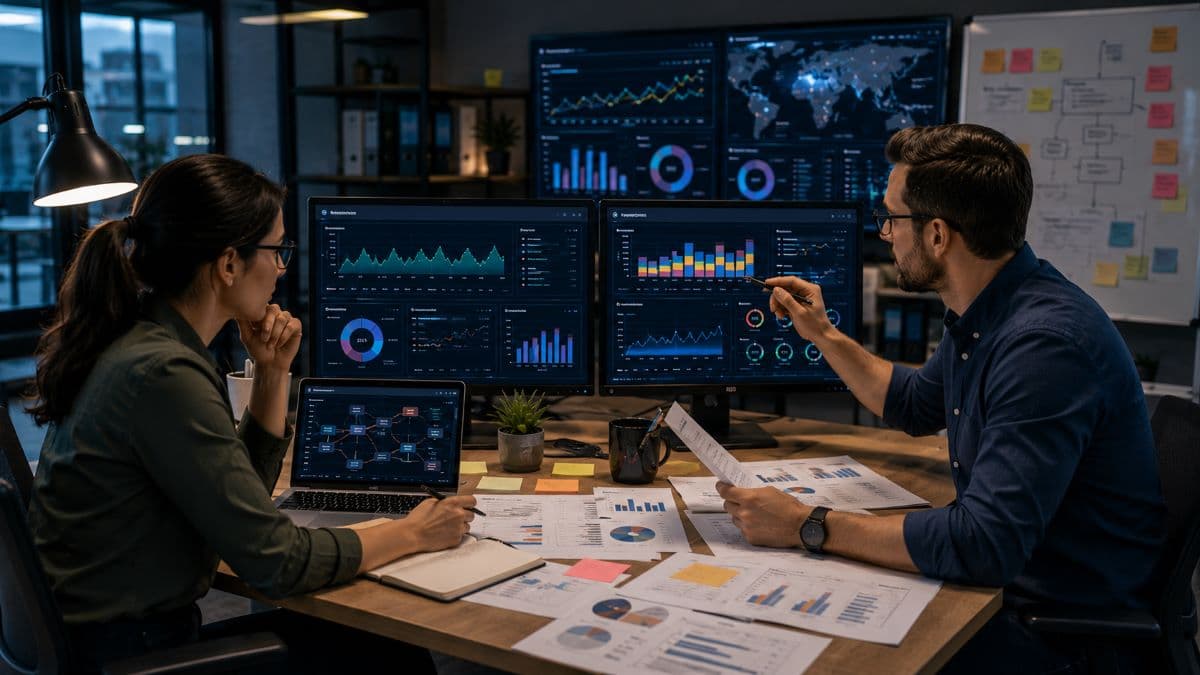
Gathering data is the easy part. The harder and more valuable part is turning it into insight, because a flood of raw signals that nobody reviews helps no one. Useful telemetry depends on collecting the right data, bringing it together so related signals can be seen side by side, and having someone or something watching it who knows what matters and what to ignore.
There is a real balance to strike here. Too much noise and genuine warnings get lost in a sea of unimportant alerts, a problem that leads teams to start ignoring them altogether. Too little data and important signals are never captured in the first place. Getting this right, tuning what is collected and how alerts are handled, is where the practical difficulty lies for most businesses, and it is also why visibility is most effective when it is actively managed rather than simply switched on. Done well, it ties closely to keeping systems healthy and staying ahead of the common IT problems businesses run into.
Telemetry and compliance
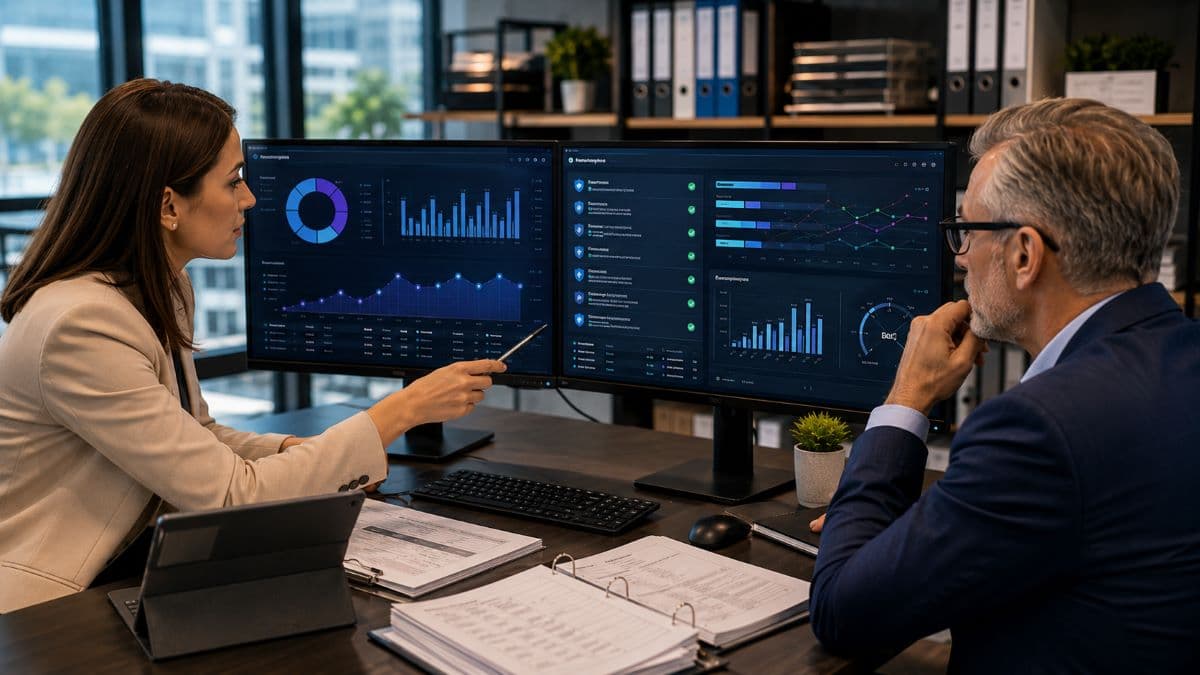
For businesses in regulated fields, telemetry serves a purpose beyond keeping systems running. Many regulations and security frameworks expect an organization to keep records of activity, watch for unauthorized access, and be able to show exactly what happened during an incident. The logs and data that telemetry collects are precisely what satisfy these expectations, providing the trail that an auditor or investigator needs to see. A business that gathers and retains this data in an organized way is far better placed to demonstrate compliance than one that has no record of what its systems have been doing, and it can answer questions about an incident with evidence rather than guesswork. In this sense, the same visibility that improves performance and security also quietly supports the obligations that regulated businesses are required to meet, which is part of why it matters so much for medical, legal, and financial offices in particular.
What holistic visibility looks like for a small business
A small business does not need the sprawling, complex setup of a large enterprise to benefit from telemetry. The principle is the same at any size: bring together the signals from your systems so problems are caught early and nothing important goes unseen. The scale is smaller and the tools are simpler, but the value of seeing what is happening is just as real for a ten-person office as for a large company.
In practice, for most smaller businesses this means having their devices, servers, network, and cloud services monitored as part of a managed relationship, so the data is collected, watched, and acted on without the business having to build and staff that capability itself. Continuous monitoring backed by around-the-clock IT services is how that visibility becomes practical for a business that cannot watch its own systems every hour of the day.
Frequently Asked Questions
Telemetry is the automatic collection of data from your technology systems so you can see how they are performing and behaving. Instead of checking each device by hand, the systems report on themselves continuously to a central place where the data can be analyzed. It is similar to the dashboard in a car, which constantly reports on the vehicle so problems show up as warnings rather than breakdowns.
Telemetry is the data your systems produce, such as metrics, logs, and traces, while monitoring is the activity of watching that data for problems and raising alerts. In other words, telemetry is the raw material and monitoring is what you do with it. Effective oversight uses telemetry as the foundation and monitoring, along with deeper analysis, to make sense of it.
Because you cannot fix or defend what you cannot see. Visibility lets you catch performance problems before they cause downtime, spot signs of a security threat early, and understand what normal looks like for your systems so anything unusual stands out. Without it, a business tends to find out about problems only after they have already caused harm.
No. While large companies have the most complex environments, the underlying need to see what your systems are doing applies to a business of any size. A small business can gain the same benefits through managed monitoring, which collects and watches the data without the business needing to build that capability on its own. The scale differs, but the value of visibility does not.
If you want holistic visibility into your systems so problems and threats are caught early, GlobeVM provides the telemetry, monitoring, and management behind it for businesses across Los Angeles and the surrounding area.
Comments
0 Comments