

If your business has ever had an employee reuse a password, or use their work email to sign up for an outside service that was later breached, there is a reasonable chance some of your login details are already circulating in places you cannot see. Stolen credentials are one of the most valuable commodities for criminals, and they are bought, sold, and traded constantly. Dark web monitoring is a service that watches those hidden corners of the internet for your business's exposed information and warns you when it appears, so you can act before someone uses it against you. This guide explains what dark web monitoring is, how it works, what it genuinely can and cannot do, and whether it earns a place in your security.
What the Dark Web Actually Is
The term sounds dramatic, so it helps to ground it. The internet most people use every day, the part search engines index and browsers reach normally, is only a slice of what exists. Beneath it sits a layer that ordinary search engines do not index and that requires special software to access, and within that layer is a smaller area where anonymity is the point. That is the dark web. It has legitimate uses, including privacy for journalists and people under oppressive governments, but it is also where stolen data is traded, where breached databases are dumped, and where criminal marketplaces sell login credentials, financial details, and other information harvested from attacks.
For a business, the relevant fact is simple: when a company you or your staff use suffers a breach, the stolen information frequently ends up for sale or freely available in these hidden marketplaces and forums. Email addresses, passwords, and other details get bundled into large collections and circulated among criminals. You will almost never know this has happened through normal means, because the exposure is invisible from where you sit. That invisibility is exactly the problem dark web monitoring is built to address.

What Dark Web Monitoring Is
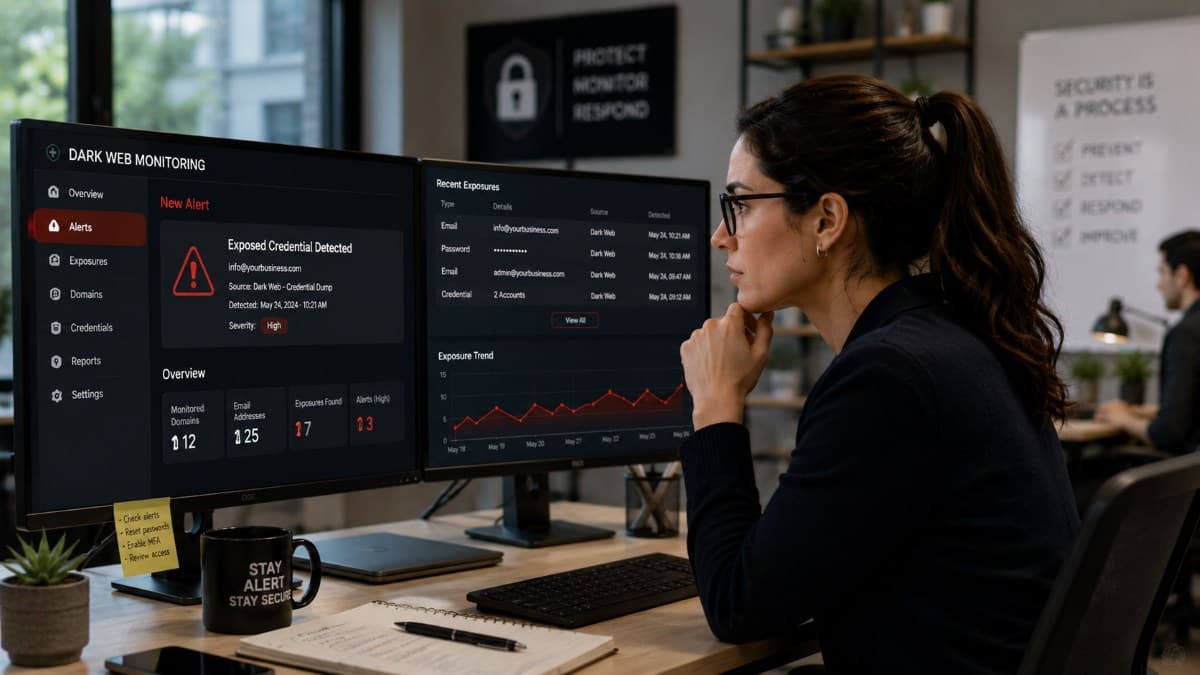
Dark web monitoring is a service that continuously scans these hidden sources, breach dumps, criminal forums, and marketplaces, looking specifically for information tied to your business. You tell it what to watch for, typically your company's email domains and sometimes specific accounts or other identifiers, and it searches the data circulating in those places for matches. When it finds your information, an employee's work email and password appearing in a breach collection, for example, it alerts you. The value is turning an invisible exposure into a visible warning, so that a stolen credential becomes something you know about and can respond to rather than a quiet liability waiting to be used.
It is worth being precise about what the service is doing, because the name can suggest something more dramatic than the reality. Dark web monitoring is essentially an alerting system. It does not break into criminal networks or remove your data from them; it watches sources of known stolen data and tells you when yours shows up. Think of it less like a guard who stops intruders and more like a service that calls to say your house keys were found in a place they should not be, so you can change the locks. That framing matters for setting honest expectations, which is where many businesses go wrong. Used as one layer within broader managed cybersecurity, it adds genuine early warning; treated as a standalone shield, it disappoints.
How Dark Web Monitoring Works
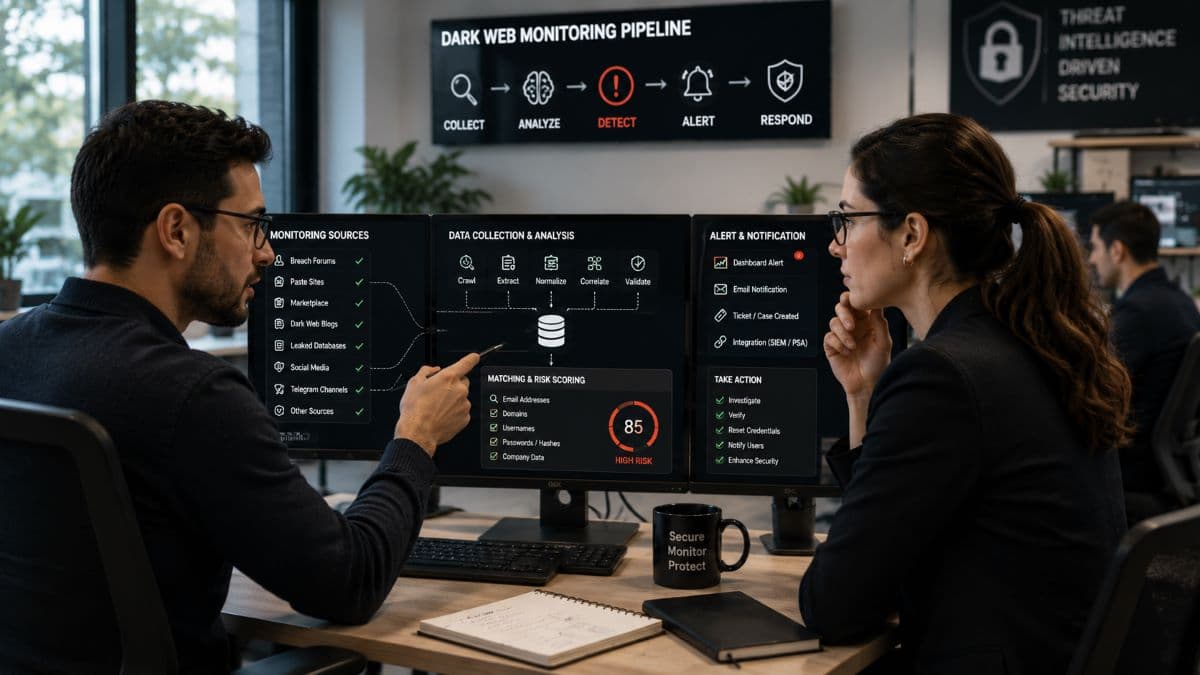
Behind the service is a combination of automated scanning and threat intelligence. Monitoring tools maintain access to and awareness of the places where stolen data appears, and they continuously compare the information found there against the identifiers you have asked them to watch. They draw on large databases of known breaches, feeds of newly leaked data, and ongoing collection from forums and marketplaces, building a picture of what has been exposed. When your domain or an associated account turns up in that exposed data, the system flags it and notifies you, often with detail about what was exposed and where it came from.
The practical result is an early warning rather than a real-time interception. Most exposures that monitoring catches come from breaches at other companies, services your staff used, vendors you work with, platforms that held some of your information, where the breach happened outside your walls entirely. You did nothing wrong, but your data was caught up in someone else's incident, and monitoring is how you learn about it. Pairing this with ongoing continuous monitoring of your own systems gives you visibility on two fronts: what is happening inside your environment and what of yours has surfaced outside it.
Why It Matters for a Small Business
The reason this is worth attention comes down to how attackers actually break in. A great many breaches begin not with sophisticated hacking but with valid stolen credentials, an attacker simply logging in with a username and password that already work. When your staff reuse passwords across personal and work accounts, a breach at an unrelated service can hand criminals a key that also opens your systems. Dark web monitoring gives you a chance to find out that a credential is exposed and change it before anyone uses it, closing a window that would otherwise stay open indefinitely.
The threat is amplified by password reuse, which remains extremely common despite years of warnings. When someone uses the same password for a personal shopping site and their work email, a breach of the shopping site quietly compromises the work account too. Monitoring helps surface these connections, and it pairs naturally with the discipline of strong, unique credentials. Encouraging proper strong password management reduces the damage any single exposure can do, while monitoring tells you when an exposure has occurred so you can respond. Together they address both halves of the problem: limiting reuse and catching what slips out anyway.
The Honest Limits of Dark Web Monitoring
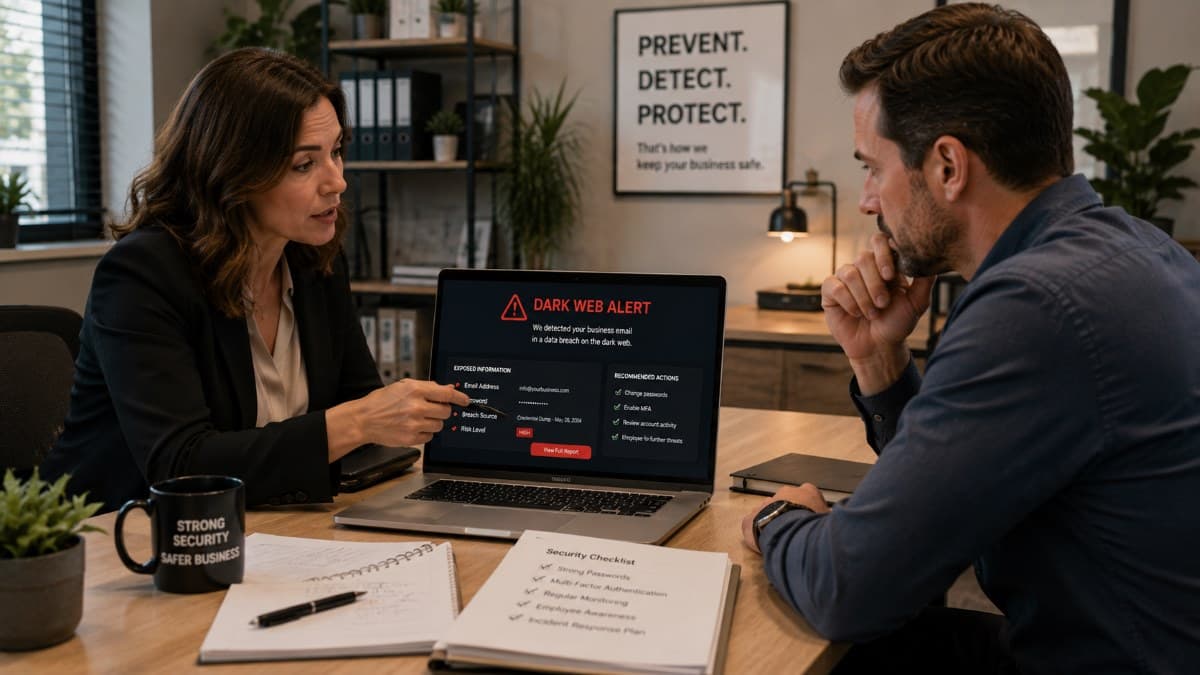
This is where a straight answer matters most, because dark web monitoring is often oversold. It is a useful service, but it has three real limits, and understanding them is what keeps it from giving you a false sense of safety.
It Cannot Remove Your Data from the Dark Web
The most important limit is that monitoring cannot remove your information from the dark web. Once data is out there, it is effectively impossible to retract; it has been copied, shared, and stored in places no one controls. Monitoring tells you about the exposure, but the response is on you, and the data stays out there regardless. A service that implies it can clean your information off the dark web is promising something no one can deliver.
Its Coverage Is Real but Not Total
The second limit is coverage. Monitoring searches the sources it has access to and awareness of, which is substantial but never the entirety of every hidden corner of the internet. Some stolen data is traded privately, never appearing in the places monitoring can reach, so an absence of alerts does not prove your information is safe. The honest reading of a quiet monitoring dashboard is that nothing has surfaced in the sources it watches, not that nothing exists anywhere.
It Detects, It Does Not Prevent
The third limit is the most important to internalize: monitoring is detection, not prevention. It does nothing to stop a credential from being stolen in the first place, and it does not block an attacker who already has working credentials from logging in. That is why the single most effective companion to monitoring is strong authentication, and why multi-factor authentication matters more than the monitoring itself, because it makes a stolen password far less useful even before you have changed it.
How to Respond When You Get an Alert
Take These Steps Right Away
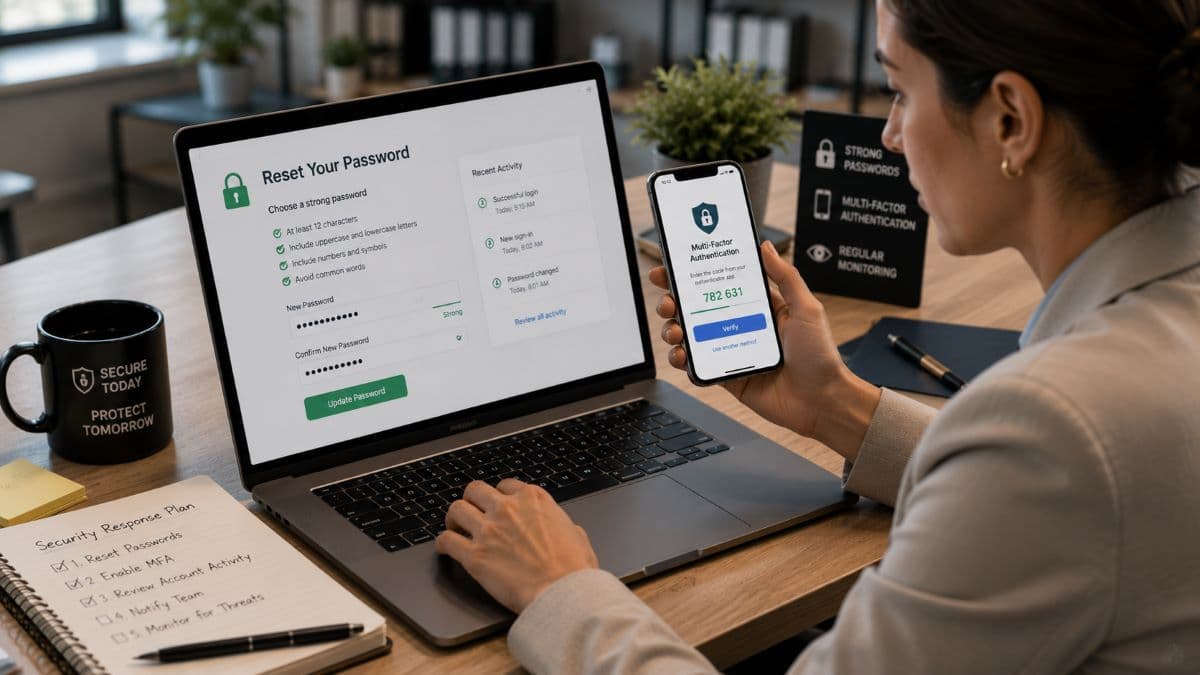
An alert is only valuable if it leads to action, and the right action is usually quick and specific. When monitoring reports that a credential is exposed, the immediate step is to change that password everywhere it is used, which is also the moment reuse becomes painfully relevant, since one exposed password may need changing in several places. Enabling strong authentication on the affected account, if it is not already in place, closes the door even if the old password is still circulating. It is also worth watching the affected account for signs of unauthorized access, because an exposure that is acted on slowly may already have been used.
Then Fix the Underlying Weakness
The broader response is to treat each alert as information about a weakness to fix rather than a one-time chore. Repeated exposures tied to the same service or the same habits point to something worth addressing at the root, whether that is password reuse, a risky vendor, or staff signing up for outside services with work credentials. Because stolen credentials so often feed directly into email-based attacks, understanding and guarding against schemes like business email compromise turns a monitoring alert into a prompt to shore up the defenses an attacker would exploit next. The goal is not just to change a password but to close the path the exposure opened.
Where Monitoring Fits in Your Security
The honest way to position dark web monitoring is as one useful layer among several, valuable for what it does and not asked to do more. It gives you early warning that credentials or data are exposed, which is genuinely helpful, but it works only when it sits alongside the protections that actually prevent and contain attacks: strong unique passwords, multi-factor authentication everywhere, monitoring of your own systems, and staff who know not to reuse work credentials on outside services. On its own it is an alarm with nothing behind it; as part of a layered approach it is a sensible addition. For a business in the Los Angeles area, a provider offering managed IT services in Los Angeles can fold monitoring into that broader setup so the alerts it produces actually connect to a response.
It also helps to know where your real weaknesses are, since monitoring tells you what has leaked but not where your defenses are thin. A periodic outside review, such as a set of network security audits, shows where exposed credentials could actually be used and where adding protection would matter most.
And because credential theft so often precedes ransomware, having a plan to respond to a ransomware incident means that if a monitored exposure does turn into an attack, you are ready rather than scrambling. Monitoring is the early warning; these are the defenses and the plan that make the warning worth having.

Deciding Whether You Need It
For most small businesses, dark web monitoring is a reasonable, low-cost layer that provides real value as long as expectations are honest. It will not make you secure on its own, it cannot remove your data from where it has spread, and it does not replace the fundamentals, but it does turn an invisible exposure into a warning you can act on, which is worth having. The businesses that benefit most are those that pair it with strong authentication, good password habits, and a willingness to respond when an alert arrives. Understood as early warning rather than protection, dark web monitoring is a sensible piece of a complete security picture, helping you catch a stolen credential before it becomes a breach.
Frequently Asked Questions
It continuously scans hidden sources where stolen data is traded, breach dumps, criminal forums, and marketplaces, looking for information tied to your business, such as your email domains or specific accounts. When your information appears, it alerts you so you can respond, usually by changing the exposed password and enabling strong authentication. In short, it turns an invisible exposure into a visible warning. It is an alerting system, not a tool that prevents attacks or removes your data.
No, and any service that claims it can is overpromising. Once data has been exposed and circulated, it has been copied and shared across places no one controls, and it cannot be retracted. Monitoring tells you about the exposure so you can limit the damage by changing credentials and tightening protection, but the data itself stays out there. The value is in the warning and your response, not in any ability to clean the dark web.
No. Monitoring is detection, not prevention. It does not stop credentials from being stolen and does not block an attacker who already has a working password from logging in. It is valuable only as one layer alongside the protections that actually prevent and contain attacks, especially multi-factor authentication, strong unique passwords, monitoring of your own systems, and staff awareness. Relying on it alone would leave you exposed despite the alerts.
Act quickly and specifically. Change the exposed password everywhere it is used, which often means several places if the password was reused, and enable strong authentication on the affected account if it is not already on. Watch that account for any signs of unauthorized access. Then treat the alert as a signal to fix the underlying weakness, whether that is password reuse, a risky outside service, or staff using work credentials where they should not.
If you want early warning when your business's credentials are exposed, backed by the protections that make that warning actually useful, GlobeVM can set up dark web monitoring as part of a security approach built to prevent and contain attacks, not just detect them.
Comments
0 Comments