A construction company lives in two places at once: an office where estimates, contracts, and payroll get produced, and a string of jobsites where the actual money is made in mud, dust, and schedule pressure. Most IT providers only understand the first place. IT support for construction is the discipline of serving both, keeping a superintendent's tablet working in a trailer with two bars of signal, keeping the estimating system alive the night a bid is due, and keeping a progress payment from being stolen by an email that looked exactly like the general contractor's. Builders who have lived a failed drawing sync on pour day already know the difference between office IT and field-ready IT.
IT Support for Construction: Keeping the Office and the Jobsite on One Team

By George
18 September 2026

This guide walks through what makes construction technology its own problem, what field-ready support actually includes, the fraud pattern that targets builders specifically. It ends with how to evaluate a provider before your next project depends on one.
Why Construction IT Is Its Own Discipline
Four conditions separate a contractor from an office business of the same size. The workforce is split between office and field, and the field half works from trailers, trucks, and active sites where connectivity is improvised and devices take physical abuse. The files are enormous and version-critical: plan sets, CAD and BIM models, and photo documentation that must be identical in the trailer and the office, because a crew building from last week's revision is rework measured in change orders.
The cast rotates constantly: subcontractors, project engineers, and seasonal crews join and leave by the project, each needing access to exactly one job's documents and nothing else. And the deadlines are contractual: bid dates, submittal windows, and draw schedules carry money and liquidated damages, so a system outage during bid week is not an inconvenience, it is margin walking out the door.
There is a fifth condition that owners feel before they can name it: the money moves on email. Progress payments, retainage releases, and supplier invoices flow through inboxes between parties who have often never met in person, which is precisely the environment payment fraud was built for. We will come back to that one, because it deserves its own section.
What Field-Ready Construction IT Support Includes
Connectivity that reaches the trailer
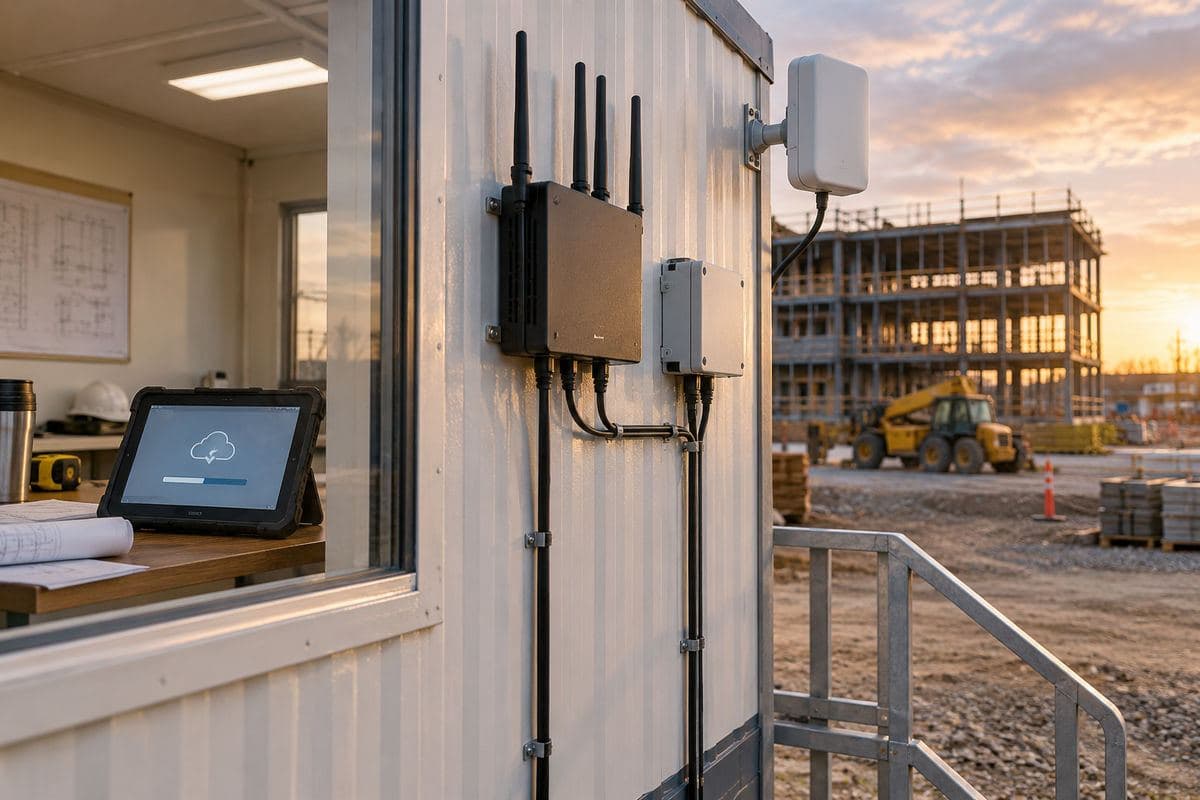
Every project starts with the same unglamorous question: how does this site get online? Good support treats jobsite connectivity as a repeatable kit rather than a per-project improvisation: a cellular router with external antennas for the trailer, a bonded or secondary carrier where a single network is weak, and a documented setup that goes live the week the trailer lands, not the month after.
The same kit thinking applies inside the site, where a weatherproof access point can put usable Wi-Fi on a floor plate so field engineers stop burning phone batteries as hotspots. Site cameras and time-lapse rigs ride the same kit, which turns documentation and remote progress checks into a free byproduct of connectivity done once. When the site stands up fast, drawings sync, punch lists update, and the office stops printing plans nobody will maintain.
Project files that match everywhere
The heart of construction IT is a single source of truth for documents. Whether the company runs a construction management platform or a well-organized cloud drive, the requirements are the same: one current plan set per project, revisions controlled, mobile access that works on a tablet with gloves on, and permissions drawn at the project level so a subcontractor sees their job and nothing else.
Getting there usually means moving project files to the cloud deliberately, with a folder structure the whole company shares, instead of the slow drift where every project manager invents a system and the server becomes an archaeology site. When a dispute reaches lawyers, the folder that shows who had which revision on which date is the cheapest witness the company will ever hire. Photo documentation belongs in the same structure, because the picture that wins a dispute is worthless if nobody can find it two years later.
Estimating and accounting kept alive
Two systems stop a contractor cold when they fail: estimating and construction accounting. Bid nights are the filing deadlines of this industry, and support that understands builders treats the estimating workstation, its plugins, and its license server as protected equipment with a fast response path, especially in the hours before a due date. Construction accounting platforms carry payroll with certified reporting, job costing, and draw paperwork, and they need the same care: monitored backups, tested restores, and updates scheduled around payroll runs rather than through them. A provider who has never heard of a bid night will learn about it during yours.
Devices built for the field, tracked like tools
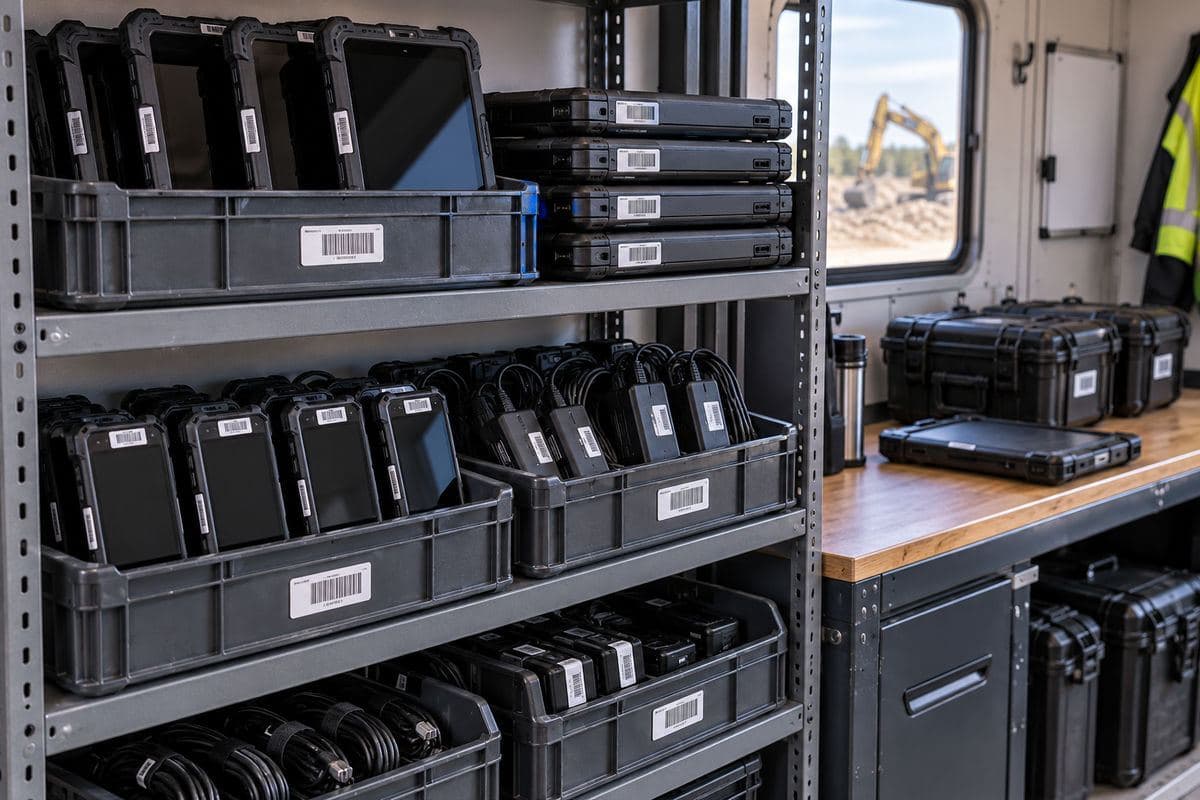
Field hardware lives hard: tablets get dropped from scaffolds, laptops ride dashboards through summer heat, and phones fall into things phones should not fall into. The sustainable pattern is rugged or ruggedized standard models, spares staged in labeled crates with chargers and cables so a superintendent is never down for a week, encryption on everything since devices leave sites in unlocked trucks. And endpoint protection on every machine because field devices touch the same email and project systems the office does. Just as important is knowing what exists: gear scatters across sites and crews, and the discipline of IT asset management is what keeps a hundred devices from becoming a hundred mysteries, including the loaner tablet that left with a sub eight months ago.
Access that follows the project, not the person
People join for a job and leave when it closes, so access has to be granted and removed at project speed. Field-literate support builds the routine: accounts and project permissions ready when a crew mobilizes, shared logins eliminated because they make site activity untraceable, and a closeout step that removes access the same week the job demobilizes.
Closeout has a data half too, and it is the forgotten phase of construction IT: the project record, plans, RFIs, submittals, photos, and correspondence, archived read-only in one place, because warranty claims and disputes surface years later and the company that can produce its record wins the argument. Archiving at demobilization costs an hour; reconstructing a record during a claim costs a paralegal's month. Personal devices on the job get deliberate handling instead of default trust, since a foreman's own phone full of project email is a company data question the day that phone is lost or that foreman moves to a competitor.
The Fraud Pattern Built for Builders
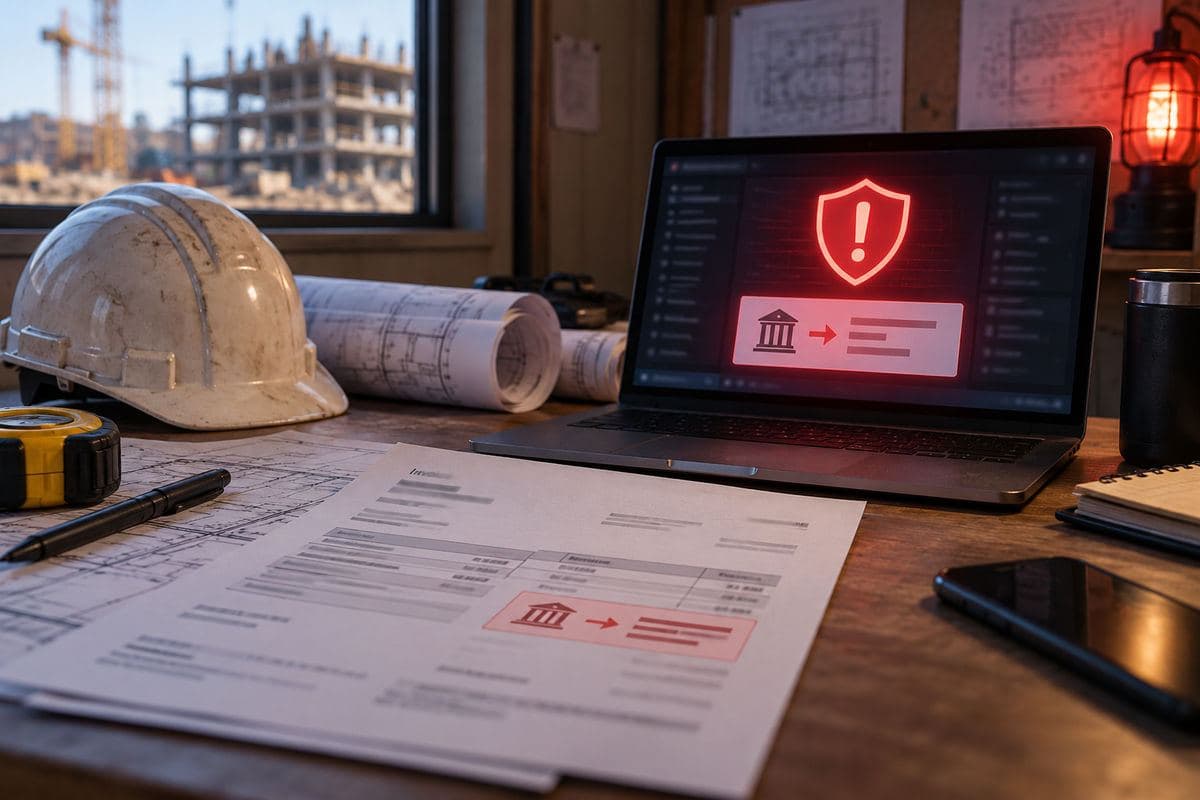
Payment fraud thrives in construction because the industry's normal behavior looks exactly like the scam: large payments, moved on emailed instructions, between many parties, under deadline pressure. The pattern is consistent. An attacker compromises or convincingly imitates a general contractor, subcontractor, or supplier mailbox, waits for a real invoice or draw cycle, then sends the small fatal update: new bank account, revised remittance, urgent change before Friday's payment. The money leaves, and by the time the real vendor calls about a missing payment, recovery is unlikely.
The defense is procedural steel wrapped in technical monitoring: every banking change verified by phone call to a number already on file, never a number in the email; dual approval on payments above a threshold. The same verification discipline applied to lien waivers and retainage releases, since attackers study those documents too; and mailbox protections that catch the forwarding rules and lookalike domains these schemes depend on. Train the accounting inbox first, because every version of this scheme eventually lands there. The full anatomy is in our guide to business email compromise, and the construction-specific lesson is blunt: the companies that survive this are the ones whose payment procedures do not bend for urgency, seniority, or a convincing signature block.
When Owners and GCs Start Auditing Your Security
Security questionnaires have reached construction. Public work, healthcare and education projects, and larger general contractors increasingly ask bidders how company and project data is protected, and cyber insurance carriers ask harder questions at every renewal. Public agencies increasingly fold these questions into prequalification itself, so the packet decides whether you may bid at all. A contractor with multi-factor authentication enforced, backups tested, payment verification documented, and training records on file answers in an afternoon and looks like a professional operation.
A contractor without them either overpromises on paper or loses the work quietly, and at renewal the insurance market prices the difference, because carriers now treat these controls as the line between insurable and expensive. Good support produces this evidence as a byproduct of doing the job right, which is cheaper than producing it as a project the week a prequalification package is due.
Choosing a Provider Who Understands Jobsites
The interview is short if you ask field questions. How many contractors do they support today, and will a project executive take a reference call? What is their standard jobsite connectivity kit, and how fast does a new trailer come online?
Which construction management and accounting platforms do they administer, and who owns escalations with those vendors? What is their written response commitment during bid week and payroll runs? How do they handle project-based access for subs and demobilization at closeout? And what happens when a superintendent's tablet dies on a Tuesday, specifically, in hours?
Vague answers to two of these predict the relationship. So does a proposal that never asks how many active projects you run or where they are; we have that conversation with builders from Santa Clarita to the South Bay. And the pattern is reliable: providers who ask about trailers, bid nights, and draw schedules support them well, and providers who ask only about users and mailboxes support an office that is only half the company. That gap is the reason our IT support for construction practice runs as its own discipline with its own playbook.
Frequently Asked Questions
Beyond office help desk and device management, it includes jobsite connectivity kits for trailers and field crews, a controlled single source of truth for plans and project documents, protected uptime for estimating and construction accounting, rugged field devices tracked and secured, project-based access for rotating crews and subcontractors, and payment fraud defenses tuned to how construction money actually moves.
The dependable pattern is a cellular router with external antennas in the trailer, a second carrier or bonded connection where coverage is thin, and weatherproof access points where crews need Wi-Fi on the floor. Treated as a standard kit that deploys the week the trailer lands, site connectivity becomes routine; improvised per project, it becomes a month of hotspots and printed plans.
Because the industry's normal workflow matches the scam: large progress payments, moved on emailed instructions, among many parties under deadline pressure. Attackers imitate or compromise a GC, sub, or supplier mailbox and send revised banking details timed to a real payment cycle. Callback verification on every banking change and dual approval on large payments are the controls that break the scheme.
Grant access at the project level, not the company level: a sub sees their job's documents and nothing else, through individual accounts rather than shared logins. Access is created at mobilization and removed at demobilization as a standard closeout step, with a periodic review to catch stragglers, because a sub who finished last year should not still open this year's plans.
Standardized rugged or ruggedized models with encryption on, endpoint protection installed, and spares staged so a broken tablet is a swap rather than a week of downtime. Every device belongs in an asset inventory tied to a person and a project, so the company always knows what exists, where it is, and what walked away.
Field-ready support prices above plain office support for the same headcount, because the scope is larger: site connectivity, field devices, project platforms, and fraud controls are real work. The honest comparison is scope against scope, weighed against what a down estimating system on bid night or one redirected progress payment actually costs, numbers every owner can produce from memory.
The office and the jobsite are one company, and IT support for construction succeeds exactly when the technology stops caring which one you are standing in, so if you want that measured against your own projects, book a field IT review with GlobeVM and we will walk a trailer with you.
Comments
0 Comments