Every time an employee in your office clicks a file, streams a video, or accesses a database, that request travels physically through fiber optic cables to a server. For years, the standard practice has been to send all this data to centralized data centers—often located hundreds or thousands of miles away in places like Oregon or Virginia. While centralized servers offer massive storage capacity, physical distance creates an unavoidable problem: latency. Data can only travel so fast. When thousands of connected devices, high-resolution cameras, and employee workstations compete for bandwidth simultaneously, sending every single command across the country and back creates operational bottlenecks.
Understanding Mobile Edge Computing & Its Value for LA Businesses

By nazy rafaeil
13 June 2026

For standard email or document editing, this minor delay goes unnoticed. However, for Los Angeles businesses handling large media files, operating automated warehouse robotics, or analyzing live security feeds, a half-second delay disrupts the entire workflow. The solution is no longer pushing more data to distant servers, but rather bringing the processing power closer to the physical location where the data is created. For companies pushing large files or relying on instant data analysis, Mobile Edge Computing offers a practical alternative to pure cloud dependence.
By restructuring how and where information is processed, organizations can bypass internet congestion, drastically reduce their monthly bandwidth expenditures, and maintain operational continuity even if their primary internet connection experiences a disruption.
What Exactly Is Mobile Edge Computing?
Definition: Mobile Edge Computing is a network architecture that processes data physically close to where it is generated—at the "edge" of the network—rather than sending it to a centralized cloud server. By keeping computation local, organizations reduce latency, lower bandwidth costs, and improve the performance of real-time applications.
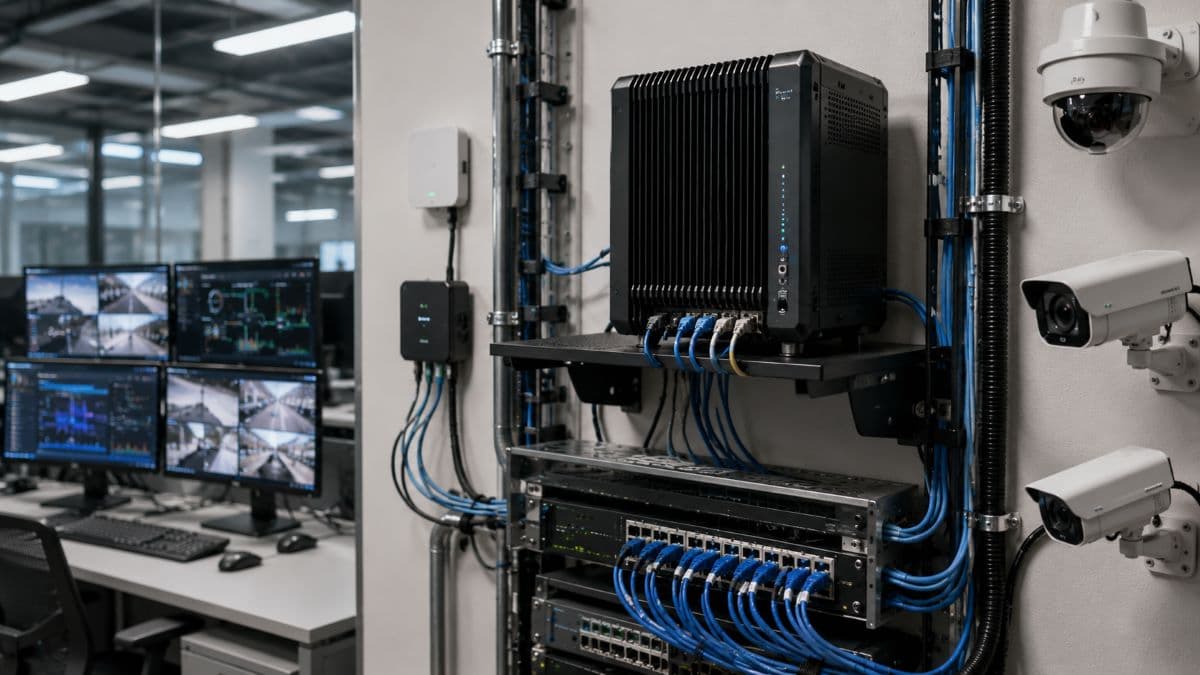
To understand how this works, consider a standard security camera system. In a traditional setup, ten high-definition cameras stream live video to a remote server 24 hours a day. The remote server analyzes the footage for motion or unauthorized access. This constant stream consumes a massive portion of the company's internet bandwidth. With an edge architecture, a local processing device (an edge node) is installed directly on the company premises. This node analyzes the video feed in real time. It only sends data to the central server when it detects an actual security event, filtering out hours of empty footage. This localized approach applies to manufacturing sensors, medical imaging devices, and employee workstations.
This architecture does not eliminate the need for centralized servers. Instead, it creates a filtering and processing layer right inside your building or at a local cellular tower. The local hardware handles immediate, time-sensitive tasks, while long-term storage and complex historical data analysis are still forwarded to your cloud services and migration infrastructure.
Tangible Benefits for Los Angeles Industries
Different regions have different industrial demands. The greater Los Angeles area houses specific sectors that suffer heavily from network latency. Moving processing power onto the premises solves very specific, localized operational headaches.
Media, Entertainment, and Post-Production
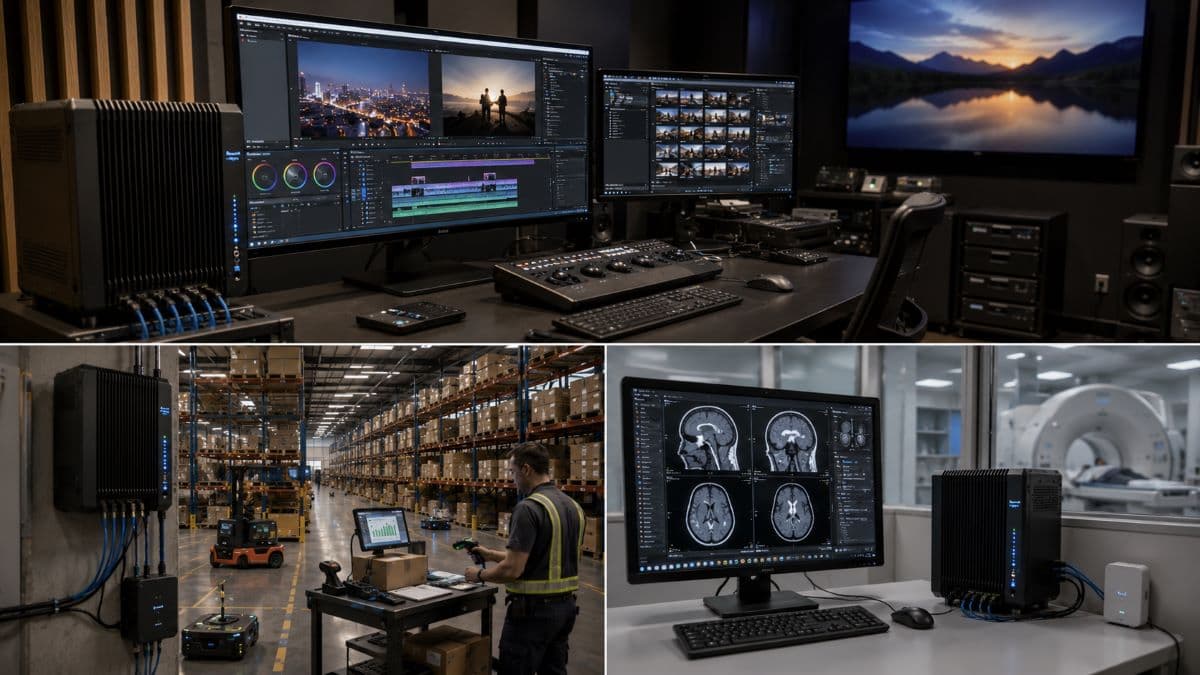
Studios located in Burbank, Hollywood, and Culver City work with enormous file sizes. A single uncompressed 8K video file can span hundreds of gigabytes. When multiple video editors, colorists, and sound engineers attempt to collaborate on these files via a remote server, the resulting lag makes precise frame-by-frame editing impossible. Editors are forced to download the entire file locally, work on it, and upload it again creating severe version control issues and wasting hours on file transfers.
By implementing local processing nodes, studios can keep the heavy rendering and active editing data directly on their local network. The centralized storage simply acts as a final repository for finished projects. This allows multiple editors in the same facility to work on the exact same project simultaneously with zero perceptible delay.
Logistics and Warehousing in the South Bay
The warehousing districts surrounding the Port of Los Angeles and Long Beach rely on constant data flow. Modern logistics operations use automated guided vehicles (AGVs), hundreds of hand-held barcode scanners, and inventory tracking sensors. If the facility relies entirely on a distant server, a temporary internet outage stops the entire warehouse floor. Scanners will not register items, and automated vehicles may halt because they cannot reach their control server.
Implementing Mobile Edge Computing allows these facilities to process scanner data locally. If the main internet line goes down, the local nodes continue managing the inventory counts and robotic paths. Once the internet connection is restored, the local node quietly synchronizes the updated data with the central database. This ensures warehouse operations never stop just because an external internet service provider is having an outage.
Healthcare and Medical Imaging
Clinics across the San Fernando Valley and wider Ventura County handle large diagnostic files, such as MRI and CT scans. Beyond the size of the files, these facilities must strictly adhere to HIPAA regulations regarding patient data privacy. Sending unencrypted, raw patient data across public internet channels to a remote server introduces significant compliance risks.
Edge nodes allow the clinic to process and view the medical images locally with immediate load times for doctors. More importantly, the local node can encrypt, anonymize, or strip personally identifiable information (PII) from the data before it is ever transmitted over the public internet to the long-term storage archives. This dual approach solves both the speed issue for the physician and the compliance issue for the practice manager.
The Security Reality of Distributed Networks
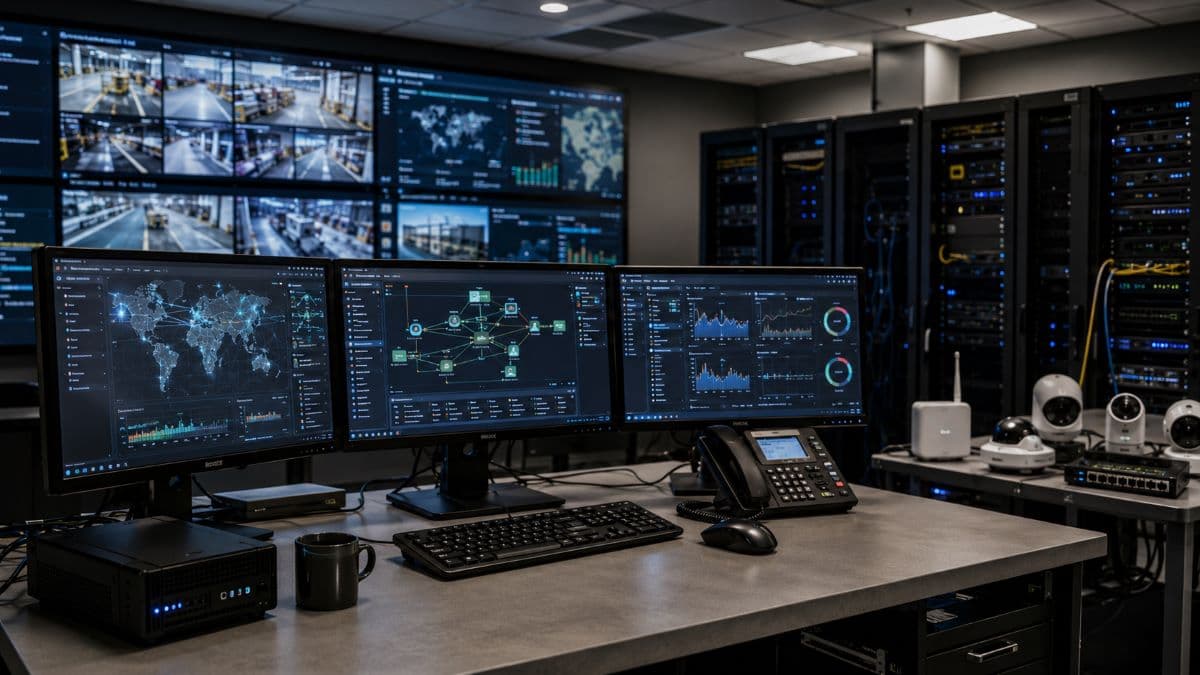
While processing data locally solves speed and bandwidth problems, it completely changes your security perimeter. For the past decade, IT security focused on building a strong digital wall around the main office and the central server. Edge architecture disperses your data processing across dozens of localized devices, routers, and IoT sensors. Each of these devices is a potential entry point for unauthorized access.
Vulnerabilities in IoT and Edge Hardware
Many smart devices, localized sensors, and wireless controllers are manufactured with minimal built-in security. They often ship with hardcoded default passwords and lack the ability to install standard antivirus software. If a malicious actor gains access to an unsecured temperature sensor or wireless scanner in your warehouse, they can use that tiny foothold to move laterally across your network and access sensitive corporate data.
Because the network is spread out, you cannot rely on a single firewall. Every single processing node must be treated as a potentially hostile environment. You must verify every connection attempt, regardless of whether the device is physically located inside your building. This requires implementing strict zero trust architecture principles, where no device, user, or application is trusted by default.
Protecting the Edge Perimeter
Securing a distributed network requires specialized protocols that go beyond basic password protection. To properly defend these local nodes, businesses must implement:
- Network Segmentation: Edge devices and IoT sensors must be placed on a completely separate Virtual Local Area Network (VLAN) from employee computers and financial data. If an edge device is compromised, the attacker cannot cross over into the administrative network.
- Port Authentication (802.1X): Any device attempting to connect to the local network—whether wired or wireless—must present a cryptographic certificate or undergo strict authentication before the network switch allows it to communicate.
- Automated Patch Management: Edge nodes require constant firmware updates to patch newly discovered vulnerabilities. Because these devices are numerous and scattered, manual updating is impossible. Centralized monitoring tools must push security patches to all edge devices automatically.
Without these protections in place, the operational benefits of local processing will be quickly overshadowed by the financial impact of network outages caused by a security breach. Protecting these diverse endpoints is exactly why businesses turn to professional cybersecurity solutions to audit and monitor their infrastructure.
Infrastructure Requirements and Implementation Steps
Transitioning to an edge-focused network does not mean ripping out your existing hardware and starting over. It is an additive process. It requires identifying the specific bottlenecks in your daily operations and placing hardware strategically to resolve them. If your Los Angeles business is ready to reduce its reliance on distant servers, the implementation follows a structured path.
Step 1: Traffic Analysis and Hardware Placement
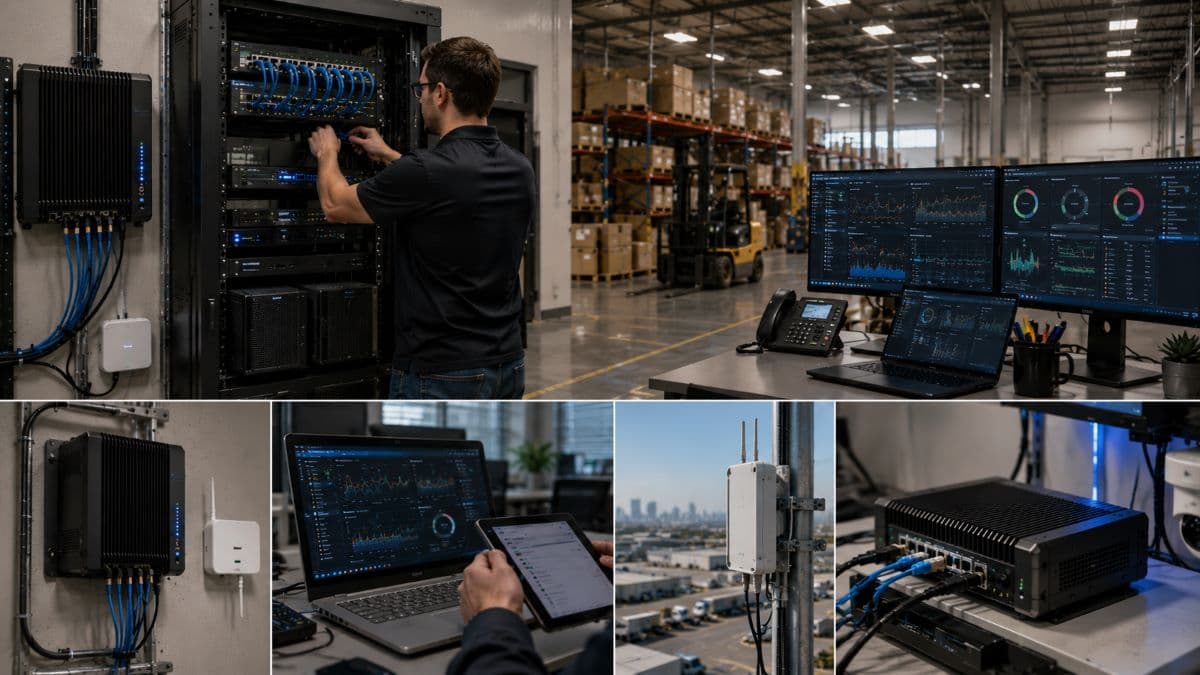
Before purchasing equipment, you must map your network traffic. An IT professional will analyze your daily operations to identify which applications consume the most bandwidth and which are most sensitive to latency. Once identified, micro-data centers or edge servers are installed. These are not massive server racks requiring dedicated cooling rooms; modern edge nodes are often the size of a standard desktop computer or a small wall-mounted appliance designed to operate in standard office or warehouse environments.
Step 2: Integrating with 5G Networks
A critical component of modern local processing is connectivity. If your facility covers a large physical area—like a manufacturing plant or an outdoor lot—running physical Ethernet cables to every sensor or camera is highly expensive and often physically impossible. Deploying Mobile Edge Computing requires utilizing localized wireless networks, often leveraging 5G cellular technology. 5G provides the low latency and high connection density necessary to bridge hundreds of local devices to the edge processing node without the interference common in standard Wi-Fi networks.
Step 3: Centralized Management and RMM
Once you install multiple processing nodes across different branch offices or warehouse floors, you can no longer manage them individually. You need a system that monitors the health, temperature, storage capacity, and security status of every node from a single dashboard. This is achieved through Remote Monitoring and Management (RMM) software. RMM tools allow technicians to predict hardware failures before they happen, ensuring continuous operation. For most small to mid-sized businesses, managing this complex hardware array internally is not feasible, making outsourced IT management the most reliable way to maintain the environment.
Frequently Asked Questions
No. It serves as a complementary filter. The local nodes handle immediate, real-time processing and immediate actions. The cloud is still utilized for long-term data archiving, running complex artificial intelligence training models on historical data, and hosting corporate applications that do not require millisecond response times.
Traditional local servers were often isolated units intended to store basic files for an office. Edge nodes are highly connected, purpose-built devices designed to interact constantly with local mobile networks, IoT sensors, and the broader centralized cloud simultaneously. They act as active gateways rather than passive storage boxes.
5G provides the wireless bridge. While the edge node provides the localized computing power, 5G networks provide the necessary speed and bandwidth to transmit data from hundreds of wireless devices to that node without the lag associated with older wireless protocols.
No device is inherently safe from ransomware. In fact, edge nodes require specialized security configurations because they expand the attack surface. Preventing ransomware on these devices requires strict network segmentation, removing default credentials, and employing active monitoring tools to isolate an infected node before the infection spreads to the main database.
Final Thoughts on Modernizing Your IT Strategy
Relying exclusively on distant data centers is no longer a viable strategy for businesses that depend on real-time data, large file manipulation, or continuous automated processes. Bringing processing power directly onto your premises solves the physical limitations of internet latency and provides a massive boost to daily productivity. Adopting Mobile Edge Computing is about aligning your infrastructure with your operational needs, ensuring that your staff and systems are never left waiting for data to travel across the country.
Transitioning from a pure cloud environment to a hybrid, localized model requires careful planning, exact hardware selection, and strict security protocols to ensure your data remains protected. If you are experiencing network bottlenecks or are concerned about the security of your distributed devices, you need a technical partner who understands both the hardware and the specialized security requirements.
Schedule a comprehensive network assessment with GlobeVM today to identify your operational bottlenecks and design a localized processing strategy tailored specifically to your business needs.
Comments
0 Comments