


Healthcare depends on technology in a way few other fields do, and it does so under conditions most businesses never face. A medical practice has to keep systems available during patient hours, protect some of the most sensitive personal information there is, and meet strict rules about how that information is handled, all at the same time. When a system goes down, patients are waiting. When data is exposed, the harm is real and the legal consequences are serious. IT for healthcare is simply not the same as IT for a typical office, and treating it that way is where many practices run into trouble.
Our work is to provide technology and security shaped around how a medical practice actually operates, so it supports patient care rather than getting in the way of it. That means understanding not just the computers and the network, but the clinical workflow around them, the compliance obligations that sit on top, and the fact that in a practice, downtime and data loss are not abstract problems but ones that reach patients directly.
Why Healthcare Is a Target
It is worth understanding why medical practices face such pressure on security. Patient records are unusually valuable to criminals, because they contain a complete picture of a person, identity details, insurance information, and medical history, that can be used for fraud in ways a stolen card number cannot. That makes healthcare one of the most heavily targeted sectors, and smaller practices are not spared. If anything, attackers often see them as easier targets than large hospital systems with full security teams. A practice does not need to be large to be worth attacking; it only needs to hold patient data, which every practice does. Recognizing this is the starting point for taking protection seriously, rather than assuming it is someone else’s problem.
Protecting Patient Data
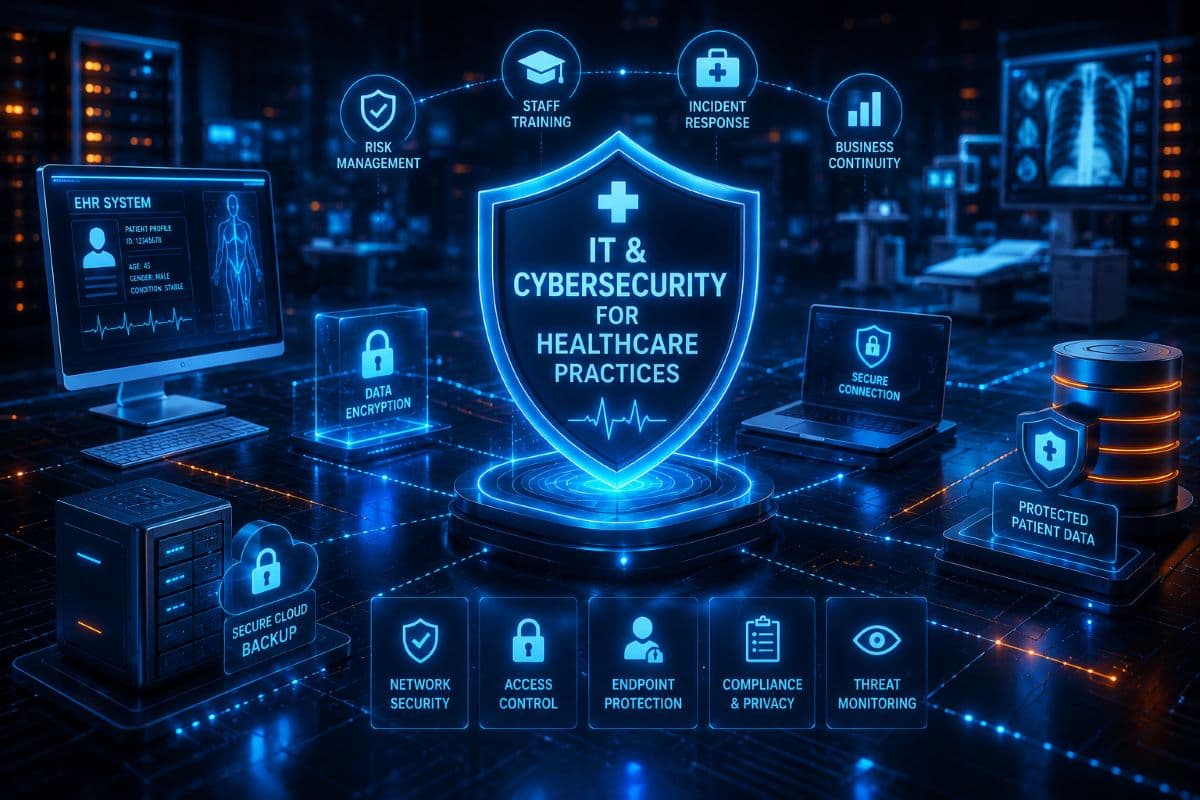
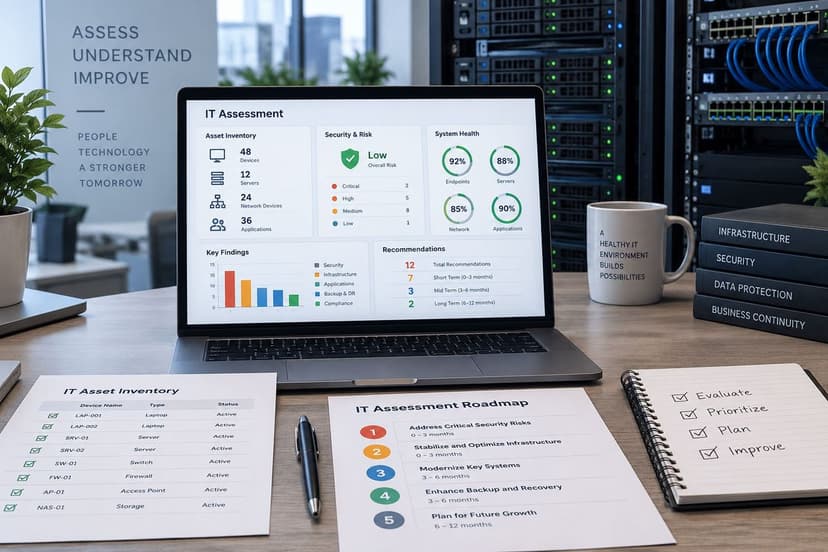
Protecting patient information well takes more than a single tool; it takes several layers working together. That includes controlling who can access records and making sure a stolen password alone is not enough to reach them, protecting the laptops, desktops, and servers where data lives, filtering the email that is the most common way attacks arrive, and keeping reliable backups so information can be recovered if something goes wrong. It also includes the people side, because staff who can recognize a suspicious message stop attacks that technology misses. A practical review of where patient data sits and what could put it at risk, a security risk assessment, is the foundation, because it tells you where to focus rather than guessing. Strong protection for a practice is the sum of these parts, fitted to the way the practice works.
Supporting HIPAA Compliance
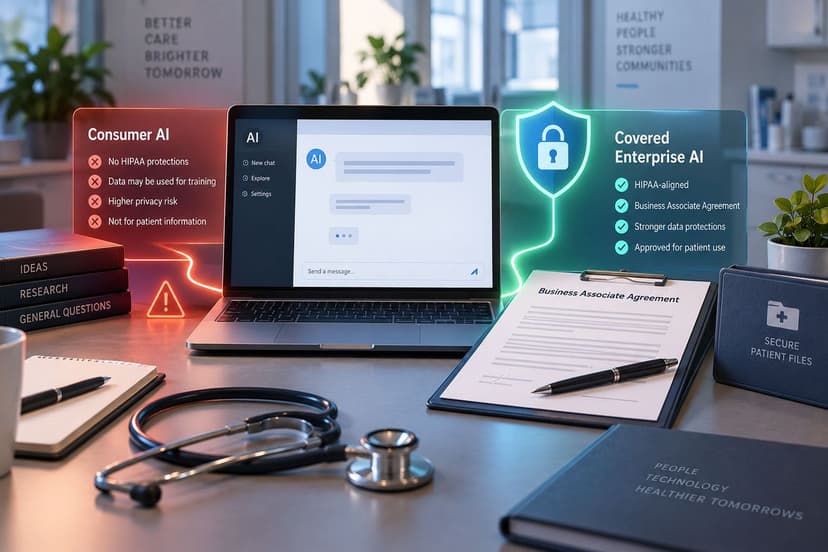
For a medical practice, security and compliance are tied together, because HIPAA requires you to protect patient information and to be able to show that you do. We support that obligation in practical terms: putting the safeguards HIPAA expects in place, signing the business associate agreement that any provider handling patient data should sign, and helping keep the documentation that compliance depends on. It is worth being clear that compliance and security are related but not identical. Meeting the rules on paper is not the same as being genuinely protected, and real protection is not automatically documented in the way auditors expect, so doing both properly is the goal. The deeper detail of what HIPAA requires, and how a practice becomes and stays compliant, is its own subject, and one we handle through our dedicated compliance and risk management service rather than as an afterthought.
Keeping Practices Running
In a medical practice, system availability is not a background concern; it directly affects patients. If the practice management system is down, appointments back up, billing stalls, and staff cannot do their jobs. This is why reliable IT for healthcare puts real weight on keeping systems running and resolving problems quickly when they occur. It means monitoring systems so issues are caught before they cause an outage, maintaining the equipment and software the practice runs on, and having support that responds fast when something breaks, because in a practice every minute of downtime carries a cost measured in patients waiting. Good healthcare IT is judged less by how impressive it looks and more by how rarely the practice has to think about it.
Healthcare IT Across Los Angeles
As a managed IT and cybersecurity provider based in the Los Angeles area, with CCSP certified expertise, GlobeVM supports medical practices across Woodland Hills, Encino, Sherman Oaks, the San Fernando Valley, Santa Clarita, the Conejo Valley, and Ventura County. We protect patient data with layered cybersecurity, support your HIPAA obligations, keep your systems running through patient hours, and stay reachable when you need us. No provider can promise that nothing will ever go wrong, but we can make sure your practice has serious protection in place, can show its diligence, and has a local partner who understands what is at stake when the patients are yours.