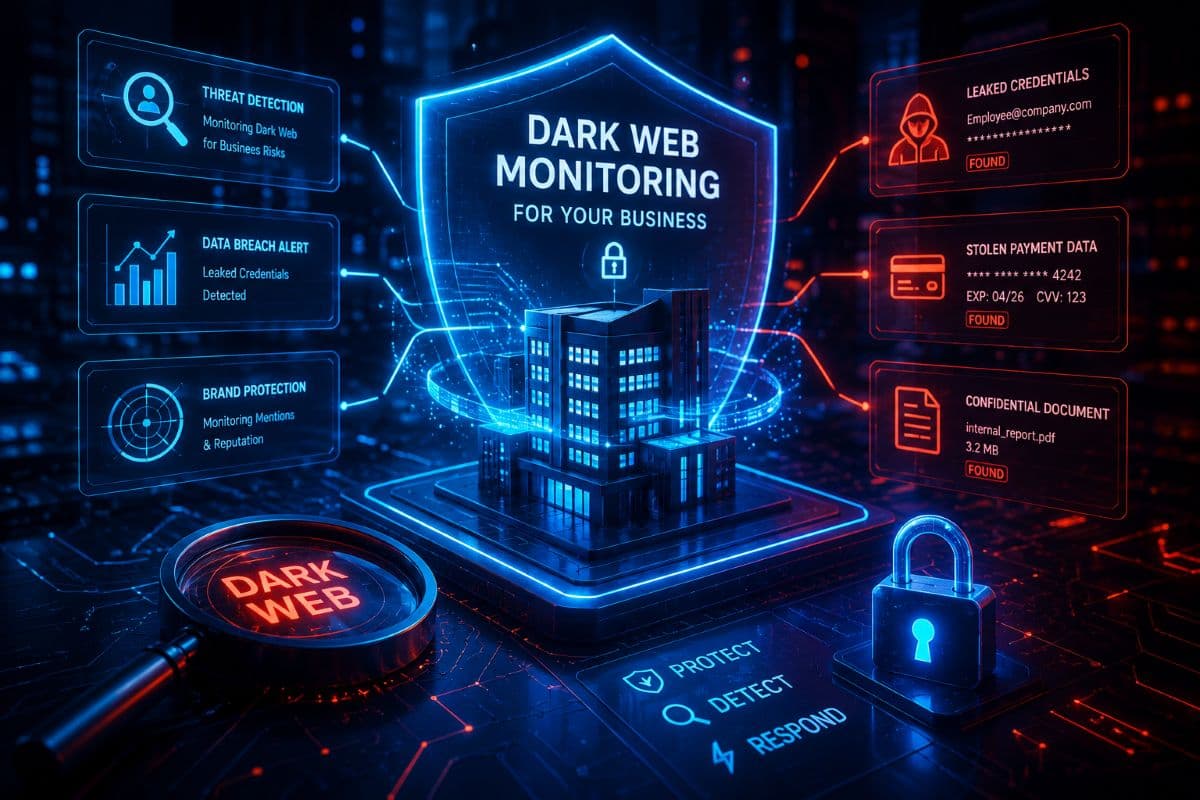




The dark web is the part of the internet that ordinary browsers and search engines do not reach, where visitors stay anonymous. That anonymity makes it home to criminal markets and forums where stolen data is traded: usernames and passwords, email lists, financial details, and files taken in breaches. Dark web monitoring is a service that continuously watches those places for anything belonging to your business, your domains, your staff logins, your data, and alerts you when something surfaces. The point is simple: stolen credentials are usually circulating well before the business they belong to has any idea, and the earlier you know, the less an attacker can do with them.
For a small or mid-sized business, this is not an exotic concern. Attackers do not need to break into your network if they can simply buy a working password for it. Monitoring exists to take away the head start they usually enjoy.
How Your Credentials End Up There
The uncomfortable truth is that your passwords can be exposed without your business ever being attacked directly. The most common path runs through someone else’s breach: an employee signs up for an outside service with their work email, that service is breached, and the email and password end up in a stolen database. If the same password was reused at work, the attacker now holds a key to your systems, which is why password habits and management matter so much. Phishing and password-stealing malware are the other frequent sources. However the theft happens, the results tend to be combined into large lists that are sold, traded, and recirculated on criminal markets for years.
What Monitoring Can and Cannot Do
It is worth being unusually direct here, because this service attracts overpromising. Dark web monitoring is an early-warning system, not a shield and not a cleanup crew. It cannot stop your data from being stolen elsewhere, and once information is copied and traded on criminal markets, no one can remove it, whatever some services imply. It also cannot see everything: some criminal activity happens in closed, invitation-only channels that no provider can reach, so complete coverage is not an honest promise. What monitoring genuinely does is shrink the dangerous gap between your credentials being exposed and you finding out. Exposed passwords are only valuable to an attacker while they still work and while no one is watching the accounts. Early warning takes both advantages away, and that is the real protection.
What Happens When Something Is Found
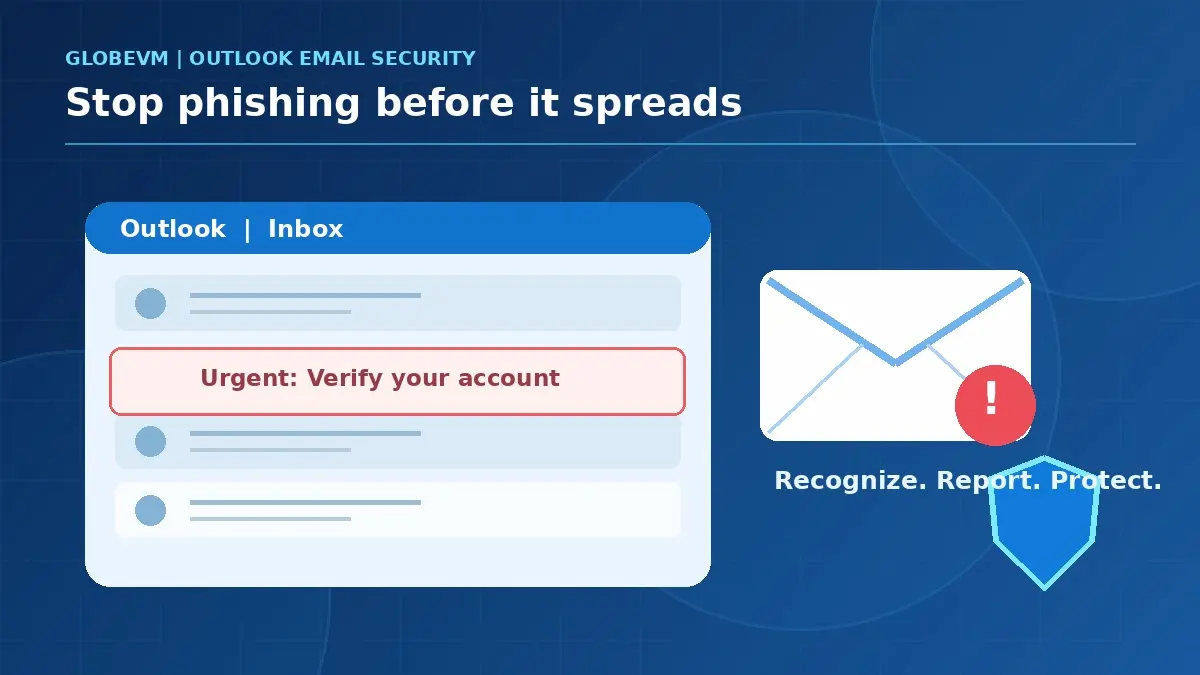
An alert is only useful if it turns into action, so the response is where the value lives. When something belonging to your business surfaces, we tell you in plain language what was found and which accounts are affected, then help you close the exposure: resetting the passwords involved, checking whether the accounts show signs of misuse, and strengthening sign-in protection so a stolen password alone is not enough. Exposed details are also raw material for targeted fraud, criminals use real names, addresses, and credentials to make their approaches convincing, so part of a good response is alerting your team to watch for email compromise scams that may follow. Handled this way, a finding becomes a controlled fix rather than a crisis.
Who Actually Needs This
A reasonable question is whether a smaller business needs monitoring at all, and the honest answer is that exposure has very little to do with size. If your team signs into email, cloud services, or anything reachable from the internet, stolen credentials are a direct route into your business, and your staff’s work emails have almost certainly been used on outside services at some point. Businesses with remote access, cloud platforms like Microsoft 365, or staff who have been around long enough to appear in old breaches get the most immediate value. The question is less whether your credentials will ever appear in a stolen list and more whether you will find out before someone tries to use them.
One Layer of a Real Defense
Dark web monitoring makes the most sense as one layer inside a wider cybersecurity program, because everything it catches points back to the fundamentals. Findings feed directly into stronger authentication, better password practices, and staff who know what a follow-on scam looks like. A business that only buys alerts, without the protections and the response around them, gets a stream of bad news it cannot act on. A business that ties monitoring into its broader security turns those same alerts into early, quiet fixes. That is the difference between owning a smoke detector and having one connected to someone who actually responds.
Dark Web Monitoring for Los Angeles Businesses
As a managed IT and cybersecurity provider based in the Los Angeles area, with CCSP certified expertise, GlobeVM provides dark web monitoring for businesses across Woodland Hills, Encino, Sherman Oaks, the San Fernando Valley, Santa Clarita, the Conejo Valley, and Ventura County. We watch for your exposure continuously, explain findings in plain language, and help you act on them before an attacker does. No service can promise your data will never be stolen or that every corner of the criminal internet is visible, and we will not pretend otherwise. What we can promise is that if your business surfaces where it should not, you will know early, understand what it means, and have a team ready to close the gap.