



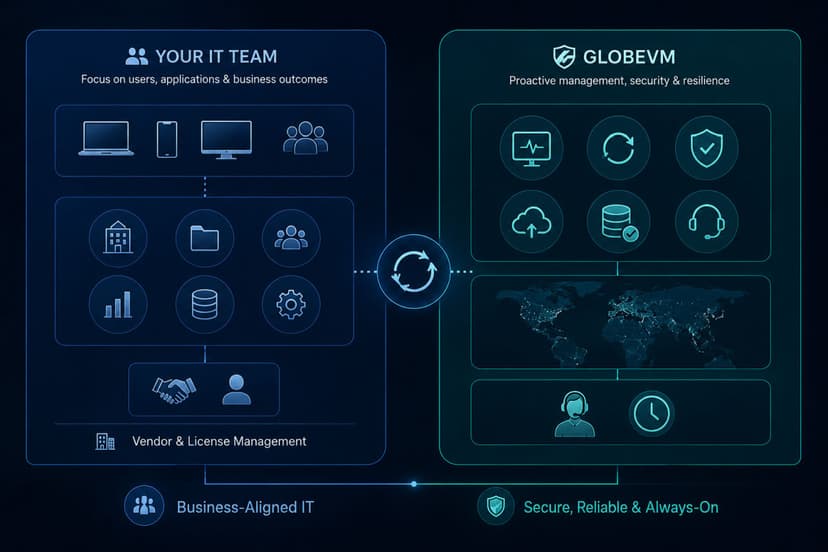


Most Los Angeles offices already run on Microsoft 365. Email lives in Outlook, files live in OneDrive and SharePoint, meetings happen in Teams, and the monthly bill arrives whether anyone manages the platform or not. Managed Microsoft 365 services close that gap. Instead of a subscription that was set up once and left alone, you get a platform that is administered, secured, and adjusted as your business changes.
What Managed Microsoft 365 Services Cover
Administration sounds abstract until you list what it actually contains.
Tenant administration done properly
Your tenant is the container that holds your company’s mail, files, and identities. Managing it means keeping admin access limited and audited, configuring sharing rules so files go where they should and nowhere else, and reviewing the settings Microsoft changes and adds throughout the year. An unattended tenant drifts, and drift is where problems start.
Licensing that matches reality
Microsoft’s plans overlap and change names often enough that most businesses end up with a mix nobody chose deliberately. Seats stay assigned to people who left. Users hold premium plans for features they never open. A licensing review matches each person to the plan they actually need, and in most environments we review, there is something to correct. We put the findings in writing so you can see the reasoning, not just the new invoice.
Accounts through their whole lifecycle
People join, change roles, and leave. Each of those events touches licenses, group memberships, shared mailboxes, and access to files. Handling them the same day, through a documented checklist, is unglamorous work that prevents both security holes and the awkward discovery that a departed employee could still read company mail three months later.
The Settings That Ship Wrong by Default
A stock Microsoft 365 tenant is configured for compatibility, not for safety. Several protections exist on every plan and simply arrive switched off or set loosely. Which ones matter most, and how to turn them on without breaking the workday, is exactly what our guide to Microsoft 365 security settings walks through. The short version: multifactor authentication everywhere, admin accounts separated from daily accounts, and the default sharing behavior tightened before someone tests it for you.
Email Protection Beyond the Defaults
Because Microsoft 365 is the most common business platform, it is also the most imitated in phishing campaigns. The built-in filtering catches plenty, and a properly configured layer of email security on top of it catches what slips through: lookalike domains, payment redirect attempts, and the login pages that copy Microsoft’s own. Managed service here means the protections are not just purchased but tuned, and that someone reviews what they catch.
Keeping Work Inside the Platform
When staff cannot do something easily in the tools they are given, they solve it themselves with personal Dropbox accounts, free PDF converters, and whatever else a search suggests. That quiet sprawl is called shadow IT, and it moves company data outside every protection you have paid for. Part of managing Microsoft 365 well is making the sanctioned path the easy path: sharing that works, storage people can find, and requests answered quickly enough that workarounds stop being tempting.
Migrations Without Losing a Workday
Businesses still arrive at Microsoft 365 from older mail servers, Google Workspace, or aging file servers, and the move worries owners more than it should. Done properly, the heavy transfer runs in the background over days, the final cutover lands on an evening or weekend, and staff start Monday in the new environment with their mail and files where they expect them. The honest caveat is that every migration has details to plan around, old archives, shared calendars, that one application wired to the old server, which is why the planning conversation happens before any switch is scheduled.
Retention Is Not Backup
One assumption catches businesses off guard: Microsoft keeps the service running, but protecting your data from deletion, corruption, and account compromise is left to you. Retention policies and the recycle bin help with small accidents, and they are not a backup. They have time limits, they can be emptied, and they do not help when a mailbox is wiped through a compromised account. Part of managing the platform responsibly is deciding, deliberately, how mail and files are backed up outside the tenant and how far back you can reach. That decision belongs in writing, not in assumptions.
A Platform That Earns Its Monthly Bill
You are paying for Microsoft 365 either way. Managed Microsoft 365 services make sure the subscription is doing its full job: secured the way the settings allow, licensed the way your headcount actually looks, and supported by people who work in the admin center every day. If nobody has reviewed your tenant since it was created, that review is a sensible place to start, and we are glad to do it.